Corsair MP700 4TB PCIe 5.0 NVMe SSD Specifications (2026)
Quick answer
The Corsair MP700 4TB is one of the first mainstream PCIe 5.0 SSDs from a widely recognized Western brand, combining the Phison PS5026-E26 controller with Micron 232-layer 3D TLC NAND and LPDDR4 DRAM cache.
Read: 10000 MB/s Write: 9500 MB/s Endurance: 3000 TBW Warranty: 5 years Interface: M.2 5.0
Corsair MP700 4TB uses a Phison E26 controller with 232-layer 3D TLC NAND and LPDDR4 DRAM to deliver PCIe Gen5 reads of 10,000 MB/s and writes of 9,500 MB/s.
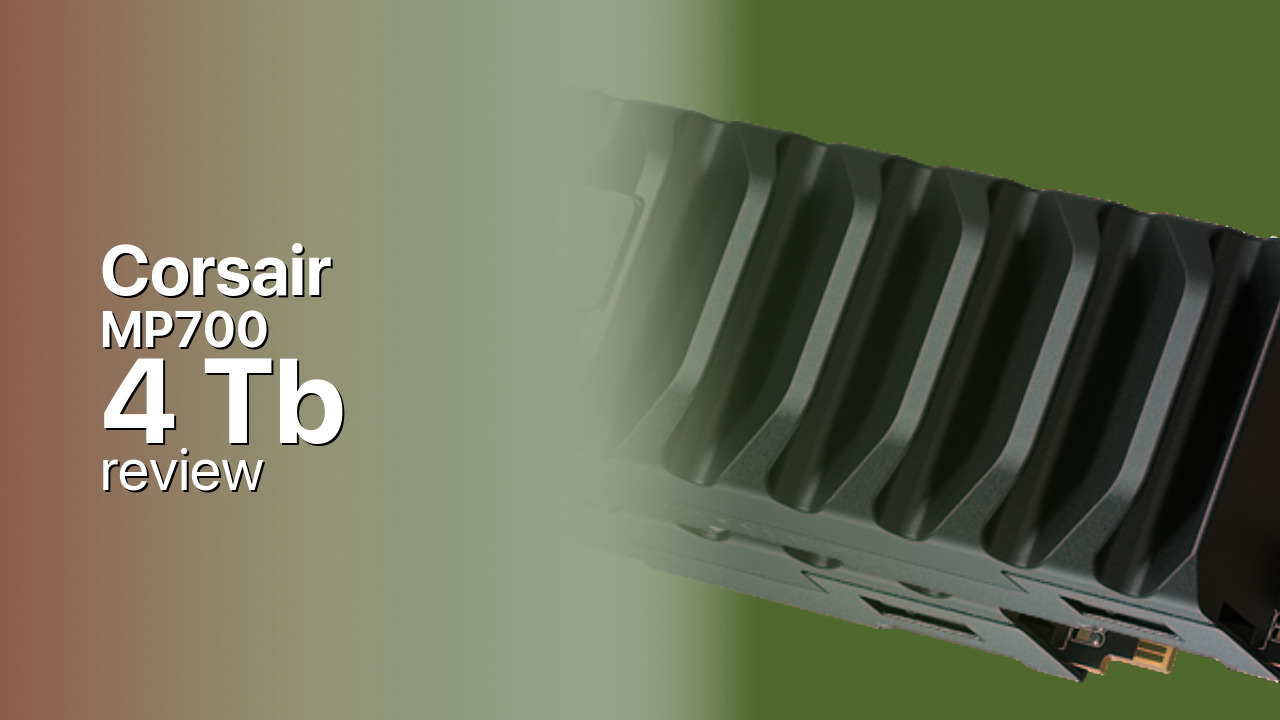
Controller & Memory
Corsair entered the PCIe 5.0 storage market with the MP700, a flagship NVMe SSD built around the Phison PS5026-E26 controller and Micron 232-layer 3D TLC NAND flash. The 4TB model delivers sequential read speeds up to 10,000 MB/s and writes up to 9,500 MB/s over a PCIe 5.0 x4 interface, making it one of the first widely available Gen5 drives from a major Western brand.
The Phison E26 is an eight-channel NVMe 2.0 controller designed specifically for PCIe 5.0 bandwidth. It supports LPDDR4 DRAM cache, and the MP700 4TB includes a dedicated LPDDR4 chip for efficient NAND mapping table management. Random 4K performance reaches 1.5 million IOPS for reads and up to 1.7 million IOPS for writes, reflecting the E26 architectural improvements over the previous E18 Gen4 controller.
Thermal management is critical for PCIe 5.0 SSDs, and Corsair offers the MP700 in both bare PCB and heatsink variants. The Phison E26 controller can exceed 80 degrees Celsius under sustained load without adequate cooling, which triggers thermal throttling. Corsair recommends using the heatsink version or ensuring strong motherboard M.2 slot airflow.
Endurance for the 4TB model is rated at 3000 TBW, backed by a five-year limited warranty from Corsair. This translates to approximately 2 GB of writes per day over the warranty period, more than sufficient for gaming and heavy desktop workloads.
Storage Comparisons:
MP700 Performance & Benchmarks
The 4TB MP700 achieves 10,000 MB/s sequential read and 9,500 MB/s write throughput over PCIe 5.0 x4. These figures represent a significant generational improvement over PCIe 4.0 drives, which max out around 7,400 MB/s read and 6,800 MB/s write. Later E26-based firmware updates pushed some drives to 14,000 MB/s, but the MP700 launched with more conservative tuning focused on stability.
Corsair MP700 4 TB vs M.2 5.0 peers
Switch between sequential throughput and random IOPS to see how this drive stacks up against other M.2 5.0 SSDs in our database. The highlighted bar is the drive on this page — click any other bar to open that drive.
- Corsair MP700 Pro XT 1 TB: 14,900 MB/s read, 14,200 MB/s write
- Corsair MP700 Pro XT 2 TB: 14,900 MB/s read, 14,500 MB/s write
- Corsair MP700 Pro XT 4 TB: 14,900 MB/s read, 14,400 MB/s write
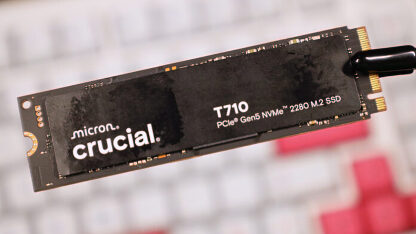
- Crucial T710 1 TB: 14,900 MB/s read, 13,800 MB/s write
- Corsair MP700 4 TB (this drive): 10,000 MB/s read, 9,500 MB/s write
Random 4K performance of 1.5 million read and 1.7 million write IOPS delivers excellent responsiveness in desktop workloads, application launches, and gaming asset streaming. The LPDDR4 DRAM cache ensures efficient handling of mixed read-write operations without the performance penalties seen in HMB DRAMless designs.
Under sustained heavy writes, the dynamic SLC cache eventually exhausts and write speeds fall to the native TLC pace of the 232-layer NAND. Corsair rates the SLC cache large enough to handle typical consumer workloads without exhausting, but professional users transferring hundreds of gigabytes will notice the drop to native write speed.
Cooling is essential for maintaining these speeds. Without a heatsink or active fan, the E26 controller reaches thermal throttling temperatures within minutes of sustained activity. The MP700 heatsink variant or a motherboard with robust M.2 cooling armor is strongly recommended to prevent performance degradation.
Corsair MP700 vs Competitors
See how the MP700 stacks up against other M.2 5.0 drives in our database:
Compare with rival drives:
Endurance, TBW & Warranty
Corsair backs the MP700 4TB with a five-year limited warranty from the date of original purchase. The endurance rating stands at 3000 TBW, meaning Corsair guarantees the drive can handle at least 3000 terabytes of total data written before the warranty expires, whichever limit is reached first. This works out to approximately 2 GB of writes per day sustained over five years of continuous use. Corsair is a well-established component manufacturer with global support infrastructure, and warranty claims can be processed through their website or authorized retailers. The five-year warranty and 3000 TBW endurance are consistent with other premium Phison E26 platform drives from brands like Seagate and Gigabyte, providing confidence in the long-term reliability of the MP700 series.
Corsair MP700 4 TB Specifications
| Category | Value |
|---|---|
| Capacity [?] | 4 TB |
| Interface [?] | M.2 5.0 |
| Controller [?] | Phison PS5026-E26 |
| Memory type [?] | 232L 3D TLC |
| DRAM [?] | LPDDR4 |
| Read speed (MB/s) [?] | 10000 |
| Write speed (MB/s) [?] | 9500 |
| Read IOPS [?] | 1500000 |
| Write IOPS [?] | 1700000 |
| Endurance (TBW) [?] | 3000 |
| MTBF (million hours) [?] | 1800000 |
| Warranty (years) [?] | 5 |
Verdict: Is the MP700 Worth It in 2026?
The Corsair MP700 4TB is one of the first mainstream PCIe 5.0 SSDs from a widely recognized Western brand, combining the Phison PS5026-E26 controller with Micron 232-layer 3D TLC NAND and LPDDR4 DRAM cache. At 10,000 MB/s read and 9,500 MB/s write, it delivers a meaningful generational upgrade over Gen4 storage and positions the 4TB capacity as a strong option for enthusiasts building next-generation systems.
The 3000 TBW endurance rating and five-year warranty from Corsair provide long-term confidence. Thermal management is essential with any E26-based drive, so plan for adequate cooling whether through a motherboard heatsink or the MP700 pre-fitted heatsink variant. If you are ready to adopt PCIe 5.0 storage and want a drive backed by a reputable brand with global support, the MP700 4TB is a solid choice.
+ Pros
- 10,000 MB/s reads deliver significant PCIe Gen5 improvement
- 232-layer 3D TLC NAND for high density and reliability
- LPDDR4 DRAM cache for sustained random performance
- Five-year warranty with 3000 TBW endurance rating
- DirectStorage optimization for faster game loading on Windows
- Cons
- Requires robust cooling to prevent E26 controller thermal throttling
- Launch speeds below the 14,000 MB/s ceiling of later E26 firmware
- Premium pricing compared to mature PCIe 4.0 alternatives
- SLC cache exhaustion under sustained multi-hundred-gigabyte transfers
Buy this or similar SSD Storage:
Video Review
Corsair MP500 I MP400 I MP510 I MP600 - Corsair M.2 NVME line-up