Netac NV150HK 4TB PCIe 5.0 NVMe SSD Review (2026)
Quick answer
The Netac NV150HK 4 TB is a credible PCIe 5.0 flagship that pairs the proven Silicon Motion SM2508 plus Micron 232-layer TLC platform with maximum 4 TB capacity, 14,000 MB/s reads, 2,000,000 read IOPS and a 2,400 TBW rating backed by a five-year warranty.
Read: 14000 MB/s Write: 13000 MB/s Endurance: 2400 TBW Warranty: 5 years Interface: M.2 5.0
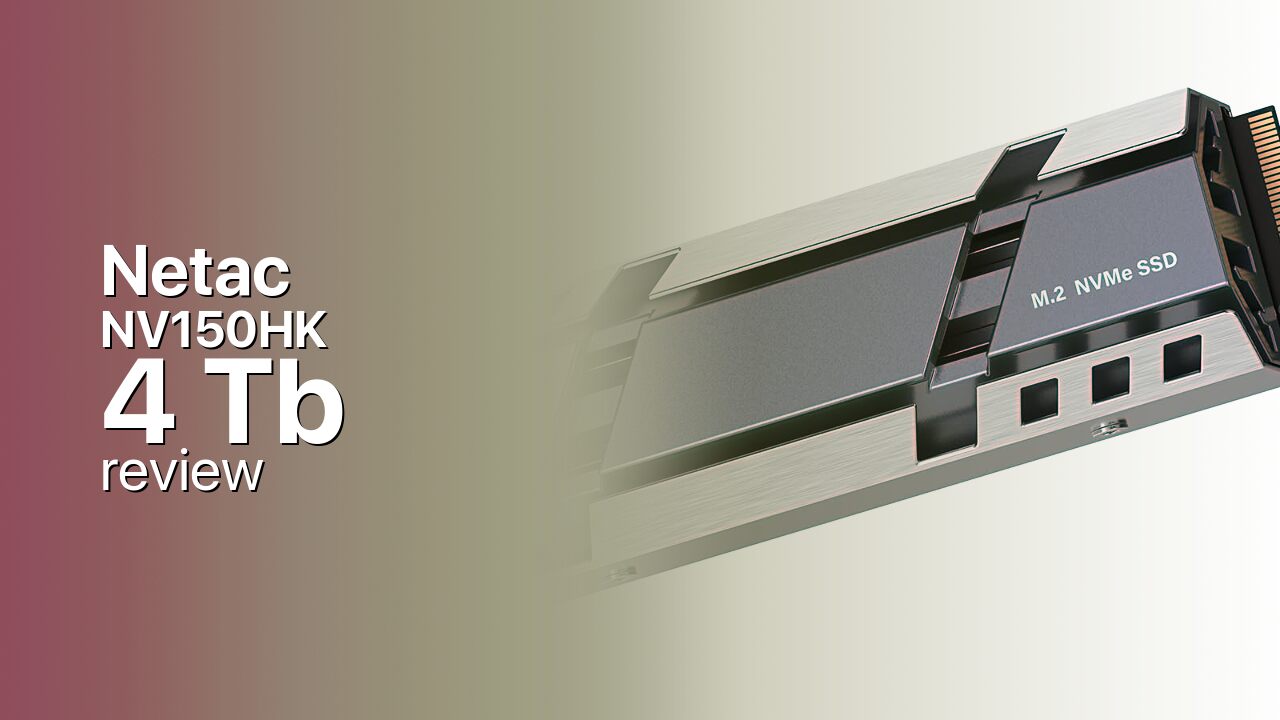
The Netac NV150HK 4 TB is the flagship capacity of Netac's PCIe 5.0 lineup, pairing a Silicon Motion SM2508 controller with Micron 232-layer TLC for 14,000 MB/s sequential reads.
Controller & Memory
The Netac NV150HK is the brand's PCIe 5.0 consumer NVMe drive, and the 4 TB model reviewed here sits at the top of a range that also includes 1 TB and 2 TB variants. It uses the Silicon Motion SM2508 8-channel PCIe 5.0 controller, the same platform found in several 2025 Gen5 drives, paired with Micron 232-layer 3D TLC NAND and a DDR4 DRAM cache. That combination delivers the kind of sequential throughput, around 14 GB/s, that was server-class only a few product cycles ago, and it puts the NV150HK in direct competition with other SM2508-based flagships.
What the 4 TB offers over the smaller capacities is maximum fast storage in a single M.2 slot. Netac rates the 4 TB at up to 14,000 MB/s sequential read and 13,000 MB/s sequential write, with 2,000,000 random read and 1,800,000 random write IOPS, and a 2,400 TBW endurance rating backed by a five-year warranty. These are genuinely flagship-class numbers: the sequential reads match the best Gen5 drives on the market, and the 2.4 PB endurance is substantial. The NV150HK is aimed at enthusiasts and content creators who want both top-tier throughput and a large capacity without compromise.
As a newer brand entry in the Gen5 space, the NV150HK's main trade-off versus established names like Crucial, Samsung or WD is support footprint and long-term firmware track record rather than raw hardware, since the SM2508 plus Micron 232-layer TLC platform is shared. The drive competes with other PCIe 5.0 flagships such as the Crucial T705, the Kioxia Exceria Pro G2 and the WD Black SN8100, and its value proposition depends heavily on pricing, which varies by region. Buyers should weigh the strong specifications against the thinner brand support network.
Storage Comparisons:
NV150HK Performance & Benchmarks
Netac rates the NV150HK 4 TB at up to 14,000 MB/s sequential read and 13,000 MB/s sequential write, with 2,000,000 random read and 1,800,000 random write IOPS. Those figures are firmly in flagship PCIe 5.0 territory and sit alongside the fastest consumer NVMe drives available. In day-to-day use that sequential headroom shows up when moving large files, game libraries, video projects or virtual machine images, and at 4 TB there is room to keep plenty of them on the fast tier. For ordinary booting and browsing the gap to a good PCIe 4.0 drive is smaller than the raw numbers suggest, because those workloads are rarely sequential.
Netac NV150HK 4 TB vs M.2 5.0 peers
Switch between sequential throughput and random IOPS to see how this drive stacks up against other M.2 5.0 SSDs in our database. The highlighted bar is the drive on this page — click any other bar to open that drive.
- Corsair MP700 Pro XT 1 TB: 14,900 MB/s read, 14,200 MB/s write
- Corsair MP700 Pro XT 2 TB: 14,900 MB/s read, 14,500 MB/s write
- Corsair MP700 Pro XT 4 TB: 14,900 MB/s read, 14,400 MB/s write
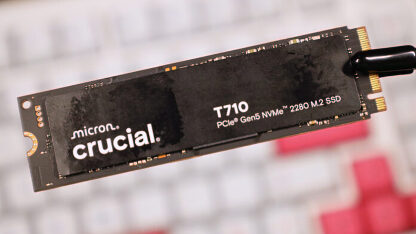
- Crucial T710 1 TB: 14,900 MB/s read, 13,800 MB/s write
- Netac NV150HK 4 TB (this drive): 14,000 MB/s read, 13,000 MB/s write
Where Gen5 earns its keep is sustained throughput and high-queue-depth random performance, the conditions that DirectStorage-era games and demanding creative tools are starting to use. The SM2508 controller is one of the more efficient PCIe 5.0 designs, which helps the NV150HK hold its peak performance under sustained loads rather than throttling as aggressively as some early Gen5 parts. The 2,000,000 random read IOPS figure is particularly relevant for mixed workloads with many small files. Independent reviewers measuring the NV150HK family confirm it reaches its advertised sequential figures, making it a credible flagship performer for buyers whose platform can feed it a PCIe 5.0 link.
Netac NV150HK vs Competitors
See how the NV150HK stacks up against other M.2 5.0 drives in our database:
Compare with rival drives:
Endurance, TBW & Warranty
Netac backs the NV150HK with a five-year limited warranty, and the 4 TB model carries a 2,400 TBW (terabytes written) endurance rating. That is strong coverage that matches other PCIe 5.0 flagships: 2,400 TBW works out to roughly 1,315 GB of writes every single day for five years, vastly more than any typical 20 to 50 GB daily consumer workload. At 50 GB of writes per day you would need around 131 years to exhaust the rated endurance, so the NAND will outlast the warranty term many times over and wear is simply not a concern, even on a 4 TB drive holding a large media library. The five-year term is the binding limit. As a smaller global brand, Netac's RMA process varies by region, so buyers should confirm local warranty support before purchase and keep proof of purchase. For a flagship drive carrying an operating system, games and large project files, the combination of TLC NAND, a DRAM cache, a 2,400 TBW rating and five-year cover is reassuring.
Netac NV150HK 4 TB Specifications
| Category | Value |
|---|---|
| Capacity [?] | 4 TB |
| Interface [?] | M.2 5.0 |
| Controller [?] | Silicon Motion SM2508 8 Channel |
| Memory type [?] | Micron 232-L 3D TLC |
| DRAM [?] | DDR4 |
| Read speed (MB/s) [?] | 14000 |
| Write speed (MB/s) [?] | 13000 |
| Read IOPS [?] | 2000000 |
| Write IOPS [?] | 1800000 |
| Endurance (TBW) [?] | 2400 |
| MTBF (million hours) [?] | 2000000 |
| Warranty (years) [?] | 5 |
Verdict: Is the NV150HK Worth It in 2026?
The Netac NV150HK 4 TB is a credible PCIe 5.0 flagship that pairs the proven Silicon Motion SM2508 plus Micron 232-layer TLC platform with maximum 4 TB capacity, 14,000 MB/s reads, 2,000,000 read IOPS and a 2,400 TBW rating backed by a five-year warranty. On raw specifications it stands shoulder to shoulder with established Gen5 drives like the Crucial T705 and Kioxia Exceria Pro G2. The trade-off is brand support: Netac's global RMA network and firmware track record are thinner than the major names, so buyers pay a premium in confidence rather than price. Choose it when it is priced sharply and local warranty support is confirmed; otherwise an established brand on the same SM2508 platform offers more peace of mind for similar hardware.
+ Pros
- PCIe 5.0 flagship speeds up to 14,000 MB/s read
- Up to 2,000,000 random read IOPS
- Large 4 TB capacity in a single M.2 slot
- Silicon Motion SM2508 with Micron 232L TLC
- DDR4 DRAM cache and 2,400 TBW endurance
- 5-year warranty
- Cons
- Needs a PCIe 5.0 platform to justify the speed
- Netac's global support footprint is thinner than major brands
- Newer entrant with a shorter firmware track record
- No heatsink included
Buy this or similar SSD Storage:



Video Review
Is DRAM Cache SSD better? Netac NV7000 m.2 NVMe SSD Review [Creators Edition]