PNY XLR8 CS3150 2TB — Actively Cooled PCIe 5.0 NVMe SSD (2026)
Quick answer
The PNY XLR8 CS3150 2TB is the strongest SKU in the CS3150 range and a compelling pick for enthusiast desktop builders who want to fully populate a PCIe 5.0 M.2 slot with both speed and capacity.
Read: 12000 MB/s Write: 11000 MB/s Endurance: 1200 TBW Warranty: 5 years Interface: M.2 5.0 x 4
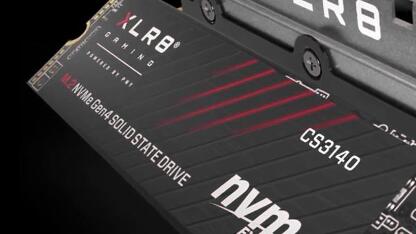
The PNY XLR8 CS3150 2TB is PNY's flagship PCIe 5.0 NVMe at its highest capacity, pairing a Phison E26 controller with Micron 232-layer TLC and a dual-fan active cooling solution that keeps Gen5 thermal throttling at bay.

Controller & Memory
The CS3150 sits at the top of PNY's XLR8 storage lineup and is built around the Phison PS5026-E26 eight-channel controller — the same silicon that powers the first wave of PCIe 5.0 consumer SSDs. NAND comes from Micron's 232-layer 3D TLC stack, one of the densest NAND layers in high-volume production when the drive launched. A 4 GB Hynix LPDDR4 DRAM cache handles the address-translation workload, keeping latency competitive even as the drive fills up and the flash management tables grow. The M.2 2280 form factor fits every standard desktop M.2 slot, though the heatsink variant adds roughly 20 mm of height that rules out motherboard slots covered by chipset coolers or armor plates.
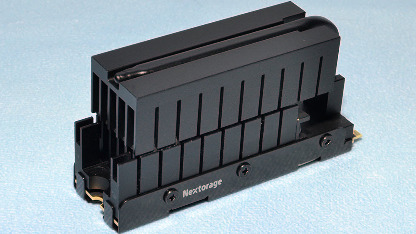
The defining feature of the CS3150 is its cooling solution. Most Gen5 SSDs rely on passive heatsinks and lean on the motherboard's built-in thermal armor. PNY ships the CS3150 with an active dual-fan assembly that connects to a 9-pin USB header and is controllable via a companion app — a direct answer to the throttling problems observed on passively cooled E26 drives. Without active airflow, the E26 can breach 70 degrees Celsius and begin throttling under sustained workloads; the CS3150's fans keep the controller well below that threshold during extended file transfers. The RGB variant (XHS SKU) adds addressable lighting, which requires the USB connection regardless.
The 2TB model is the higher-performing capacity in the CS3150 range, rated at 12,000 MB/s sequential reads and 11,000 MB/s sequential writes — a meaningful step up from the 1TB variant's 11,500/8,500 MB/s. It also carries 1,200 TBW of rated endurance versus 700 TBW on the 1TB, making it better suited for write-heavy workstation use. The CS3150 targets enthusiast desktop builders running a PCIe 5.0-capable platform: AMD Ryzen 7000 or 9000 series and Intel 12th-gen or newer motherboards with an M.2 Gen5 slot. The most direct rivals are the Crucial T705 2TB, which reaches similar sequential speeds with passive cooling, the Corsair MP700 Pro 2TB, and the Seagate FireCuda 540 2TB — all E26-based Gen5 drives in the same performance class.
Storage Comparisons:
XLR8 CS3150 Performance & Benchmarks
The PNY XLR8 CS3150 2TB is rated for 12,000 MB/s sequential reads and 11,000 MB/s sequential writes — numbers that take full advantage of the PCIe 5.0 x4 lane ceiling and represent a clear step up from the 1TB variant. The 2TB capacity spreads writes across more NAND dies in parallel, which is why both sequential and sustained write performance improve over the smaller SKU. PNY does not publish official random IOPS figures for the CS3150; independent benchmark testing at 4K Q32T16 shows results broadly consistent with other E26-based 2TB drives in this class, typically landing above 1 million read IOPS and near 1 million write IOPS at deep queue depths.
PNY XLR8 CS3150 2 TB vs M.2 5.0 x 4 peers
Switch between sequential throughput and random IOPS to see how this drive stacks up against other M.2 5.0 x 4 SSDs in our database. The highlighted bar is the drive on this page — click any other bar to open that drive.
- Kioxia Exceria Pro G2 2 TB: 14,900 MB/s read, 13,400 MB/s write
- Kioxia Exceria Pro G2 4 TB: 14,900 MB/s read, 13,700 MB/s write
- PNY XLR8 CS3250 1 TB: 14,900 MB/s read, 13,500 MB/s write
- PNY XLR8 CS3250 2 TB: 14,900 MB/s read, 14,000 MB/s write
- PNY XLR8 CS3150 2 TB (this drive): 12,000 MB/s read, 11,000 MB/s write
The drive uses an SLC write cache. While that cache holds, sustained writes maintain speeds close to the rated maximum. Once the cache fills under prolonged sequential writes, throughput transitions to direct-TLC mode, settling at a lower but still usable level — common behaviour for high-density TLC drives in this tier. For typical desktop usage — OS boots, game installs, media streaming, application launches — the cache never saturates and the drive delivers its full rated burst speeds every time. The dual-fan heatsink plays a genuinely important role here: independent reviewers consistently found that removing the active cooler and relying on a motherboard heatsink alone pushed the E26 controller to its thermal threshold, triggering throttling during sustained writes. The 2TB model, with its higher write throughput, generates more heat than the 1TB under equivalent workloads, making the active cooling even more relevant.
The real-world benefit over a good PCIe 4.0 drive is most visible in large-file sequential transfers: video editors moving uncompressed 4K or 8K footage, game library copies, and DirectStorage-enabled titles that stream asset data directly from the drive to the GPU. For OS boot and typical gaming loads, the gap over a flagship PCIe 4.0 SSD narrows — the bottleneck shifts to software and memory latency rather than storage throughput.
PNY XLR8 CS3150 vs Competitors
See how the XLR8 CS3150 stacks up against other M.2 5.0 x 4 drives in our database:
Compare with rival drives:
Endurance, TBW & Warranty
PNY backs the XLR8 CS3150 with a five-year limited warranty, correcting an earlier database entry that listed one year. The 2TB model carries a 1,200 TBW endurance rating, nearly double the 1TB variant's 700 TBW — a direct benefit of the larger NAND array spreading writes across more cells. At a realistic desktop write load of 30 GB per day, 1,200 TBW equates to roughly 109 years of use, well beyond any realistic retirement cycle. Even at a heavy workstation workload of 100 GB per day, the rated endurance covers over 32 years. MTTF is rated at 1,600,000 hours, a population-level reliability statistic that reflects the expected failure rate across a large fleet rather than a lifespan guarantee for any individual unit. PNY handles warranty claims through its standard RMA process. The drive ships with lifetime technical support included. Running the drive without adequate cooling in a thermally constrained slot may affect long-term component health, even if it does not void the warranty outright.
PNY XLR8 CS3150 2 TB Specifications
| Category | Value |
|---|---|
| Capacity [?] | 2 TB |
| Interface [?] | M.2 5.0 x 4 |
| Controller [?] | Phison PS5026-E26 8 Channel |
| Memory type [?] | Micron 232-Layer 3D TLC |
| DRAM [?] | Yes |
| Read speed (MB/s) [?] | 12000 |
| Write speed (MB/s) [?] | 11000 |
| Read IOPS [?] | 1500000 |
| Write IOPS [?] | 2000000 |
| Endurance (TBW) [?] | 1200 |
| MTBF (million hours) [?] | 1.6 |
| Warranty (years) [?] | 5 |
Verdict: Is the XLR8 CS3150 Worth It in 2026?
The PNY XLR8 CS3150 2TB is the strongest SKU in the CS3150 range and a compelling pick for enthusiast desktop builders who want to fully populate a PCIe 5.0 M.2 slot with both speed and capacity. The 12,000/11,000 MB/s read/write ratings and 1,200 TBW endurance make it a better long-term investment than the 1TB variant, which trades both speed and rated write longevity for a lower price. The active dual-fan cooling is the CS3150's headline differentiator — it keeps the Phison E26 controller from throttling where passive heatsinks alone cannot, and that matters more on the 2TB model because its higher sustained-write throughput generates more heat. Buyers who need to fit an SSD under a chipset cooler, inside a laptop, or into a PS5 should look elsewhere; the heatsink assembly blocks those form factors entirely. For a passively cooled alternative at the same tier, the Crucial T705 2TB offers comparable peak speeds without the USB-header requirement and height overhead. The CS3150 2TB makes its best case for users with a clear Gen5 slot, room for the heatsink, and a workload that benefits from consistent sustained writes — video production, large data set management, or a growing DirectStorage game library.
+ Pros
- 12,000 MB/s sequential reads on PCIe 5.0 x4
- 11,000 MB/s sequential writes — highest in the CS3150 range
- Active dual-fan cooling prevents Gen5 thermal throttling
- 1,200 TBW endurance — nearly double the 1TB variant
- 5-year limited warranty with lifetime tech support
- 4 GB LPDDR4 DRAM cache for consistent low latency
- Microsoft DirectStorage compatible
- TCG Opal 2.0 hardware encryption support
- Cons
- 20mm heatsink height blocks many motherboard slots and all laptop installs
- Requires spare 9-pin USB header for fan and RGB control
- SLC cache exhausts under sustained writes; drops to TLC speeds
- Premium pricing compared to passively cooled PCIe 5.0 alternatives
- No PCIe 4.0 backward-compatibility advantage — negligible gain on older platforms
Buy this or similar SSD Storage:



Video Review
The PNY XLR8 CS3150 PCIe 5.0 SSD!