Samsung 9100 Pro 2TB Gen5 SSD in detail (2026)
Quick answer
The Samsung 9100 Pro 2TB is the capacity to pick if you want PCIe 5.0 speed with enough endurance for serious work.
Read: 14700 MB/s Write: 13400 MB/s Endurance: 1200 TBW Warranty: 5 years Interface: M.2 5.0 x 4
The Samsung 9100 Pro 2TB combines Samsung's Presto PCIe 5.0 controller with 236-layer V-NAND TLC and 2 GB LPDDR4X DRAM to deliver 14,700 MB/s sequential reads and 13,400 MB/s writes.
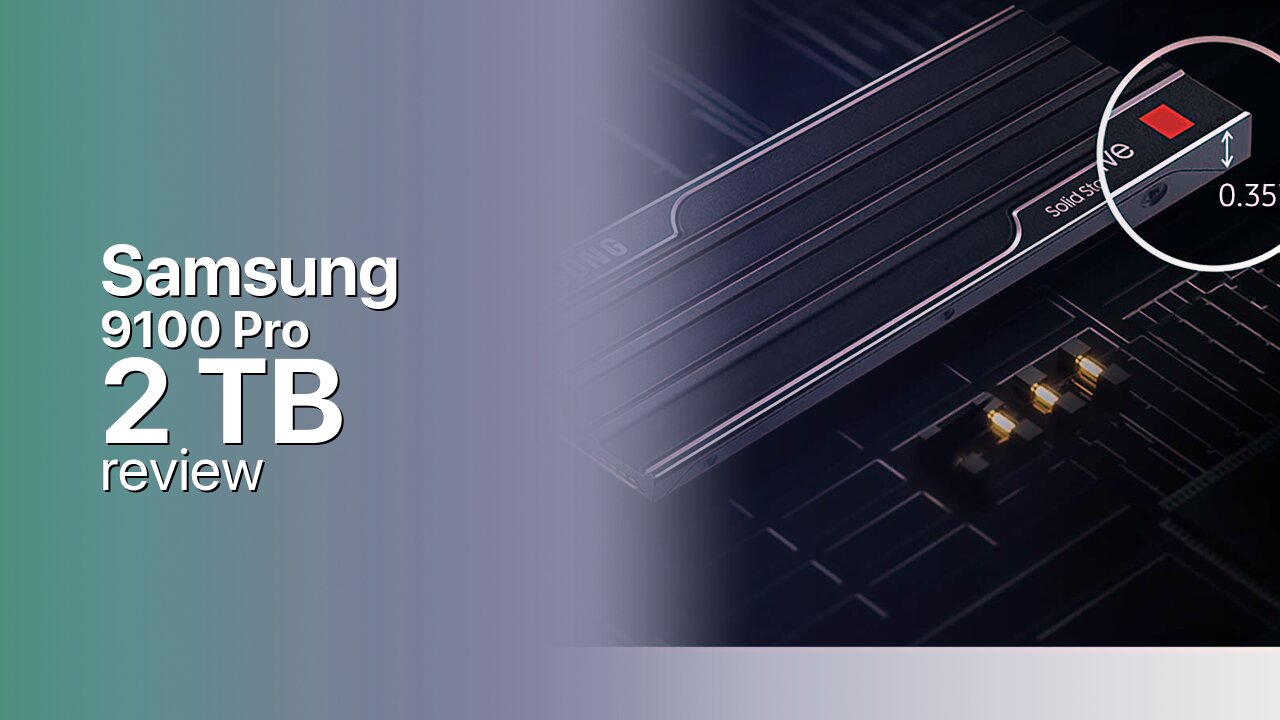
Controller & Memory
The 9100 Pro 2TB is the mid-range capacity in Samsung's first PCIe 5.0 x4 consumer SSD family. It shares the same Samsung Presto eight-channel controller and eighth-generation 236-layer V-NAND TLC flash found across the lineup, paired with a 2 GB LPDDR4X DRAM chip for the flash translation layer. The drive uses the NVMe 2.0 protocol and fits the standard M.2 2280 form factor.
Sequential performance matches the 1 TB model at 14,700 MB/s reads but edges ahead on writes at 13,400 MB/s thanks to additional NAND die for interleaving. Random performance sits at 1,850,000 read IOPS and 2,600,000 write IOPS, identical to the 1 TB model and lower than the 4 TB and 8 TB variants which reach 2,200,000 read IOPS. The endurance rating doubles to 1,200 TBW versus 600 TBW on the 1 TB model, making this a more practical choice for sustained write-heavy workloads.
The 2 TB capacity hits a practical sweet spot for enthusiasts and content creators who need fast scratch space for video editing, large game libraries, or virtual machine storage. Competitors include the Crucial T705 2TB, the WD Black SN850X 2TB at PCIe 4.0 speeds, and the Kingston Fury Renegade G5. The 9100 Pro works in any M.2 2280 slot, though full speed requires PCIe 5.0 x4 lanes from the motherboard or CPU.
Storage Comparisons:
9100 Pro Performance & Benchmarks
Samsung rates the 9100 Pro 2TB at 14,700 MB/s sequential read and 13,400 MB/s sequential write. Random performance reaches 1,850,000 read IOPS and 2,600,000 write IOPS at QD256 with 32 threads. The write IOPS figure matches the 4 TB and 8 TB models, while read IOPS trail the larger capacities by about 16 percent.
Samsung 9100 Pro 2 TB vs M.2 5.0 x 4 peers
Switch between sequential throughput and random IOPS to see how this drive stacks up against other M.2 5.0 x 4 SSDs in our database. The highlighted bar is the drive on this page — click any other bar to open that drive.
- Kioxia Exceria Pro G2 2 TB: 14,900 MB/s read, 13,400 MB/s write
- Kioxia Exceria Pro G2 4 TB: 14,900 MB/s read, 13,700 MB/s write
- PNY XLR8 CS3250 1 TB: 14,900 MB/s read, 13,500 MB/s write
- PNY XLR8 CS3250 2 TB: 14,900 MB/s read, 14,000 MB/s write
- Samsung 9100 Pro 2 TB (this drive): 14,700 MB/s read, 13,400 MB/s write
The 2 TB model benefits from more NAND die than the 1 TB version, enabling better write interleaving and slightly higher sustained write speeds. Samsung's TurboWrite SLC caching layer accelerates burst writes until the cache saturates, after which writes settle to native TLC speeds. The 2 GB LPDDR4X DRAM cache holds the entire flash translation layer in dedicated memory, eliminating the latency overhead that DRAM-less drives incur through Host Memory Buffer.
Real-world power consumption is around 8.1 W for active reads and 7.9 W for writes according to Samsung's published specifications. This is lower than many competing Phison E26-based PCIe 5.0 drives, making the 9100 Pro one of the more thermally manageable Gen5 options on the market.
Samsung 9100 Pro vs Competitors
See how the 9100 Pro stacks up against other M.2 5.0 x 4 drives in our database:
Compare with rival drives:
Endurance, TBW & Warranty
The Samsung 9100 Pro 2TB ships with a five-year limited warranty and a 1,200 TBW endurance rating. At 1,200 terabytes written, the drive can absorb roughly 658 GB of writes per day over the five-year warranty window. Even a power user writing 50 GB daily would use only about eight percent of the rated endurance over that period. For most consumers and gamers writing 10 to 30 GB per day, the drive will outlast the warranty by a wide margin. Samsung Magician software lets you monitor TBW consumption and drive health in real time, providing visibility into remaining write budget so you can plan ahead.
Samsung 9100 Pro 2 TB Specifications
| Category | Value |
|---|---|
| Capacity [?] | 2 TB |
| Interface [?] | M.2 5.0 x 4 |
| Controller [?] | Samsung Presto |
| Memory type [?] | Samsung 236-L TLC |
| DRAM [?] | Yes |
| Read speed (MB/s) [?] | 14700 |
| Write speed (MB/s) [?] | 13400 |
| Read IOPS [?] | 1850000 |
| Write IOPS [?] | 2600000 |
| Endurance (TBW) [?] | 1200 |
| MTBF (million hours) [?] | 2000000 |
| Warranty (years) [?] | 5 |
Verdict: Is the 9100 Pro Worth It in 2026?
The Samsung 9100 Pro 2TB is the capacity to pick if you want PCIe 5.0 speed with enough endurance for serious work. Its 1,200 TBW rating and 2 GB LPDDR4X DRAM make it suitable for video editing, game development, and heavy multitasking where the 1 TB model's 600 TBW might feel limiting. The 2 TB capacity also avoids the price premium of the 4 TB and 8 TB models while delivering near-identical performance. Users on PCIe 4.0 platforms should consider the Samsung 990 Pro 2TB instead, as it delivers 7,450 MB/s reads at lower power draw and a lower overall cost.
+ Pros
- 14,700 MB/s sequential read speed
- 13,400 MB/s sequential write speed
- 2 GB LPDDR4X DRAM for FTL mapping
- 1,200 TBW endurance with five-year warranty
- Lower power draw than competing Gen5 drives
- Samsung Presto in-house controller
- Cons
- Requires PCIe 5.0 for full speed
- No included heatsink on base model
- 1,850K read IOPS trail 4TB and 8TB models
- Higher idle power than PCIe 4.0 alternatives
- Premium pricing vs PCIe 4.0 drives
Buy this or similar SSD Storage:



Video Review
Samsung 9100 Pro M.2 SSD with Heatsink Review | Worth the Upgrade?