Corsair Neutron NX500 800GB PCIe NVMe SSD (2026)
Quick answer
The Corsair Neutron NX500 800 GB is a thermally unconstrained MLC NVMe SSD that sustains its rated performance under heavy workloads where M.2 drives throttle to a fraction of their speed.
Read: 2800 MB/s Write: 1600 MB/s Endurance: 1396 TBW Warranty: 5 years Interface: PCIe 3.0 x 4
The Corsair Neutron NX500 800 GB doubles the capacity and endurance of the 400 GB model, packing Toshiba 15nm MLC NAND and 2 GB of DRAM behind a custom heatsink on a PCIe add-in card with 1,396 TBW endurance.
Controller & Memory
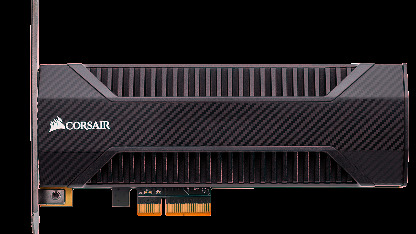
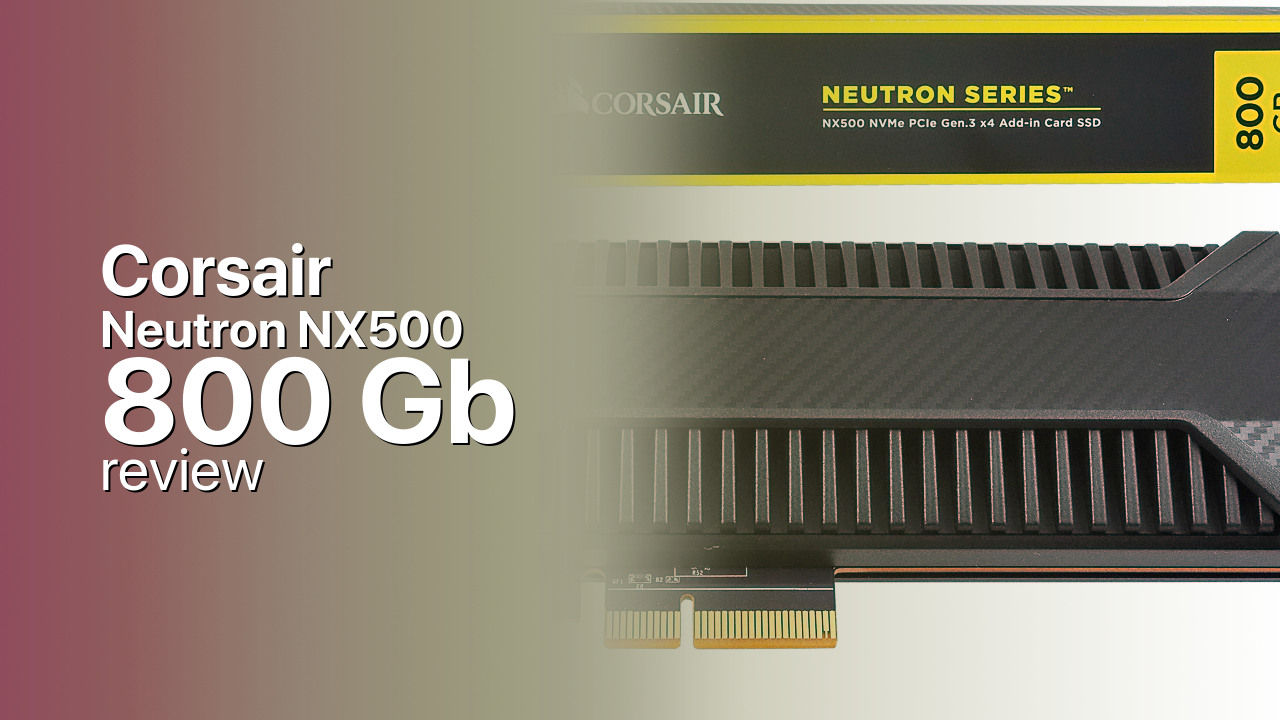
The NX500 800GB shares the same Phison PS5007-E7 controller and Toshiba 15nm MLC NAND as the 400 GB model, but doubles the flash packages and upgrades the DRAM to 2 GB of Nanya DDR3 for the flash translation layer. Like the 400 GB, it uses a half-height half-length (HHHL) PCIe add-in card with components directly mounted to the PCB, not an M.2 module on an adapter card.
The 800 GB carries the same speed ratings as the 400 GB at 2,800/1,600 MB/s sequential and 300K/270K IOPS random, as the Phison E7 platform is the bottleneck rather than the NAND count. The endurance doubles to 1,396 TBW, which remains at the 1 DWPD level that Corsair targets across the NX500 line. The 2 GB DRAM cache is substantially more than the typical allocation for an 800 GB drive and supports the heavy overprovisioning strategy Corsair employs on this series to maintain consistent sustained write performance.
The NX500 competes with other Phison E7 add-in cards like the Zotac Sonix 480GB, as well as Samsung 960 Pro 512GB and 1TB models. Against M.2 drives, the NX500 advantage is thermal: the large aluminum heatsink keeps sustained writes at full speed where M.2 drives throttle. The trade-off is the PCIe slot requirement and lack of laptop compatibility.
Storage Comparisons:
Neutron NX500 Performance & Benchmarks
Corsair rates the Neutron NX500 800 GB at 2,800 MB/s sequential read and 1,600 MB/s sequential write, with up to 300,000 random read IOPS and 270,000 random write IOPS. These figures are identical to the 400 GB model, as the Phison E7 controller and Toshiba MLC NAND deliver the same throughput regardless of capacity on this platform.
Corsair Neutron NX500 800 GB vs PCIe 3.0 x 4 peers
Switch between sequential throughput and random IOPS to see how this drive stacks up against other PCIe 3.0 x 4 SSDs in our database. The highlighted bar is the drive on this page — click any other bar to open that drive.
- Asura Genesis Xtreme 256 GB: 3,400 MB/s read, 3,000 MB/s write
- Asura Genesis Xtreme 512 GB: 3,400 MB/s read, 3,000 MB/s write
- Asura Genesis Xtreme 1 TB: 3,400 MB/s read, 3,000 MB/s write
- Asura Genesis Xtreme 2 TB: 3,400 MB/s read, 3,000 MB/s write
- Corsair Neutron NX500 800 GB (this drive): 2,800 MB/s read, 1,600 MB/s write
Where the 800 GB differs is in sustained write capacity and headroom. The larger NAND array and 2 GB DRAM buffer handle mixed workloads with more overhead than the 400 GB model. Independent reviewers at TechSpot showed the NX500 platform never exceeded 49 degrees Celsius during a 100 GB sustained transfer test, compared to 90 degrees and heavy throttling on the Samsung 960 Evo under the same conditions. The NX500 was more than twice as fast as the 960 Evo for writes exceeding 20 GB. For short burst transfers under 3 GB, performance is competitive with other PCIe 3.0 NVMe drives. The drive maintains this thermal advantage consistently across all workload types, from small random reads to large sequential writes, making it one of the most reliable performers under sustained load.
Corsair Neutron NX500 vs Competitors
See how the Neutron NX500 stacks up against other PCIe 3.0 x 4 drives in our database:
Compare with rival drives:
Endurance, TBW & Warranty
Corsair backs the Neutron NX500 800 GB with a five-year limited warranty, ending at 1,396 TBW of writes or the warranty period, whichever comes first. The 1,396 TBW rating equates to approximately 1 DWPD (drive write per day) over five years, matching the 400 GB model on a proportional basis. At a typical 20 GB per day consumer workload, the endurance translates to roughly 191 years of use. The MLC NAND, heavy overprovisioning, and generous 2 GB DRAM cache all contribute to the sustained endurance performance. The five-year warranty is an upgrade from the earlier MP500 M.2 line, which carried only three-year coverage.
Corsair Neutron NX500 800 GB Specifications
| Category | Value |
|---|---|
| Capacity [?] | 800 GB |
| Interface [?] | PCIe 3.0 x 4 |
| Controller [?] | Phison PS5007-E7 |
| Memory type [?] | Toshiba 15nm MLC |
| DRAM [?] | Nanya DDR3 |
| Read speed (MB/s) [?] | 2800 |
| Write speed (MB/s) [?] | 1600 |
| Read IOPS [?] | 300000 |
| Write IOPS [?] | 270000 |
| Endurance (TBW) [?] | 1396 |
| MTBF (million hours) [?] | 2000000 |
| Warranty (years) [?] | 5 |
Verdict: Is the Neutron NX500 Worth It in 2026?
The Corsair Neutron NX500 800 GB is a thermally unconstrained MLC NVMe SSD that sustains its rated performance under heavy workloads where M.2 drives throttle to a fraction of their speed. Desktop users who regularly move large files or run write-intensive applications will benefit most from the add-in card design with its custom heatsink. Those who need M.2 compatibility for compact builds should look at the Samsung 960 Pro or Corsair Force MP500 instead. The NX500 800 GB trades M.2 convenience for thermal headroom and MLC endurance, and it delivers on that trade convincingly.
+ Pros
- Large heatsink eliminates thermal throttling
- 1,396 TBW endurance with MLC NAND
- 2 GB DDR3 DRAM cache
- Sustained writes stay fast past 100 GB
- Toshiba 15nm MLC for reliability
- 5-year warranty coverage
- Cons
- PCIe add-in card requires spare slot
- Not M.2, no laptop compatibility
- 2,800 MB/s reads below Samsung 960 Pro
- Premium pricing for the capacity
- 800 GB not a standard capacity size
Buy this or similar SSD Storage:



Video Review
Corsair NX500 400GB Review, HHHL PCIe NVMe SSD.