Gigabyte Aorus Gen4 1TB Review — The PCIe 4.0 Original, Still Standing (2026)
Quick answer
The Gigabyte Aorus Gen4 1 TB in 2026 is a smart buy at the right price.
Read: 5000 MB/s Write: 4000 MB/s Endurance: 1800 TBW Warranty: 5 years Interface: M.2 4.0 x 4
The Gigabyte Aorus Gen4 1 TB was one of the drives that introduced PCIe 4.0 to consumers in 2019, and while modern drives are faster, its 1,800 TBW endurance rating and copper heatsink give it a second life as a high-endurance workhorse at clearance prices.
Controller & Memory
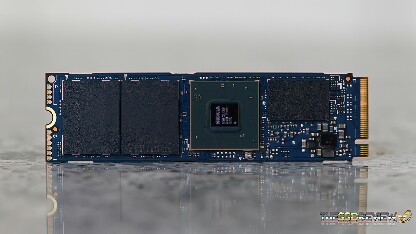
The Aorus Gen4 1 TB pairs the Phison PS5016-E16 — the 8-channel controller that powered the first PCIe 4.0 consumer SSDs — with a dedicated DDR4 DRAM cache and Kioxia BiCS4 96-layer TLC NAND. The E16 is built on TSMC's 28 nm process, which was mature even in 2019 and has benefited from years of firmware refinement. The drive is topped with a full-body copper heatsink featuring 27 fins, which Gigabyte claims offers 69% better heat dissipation than aluminium equivalents. The trade-off is thickness: 11.4 mm total, which rules out laptop use.
The Aorus Gen4 family launched alongside the Corsair MP600 and Sabrent Rocket Gen4 — all Phison E16 reference designs with the same Kioxia NAND, differentiated mainly by heatsink and firmware tuning. This 1 TB model shares its 5,000 MB/s read and 4,400 MB/s write ratings with the 2 TB flagship, avoiding the write-speed penalty that hobbles the 500 GB variant. Capacities of 500 GB, 1 TB, and 2 TB were offered.
In 2026, a used or clearance Aorus Gen4 1 TB competes on endurance and build quality rather than raw speed. Modern DRAM-less drives like the Kingston NV3 deliver higher sequential throughput, but the Aorus Gen4's 8-channel DRAM-backed design holds an edge in sustained mixed-I/O consistency and has a 5-year Gigabyte warranty behind it — something no budget white-label drive can claim.
Storage Comparisons:
Aorus Gen4 Performance & Benchmarks
Rated at 5,000 MB/s reads and 4,400 MB/s writes with 750,000 random read IOPS and 700,000 random write IOPS, the 1 TB Aorus Gen4 delivers PCIe 4.0 throughput that was class-leading in 2019 and remains entirely adequate for gaming and general productivity in 2026. The 8-channel E16 controller with DRAM cache handles mixed read/write workloads more gracefully than modern 4-channel DRAM-less designs, even if those newer drives post higher peak sequential numbers.
Gigabyte Aorus Gen4 1 TB vs M.2 4.0 x 4 peers
Switch between sequential throughput and random IOPS to see how this drive stacks up against other M.2 4.0 x 4 SSDs in our database. The highlighted bar is the drive on this page — click any other bar to open that drive.
- Patriot Viper PV593 1 TB: 14,500 MB/s read, 14,000 MB/s write
- Patriot Viper PV593 2 TB: 14,500 MB/s read, 14,000 MB/s write
- Patriot Viper PV593 4 TB: 14,500 MB/s read, 14,000 MB/s write
- Patriot Viper PV573 2 TB: 14,000 MB/s read, 12,000 MB/s write
- Gigabyte Aorus Gen4 1 TB (this drive): 5,000 MB/s read, 4,000 MB/s write
The copper heatsink is not cosmetic — the E16 on 28 nm draws more power than contemporary controllers, and under sustained write loads the drive needs the thermal mass and fin area to avoid throttling. In a well-ventilated desktop case, the heatsink keeps the drive within operating range indefinitely. In a cramped ITX build or behind a GPU backplate, the drive will run warm and may throttle, though the copper sink gives it more headroom than aluminium alternatives.
Gigabyte Aorus Gen4 vs Competitors
See how the Aorus Gen4 stacks up against other M.2 4.0 x 4 drives in our database:
Compare with rival drives:
Endurance, TBW & Warranty
Gigabyte covers the Aorus Gen4 1 TB with a 5-year warranty and a rated endurance of 1,800 TBW — triple the ~600 TBW typical of modern 1 TB consumer SSDs. At 50 GB per day, that endurance budget stretches to nearly 100 years. The 1.8 million hour MTBF is consistent with the drive's premium positioning at launch. Gigabyte's RMA infrastructure is well established, and unlike budget or white-label alternatives, a warranty claim on this drive is likely to be processed by a company that actually exists and responds to customers.
Gigabyte Aorus Gen4 1 TB Specifications
| Category | Value |
|---|---|
| Capacity [?] | 1 TB |
| Interface [?] | M.2 4.0 x 4 |
| Controller [?] | Phison PS5016-E16 8 Channel |
| Memory type [?] | Kioxia 96-L TLC |
| DRAM [?] | Yes |
| Read speed (MB/s) [?] | 5000 |
| Write speed (MB/s) [?] | 4000 |
| Read IOPS [?] | 750000 |
| Write IOPS [?] | 700000 |
| Endurance (TBW) [?] | 1800 |
| MTBF (million hours) [?] | 1800000 |
| Warranty (years) [?] | 5 |
Verdict: Is the Aorus Gen4 Worth It in 2026?
The Gigabyte Aorus Gen4 1 TB in 2026 is a smart buy at the right price. If you find it on clearance for less than a modern budget PCIe 4.0 drive, you get a DRAM-backed 8-channel design with a genuinely effective copper heatsink, 1,800 TBW of endurance, and a 5-year warranty from an established manufacturer. The trade-offs — slower peak throughput than current-gen drives, high power draw, and desktop-only form factor — matter less if endurance and reliability are what you are shopping for. It is not the fastest PCIe 4.0 drive anymore, but it is one of the most overbuilt, and that ages better than peak throughput numbers.
+ Pros
- 1,800 TBW endurance — triple the rating of most modern 1 TB consumer SSDs
- Dedicated DDR4 DRAM cache on an 8-channel Phison E16 controller
- Full copper heatsink with 27 fins — genuine thermal performance
- 5-year warranty backed by Gigabyte's global RMA infrastructure
- Years of firmware maturity on a proven controller platform
- Cons
- 5,000/4,400 MB/s throughput is outpaced by current-gen budget PCIe 4.0 drives
- 11.4 mm thick copper heatsink — not compatible with laptops or the PS5
- E16 controller on 28 nm draws more power than modern alternatives
- First-gen PCIe 4.0 — no PCIe 5.0, no DirectStorage optimisations beyond NVMe 1.3
- Only worth buying at clearance pricing; at regular retail, newer drives are faster for the same money
Buy this or similar SSD Storage:



Video Review
Review: Gigabyte AORUS NVMe Gen4 M.2 1TB PCI-Expre