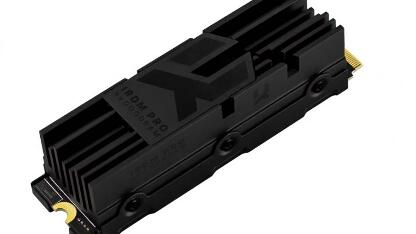
HP FX900 Pro 2TB Review — PCIe 4.0 NVMe SSD (2026)
Quick answer
The HP FX900 Pro 2TB is a solid pick for gamers and creators who want PCIe 4.0 performance without paying flagship prices.
Read: 7400 MB/s Write: 6700 MB/s Endurance: 1200 TBW Warranty: 5 years Interface: M.2 4.0 x 4
The HP FX900 Pro 2TB is one of the few PCIe 4.0 NVMe drives that actually earns its enthusiast label, pairing InnoGrit's IG5236 controller with Micron's 176-layer NAND for sequential reads that top 7,400 MB/s.
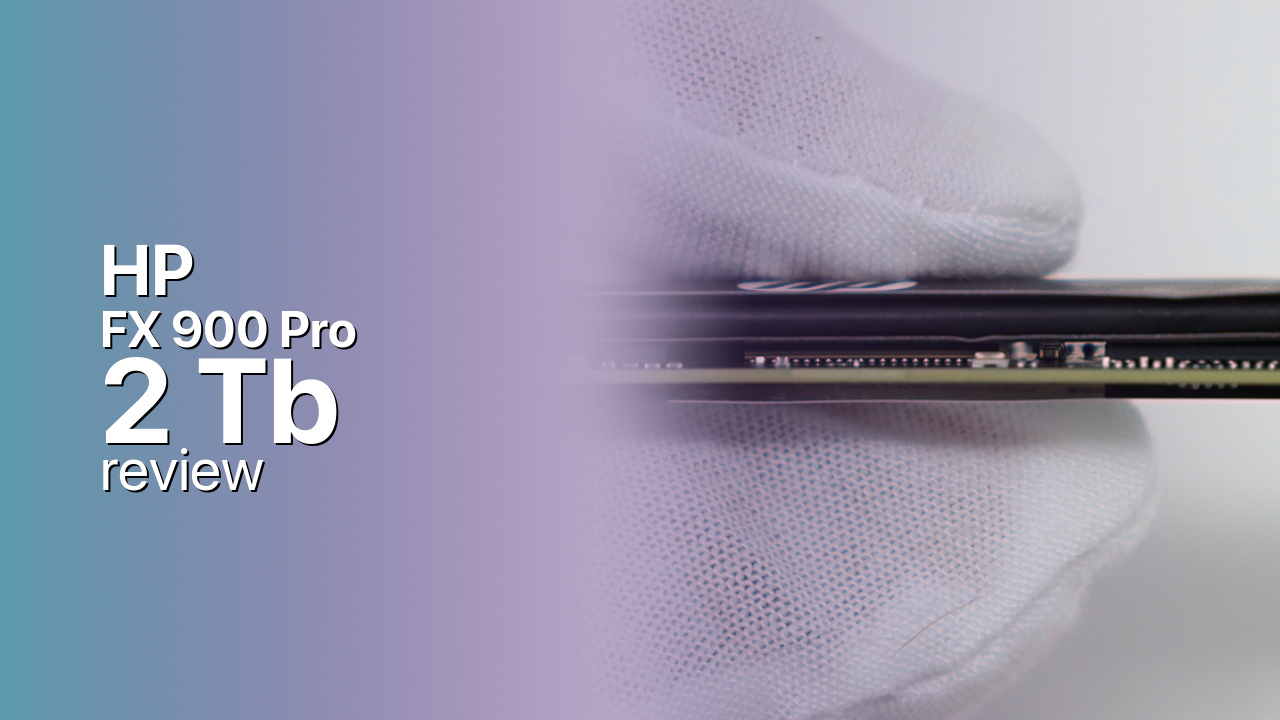
Controller & Memory
Under the hood, the FX900 Pro 2TB runs on an InnoGrit IG5236 (Rainier) 8-channel controller paired with Micron's 176-layer B47R Fortis Grade TLC NAND. Unlike most Gen4 drives that default to Phison's E18, HP went with this newer InnoGrit controller, and the combination delivers. DRAM caching is handled by DDR4-2666 chips, with a dual-sided M.2 2280 PCB layout that includes two NAND packages and one DRAM IC on each side.
The 2TB variant sits in the middle of HP's four-drive lineup, which also includes 512GB, 1TB, and 4TB capacities. Sequential speeds scale with capacity: the 2TB model is rated for 7,400 MB/s reads and 6,700 MB/s writes, while the smaller 512GB and 1TB drives drop to 7,000 and 6,400 MB/s writes respectively. Random performance is rated up to 1,344K IOPS reads and 1,122K IOPS writes for this 2TB unit.
HP opted for a thin thermal solution rather than a chunky heatsink—a graphene foam pad sits under the top label, which the manufacturer claims reduces operating temperature by around 18°C. This slim 3.2mm profile means the FX900 Pro will fit in PS5 slim expansion slots and most laptop M.2 bays, though buyers planning heavy sustained workloads should consider adding a third-party heatsink. Independent reviews consistently show the drive hovering around 40°C during typical use but climbing close to its 70°C thermal throttle point during prolonged 4K random write torture tests.
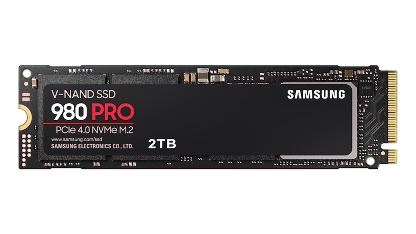
Direct competitors in this tier include the Samsung 980 Pro, WD Black SN850X, and Kingston KC3000. The FX900 Pro matches them on sequential reads and often undercuts them on price, but its 4K random write performance trails slightly behind the Phison E18-based drives in sustained workloads.
Storage Comparisons:
FX 900 Pro Performance & Benchmarks
HP rates the 2TB FX900 Pro at up to 7,400 MB/s sequential reads and 6,700 MB/s sequential writes, with random IOPS up to 1,344K reads and 1,122K writes. Independent testing using CrystalDiskMark 8 confirmed these figures, with KitGuru recording 7,523 MB/s reads and 6,705 MB/s writes—actually edging past the official ratings.
HP FX 900 Pro 2 TB vs M.2 4.0 x 4 peers
Switch between sequential throughput and random IOPS to see how this drive stacks up against other M.2 4.0 x 4 SSDs in our database. The highlighted bar is the drive on this page — click any other bar to open that drive.
- Patriot Viper PV593 1 TB: 14,500 MB/s read, 14,000 MB/s write
- Patriot Viper PV593 2 TB: 14,500 MB/s read, 14,000 MB/s write
- Patriot Viper PV593 4 TB: 14,500 MB/s read, 14,000 MB/s write
- Patriot Viper PV573 2 TB: 14,000 MB/s read, 12,000 MB/s write
- HP FX 900 Pro 2 TB (this drive): 7,400 MB/s read, 6,700 MB/s write
In real-world terms, those sequential numbers translate to game load times that are virtually indistinguishable from other top-tier PCIe 4.0 drives: Battlefield V, Call of Duty: Black Ops 4, and Overwatch all load within fractions of a second of the Samsung 980 Pro and WD Black SN850X in 3DMark Storage benchmarks. Where the FX900 Pro stands out is large-file workloads—video editors moving 4K footage or creators copying game libraries will see sustained transfers hold above 5 GB/s until the SLC cache exhausts.
That SLC cache behavior is worth noting. Like most TLC drives, the FX900 Pro uses a portion of its NAND as a pseudo-SLC buffer for fast burst writes. Independent reviews found the drive maintaining strong write performance in everyday transfers but dropping significantly during extended 4K random write sessions—the controller struggles to hit its rated 1,122K IOPS write figure in sustained tests, typically maxing out around 500K IOPS. For typical desktop use (gaming, boot drives, application loading), this limitation is irrelevant. For database servers or heavy scratch-disk workloads, a Phison E18-based competitor may hold an edge.
HP FX 900 Pro vs Competitors
See how the FX 900 Pro stacks up against other M.2 4.0 x 4 drives in our database:
Compare with rival drives:
Endurance, TBW & Warranty
HP backs the 2TB FX900 Pro with a five-year warranty and 1,200 TBW endurance rating. At a typical 40 GB/day write workload—roughly what a power user copying large files daily might generate—that 1,200 TBW translates to over 80 years of operation, far outlasting the warranty period. Even at a heavy 200 GB/day workload (video editing scratch disk, large dataset processing), you're looking at more than 16 years before hitting the TBW limit.
The warranty follows the standard industry model: five years or exhaustion of the TBW rating, whichever comes first. HP handles RMAs directly rather than routing through retailers, which can streamline the process if you ever need to file a claim. No MTBF figure is published in HP's consumer datasheet for this model, which is increasingly common as manufacturers focus on TBW as the primary reliability metric for client SSDs.
HP FX 900 Pro 2 TB Specifications
| Category | Value |
|---|---|
| Capacity [?] | 2 TB |
| Interface [?] | M.2 4.0 x 4 |
| Controller [?] | Innogrit IG5236 |
| Memory type [?] | Micron 176-layer TLC |
| DRAM [?] | DDR4 |
| Read speed (MB/s) [?] | 7400 |
| Write speed (MB/s) [?] | 6700 |
| Read IOPS [?] | 1300000 |
| Write IOPS [?] | 1100000 |
| Endurance (TBW) [?] | 1200 |
| MTBF (million hours) [?] | 2000000 |
| Warranty (years) [?] | 5 |
Verdict: Is the FX 900 Pro Worth It in 2026?
The HP FX900 Pro 2TB is a solid pick for gamers and creators who want PCIe 4.0 performance without paying flagship prices. Its sequential read speeds match the best in class, and the inclusion of a full DRAM cache keeps system responsiveness snappy. Skip it if you run sustained write-heavy workloads like database servers or 4K video rendering all day long—in those scenarios, the 4K random write performance trails behind Phison E18-based drives like the WD Black SN850X. If you're building a gaming PC, upgrading from SATA, or expanding PS5 storage, the FX900 Pro delivers the experience you'd expect from a Gen4 NVMe.
+ Pros
- 7,400 MB/s sequential reads match top-tier PCIe 4.0 drives
- 1,200 TBW endurance and 5-year warranty
- Full DRAM cache with DDR4-2666
- Slim 3.2mm profile fits PS5 and thin laptops
- InnoGrit IG5236 controller paired with Micron 176-layer TLC NAND
- Dual-sided PCB layout with four NAND packages
- Cons
- 4K random write performance trails Phison E18-based competitors
- No included heatsink—third-party cooler recommended for sustained workloads
- SLC cache exhausts quickly during large file transfers
- Temperature can approach 70°C under heavy sustained loads
Buy this or similar SSD Storage:
Video Review
HP FX900 Pro 2TB NVMe M.2 2280 Gen4 Gaming SSD - PCIe 4.0, 16 Gb/s, 3D TLC NAND Internal Soli Review