ADATA XPG Gammix S70 Blade 2TB — High-Endurance PCIe 4.0 NVMe (2026)
Quick answer
The ADATA XPG Gammix S70 Blade 2 TB is the right buy for content creators, workstation builders, and PS5 owners with a large game library who specifically value sustained-write performance and endurance over chasing the latest PCIe 5.0 ceilings.
Read: 7400 MB/s Write: 6800 MB/s Endurance: 1480 TBW Warranty: 5 years Interface: M.2 4.0 x 4
The ADATA XPG Gammix S70 Blade 2 TB is the same PCIe 4.0 platform as the 1 TB model, but its ~666 GB SLC cache and class-leading 1,480 TBW endurance make it the better pick for sustained creator workloads.
Controller & Memory
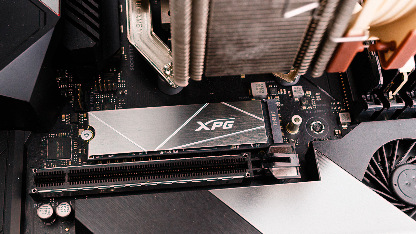
Released alongside the 1 TB version in mid-2021, the ADATA XPG Gammix S70 Blade 2 TB targets content creators, PS5 owners building larger game libraries, and workstation builders who write a lot of data. Internally it pairs Innogrit’s IG5236 “Rainier” controller — the same 8-channel PCIe 4.0 design used across the Blade line — with Micron’s 176-layer B47R 3D TLC NAND, arranged as four 512 GB packages, and two 1 GB Samsung DDR4 chips for a full 2 GB of dedicated DRAM cache (the industry-standard 1 GB-per-terabyte ratio). Unlike the 1 TB SKU, the 2 TB Blade is dual-sided — components on both faces of the M.2 2280 PCB — which is the practical difference to know about if you are squeezing this drive into a Steam Deck, ROG Ally, or an unusually thin laptop.
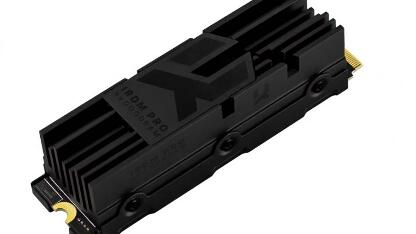
ADATA sells the 2 TB capacity both bare and with a thin aluminum heatsink (the AGAMMIXS70B-2T-CS variant) sized for the PS5 expansion slot. The Blade line is offered in 512 GB, 1 TB, 2 TB and 4 TB capacities, and the 2 TB sits at the price-per-gigabyte sweet spot for most enthusiast buyers — large enough to hold a contemporary game library plus a working set, small enough to not feel wasted on a boot drive. Its roughly 666 GB pseudo-SLC cache (about one-third of the total capacity, the standard ADATA-tier allocation) is what separates the 2 TB most clearly from the 1 TB variant in day-to-day use.
At launch the 2 TB Blade competed primarily with the Samsung 980 Pro 2 TB and WD Black SN850 2 TB — both 7,000 MB/s rated drives with 1,200 TBW endurance, meaningfully lower than the Blade’s 1,480 TBW. Against the Sabrent Rocket 4 Plus 2 TB and Kingston KC3000 2 TB (some of which share the same IG5236 controller), the Blade trades nearly identical sequential performance for the same endurance advantage. Today, with PCIe 5.0 alternatives like the Crucial T705 and Samsung 9100 Pro shipping, the S70 Blade reads as a high-endurance mid-tier choice rather than a flagship.
Storage Comparisons:
XPG Gammix S70 Blade Performance & Benchmarks
Rated sequential performance for the 2 TB variant is 7,400 MB/s read and 6,800 MB/s write — slightly faster on writes than the 1 TB SKU’s 6,400 MB/s, thanks to fuller eight-channel die population at this capacity. Random I/O is rated at 650,000 read and 740,000 write IOPS, matching the 1 TB and translating to snappy small-file access for OS duties, application launches, and the project-file workloads typical of game development, code repositories, or DCC tooling like Blender and DaVinci Resolve.
ADATA XPG Gammix S70 Blade 2 TB vs M.2 4.0 x 4 peers
Switch between sequential throughput and random IOPS to see how this drive stacks up against other M.2 4.0 x 4 SSDs in our database. The highlighted bar is the drive on this page — click any other bar to open that drive.
- Patriot Viper PV593 1 TB: 14,500 MB/s read, 14,000 MB/s write
- Patriot Viper PV593 2 TB: 14,500 MB/s read, 14,000 MB/s write
- Patriot Viper PV593 4 TB: 14,500 MB/s read, 14,000 MB/s write
- Patriot Viper PV573 2 TB: 14,000 MB/s read, 12,000 MB/s write
- ADATA XPG Gammix S70 Blade 2 TB (this drive): 7,400 MB/s read, 6,800 MB/s write
The bigger story at 2 TB is sustained-write headroom. The dynamic SLC cache is roughly one-third of total capacity — about 666 GB of pseudo-SLC before the drive falls back to direct-to-TLC writes in the 1,500–2,000 MB/s range. Independent reviewers report that even 450 GB continuous-write tests stay within cache, where 1 TB-class drives have throttled long before. For uncompressed 4K capture, large dataset ingest, or daily 100 GB+ working transfers, the 2 TB Blade is a noticeably better fit than its smaller sibling.
On the PS5 specifically, Sony’s storage benchmark measures the 2 TB Blade at around 6,100 MB/s — comfortably above the console’s 5,500 MB/s recommended minimum. Thermals with the supplied aluminum heatsink stay in line with the 1 TB SKU; the bigger NAND population does not appreciably raise temperatures because the controller, not the flash, dominates heat output. For gaming load times the difference between this drive and a PCIe 5.0 flagship is still imperceptible in most modern titles.
ADATA XPG Gammix S70 Blade vs Competitors
See how the XPG Gammix S70 Blade stacks up against other M.2 4.0 x 4 drives in our database:
Compare with rival drives:
Endurance, TBW & Warranty
ADATA covers the 2 TB S70 Blade with a 5-year limited warranty bounded by 1,480 TBW of writes — whichever comes first. That endurance figure is roughly 25% higher than the Samsung 980 Pro 2 TB and WD Black SN850 2 TB (both 1,200 TBW), and translates to about 810 GB of writes per day across the full five years — a budget no consumer workload approaches. At a more typical 60 GB/day pattern (heavier than the average user, but realistic for a content creator), the drive would take roughly 67 years to exhaust its TBW budget, long after the controller or NAND would have aged out for other reasons.
The drive is also rated at 2 million hours MTBF, which is a population-reliability statistic for batch testing rather than a per-unit lifespan promise. Warranty service is handled through ADATA’s RMA portal directly rather than through the retailer after the standard return window has elapsed — keep proof of purchase for the full coverage period.
ADATA XPG Gammix S70 Blade 2 TB Specifications
| Category | Value |
|---|---|
| Capacity [?] | 2 TB |
| Interface [?] | M.2 4.0 x 4 |
| Controller [?] | Innogrit Rainer IG5236 |
| Memory type [?] | Micron 3D TLC |
| DRAM [?] | SLC Caching and DRAM cache buffer |
| Read speed (MB/s) [?] | 7400 |
| Write speed (MB/s) [?] | 6800 |
| Read IOPS [?] | 650000 |
| Write IOPS [?] | 740000 |
| Endurance (TBW) [?] | 1480 |
| MTBF (million hours) [?] | 2 |
| Warranty (years) [?] | 5 |
Verdict: Is the XPG Gammix S70 Blade Worth It in 2026?
The ADATA XPG Gammix S70 Blade 2 TB is the right buy for content creators, workstation builders, and PS5 owners with a large game library who specifically value sustained-write performance and endurance over chasing the latest PCIe 5.0 ceilings. Its mix of 7,400 MB/s reads, the ~666 GB SLC cache, the 2 GB DRAM buffer, and a class-leading 1,480 TBW endurance still earns it a place in 2026 at the mid-tier price band. Skip it if you specifically need a single-sided drive for a Steam Deck, ROG Ally, or thin laptop — go with the 1 TB Blade instead, or a single-sided WD Black SN850X 2 TB. The closest direct alternative is the Samsung 990 Pro 2 TB, which leads on random IOPS but trails on TBW. Within the PCIe 4.0 tier, the 2 TB Blade is the endurance-focused enthusiast pick of its generation.
+ Pros
- Class-leading 1,480 TBW endurance, ~25% above Samsung 980 Pro 2 TB
- ~666 GB SLC cache absorbs 450 GB+ continuous-write workloads
- Full 2 GB Samsung DDR4 DRAM cache
- Innogrit IG5236 controller hits 7,400 MB/s rated reads
- 176-layer Micron TLC NAND at 2 TB, not QLC
- 5-year warranty serviced direct via ADATA RMA
- Cons
- Dual-sided PCB — incompatible with Steam Deck / ROG Ally single-sided slots
- Bare variant ships without a heatsink for desktop installs
- PCIe 4.0 platform — PCIe 5.0 drives now lead synthetic benchmarks
- ADATA SSD Toolbox software less polished than Samsung Magician
- Premium tier price-per-GB vs. budget 2 TB QLC competitors
Buy this or similar SSD Storage:



Video Review
XPG GAMMIX S70 PCIe Gen4x4 M.2 2280 SSD Review