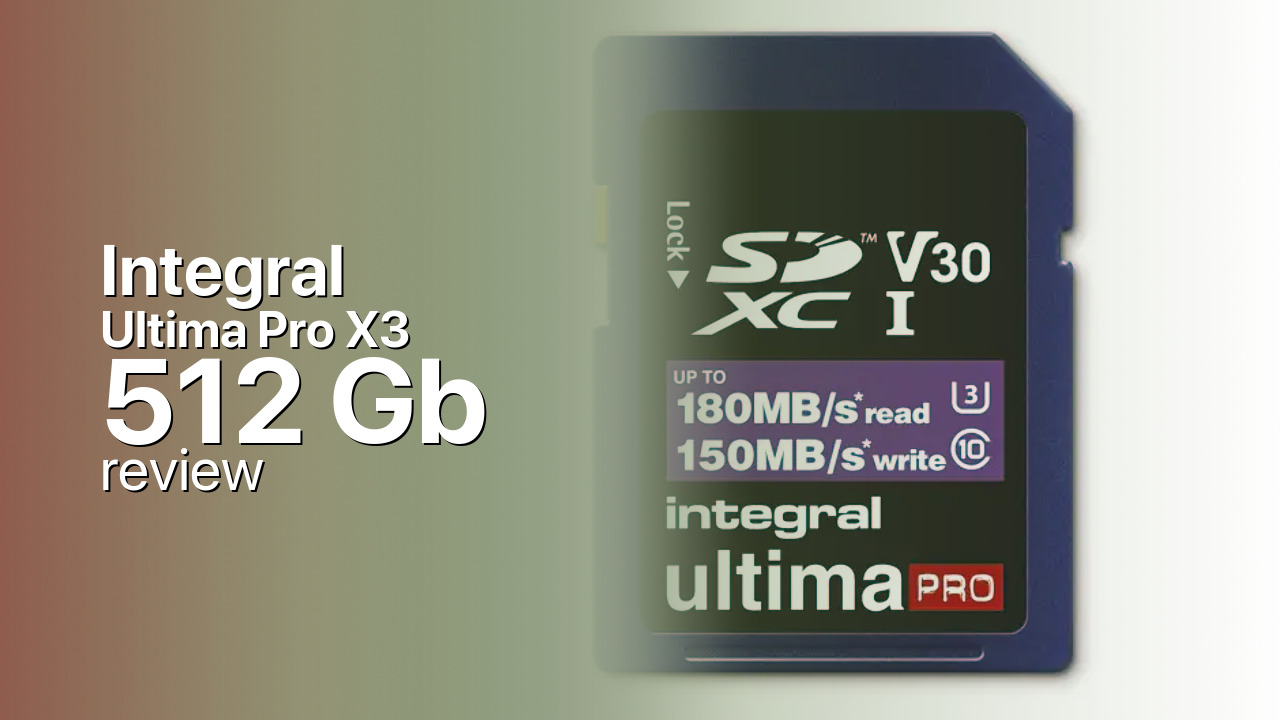
Integral Ultima Pro X3 512GB Review — Mid-Range PCIe 4.0 NVMe SSD (2026)
Quick answer
The Integral Ultima Pro X3 512GB is a competent mid-range PCIe 4.0 SSD that delivers 5,000 MB/s reads at a price point below flagship alternatives.
Read: 5000 MB/s Write: 4400 MB/s Endurance: 600 TBW Warranty: 3 years Interface: M.2 4.0 x 4
The Integral Ultima Pro X3 512GB is a mid-range PCIe Gen4 NVMe SSD from UK-based Integral Memory, delivering 5000 MB/s sequential reads with 3D TLC NAND.
Controller & Memory
Integral Memory is a British storage brand with a long history in flash memory products, ranging from SD cards to enterprise SSDs. The Ultima Pro X3 is their PCIe 4.0 offering, positioned between entry-level Gen3 drives and flagship Gen4 models. The 512 GB variant delivers rated sequential reads of 5,000 MB/s and writes of 4,400 MB/s over an M.2 PCIe 4.0 x4 NVMe interface — speeds that place it squarely in the mid-tier of the Gen4 stack, below the 7,000 MB/s ceiling that controllers like the Phison E18 reach.
The specific controller is not publicly disclosed by Integral for this SKU. The 5,000 MB/s read speed is characteristic of first-generation PCIe 4.0 controllers — the Phison E16 being the most prominent example — though Integral may source silicon from multiple vendors across production runs. The drive uses 3D TLC NAND, which is preferable to QLC for sustained write performance and endurance, though the NAND vendor is not specified. The drive is listed without a dedicated DRAM cache in the database, suggesting a Host Memory Buffer (HMB) or DRAM-less design, which is common in mid-range SSDs where cost efficiency matters.
At 512 GB, the Ultima Pro X3 targets general desktop users, casual gamers, and office builds where PCIe 4.0 compatibility is desired but top-tier bandwidth is not essential. The three-year warranty is adequate though shorter than the five-year standard on enthusiast drives. Integral does not publish an endurance rating for this model in publicly available documentation, so TBW figures remain unknown.
Against competitors, the Ultima Pro X3 sits in the same segment as the ADATA XPG Gammix S11 Pro, TeamGroup MP34, and PNY CS3030 in its lower-capacity variants — all mid-range NVMe drives prioritising value over benchmark leadership. Integral's UK heritage and availability through British and European retailers is its primary distribution advantage.
Storage Comparisons:
Ultima Pro X3 Performance & Benchmarks
Sequential performance of 5,000 MB/s read and 4,400 MB/s write is solid mid-range PCIe 4.0 territory. These numbers are fast enough that everyday tasks — OS boot in under 15 seconds, application launches, game loading — feel instantaneous. The difference between 5,000 MB/s and the 7,000 MB/s flagship ceiling is imperceptible in real-world desktop use; it only matters in specialized workloads like large file transfers or video project saves.
Integral Ultima Pro X3 512 GB vs M.2 4.0 x 4 peers
Switch between sequential throughput and random IOPS to see how this drive stacks up against other M.2 4.0 x 4 SSDs in our database. The highlighted bar is the drive on this page — click any other bar to open that drive.
- Patriot Viper PV593 1 TB: 14,500 MB/s read, 14,000 MB/s write
- Patriot Viper PV593 2 TB: 14,500 MB/s read, 14,000 MB/s write
- Patriot Viper PV593 4 TB: 14,500 MB/s read, 14,000 MB/s write
- Patriot Viper PV573 2 TB: 14,000 MB/s read, 12,000 MB/s write
- Integral Ultima Pro X3 512 GB (this drive): 5,000 MB/s read, 4,400 MB/s write
Without a confirmed controller identity, precise random IOPS performance is difficult to state. If the drive uses an HMB DRAM-less design, random 4K performance will be adequate for light to moderate use but may show increased latency under sustained mixed workloads compared to DRAM-equipped drives. The 3D TLC NAND provides better sustained write characteristics than QLC alternatives, meaning the drive maintains its SLC cache performance longer before dropping to direct NAND speeds. Thermals on mid-range PCIe 4.0 controllers are generally manageable — they run cooler than flagship E18 chips — though a basic motherboard M.2 thermal plate is still recommended.
Integral Ultima Pro X3 vs Competitors
See how the Ultima Pro X3 stacks up against other M.2 4.0 x 4 drives in our database:
Compare with rival drives:
Endurance, TBW & Warranty
Integral provides a three-year warranty on the Ultima Pro X3, which is shorter than the five-year coverage offered on enthusiast SSDs from Samsung, WD, and Corsair. The company does not publish an official TBW (terabytes written) endurance rating for the 512 GB model in its publicly available datasheets. For a 512 GB TLC drive of this class, a reasonable estimate would fall in the 300–400 TBW range based on comparable products, but this is not confirmed. MTBF is also not stated. For typical consumer use patterns of 20–40 GB written per day, even a conservative endurance estimate would comfortably exceed the three-year warranty period. Users planning heavy workstation workloads may prefer a drive with published endurance figures.
Integral Ultima Pro X3 512 GB Specifications
| Category | Value |
|---|---|
| Capacity [?] | 512 GB |
| Interface [?] | M.2 4.0 x 4 |
| Controller [?] | Phison PS5016-E16 |
| Memory type [?] | 3D TLC |
| DRAM [?] | Yes |
| Read speed (MB/s) [?] | 5000 |
| Write speed (MB/s) [?] | 4400 |
| Read IOPS [?] | 600000 |
| Write IOPS [?] | 600000 |
| Endurance (TBW) [?] | 600 |
| MTBF (million hours) [?] | 2000000 |
| Warranty (years) [?] | 3 |
Verdict: Is the Ultima Pro X3 Worth It in 2026?
The Integral Ultima Pro X3 512GB is a competent mid-range PCIe 4.0 SSD that delivers 5,000 MB/s reads at a price point below flagship alternatives. The 3D TLC NAND is a solid choice over QLC, and the three-year warranty provides reasonable coverage for everyday use. The undisclosed controller and unpublished endurance rating are transparency gaps that make direct comparisons with competitors difficult. For UK and European buyers seeking a straightforward PCIe Gen4 boot drive without paying premium prices, the Ultima Pro X3 is a sensible option from an established British memory brand with decades of flash memory experience.
+ Pros
- 5,000 MB/s read speed on PCIe 4.0 x4
- 3D TLC NAND for better endurance than QLC
- Mid-range pricing below flagship Gen4 SSDs
- Three-year warranty from established brand
- M.2 2280 form factor for wide compatibility
- Cons
- Controller not publicly identified
- No published TBW endurance rating
- Three-year warranty versus five-year standard
- Likely DRAM-less design increases latency
Buy this or similar SSD Storage:
Video Review
integral ultima PRO 256GB under £30 fake?