Intel Optane SSD 905P 380GB Review (2026)
Quick answer
The Intel Optane 905P 380GB is a specialized drive for users who need the lowest possible random I/O latency in a consumer form factor.
Read: 2600 MB/s Write: 2200 MB/s Endurance: 8760 TBW Warranty: 5 years Interface: PCIe 3.0 x 4 or U.2 2.5"
The Intel Optane 905P 380GB is the entry capacity of Intel's second-generation Optane consumer drive, pairing second-gen 3D XPoint with marginally higher throughput and endurance than the 900P it replaces.
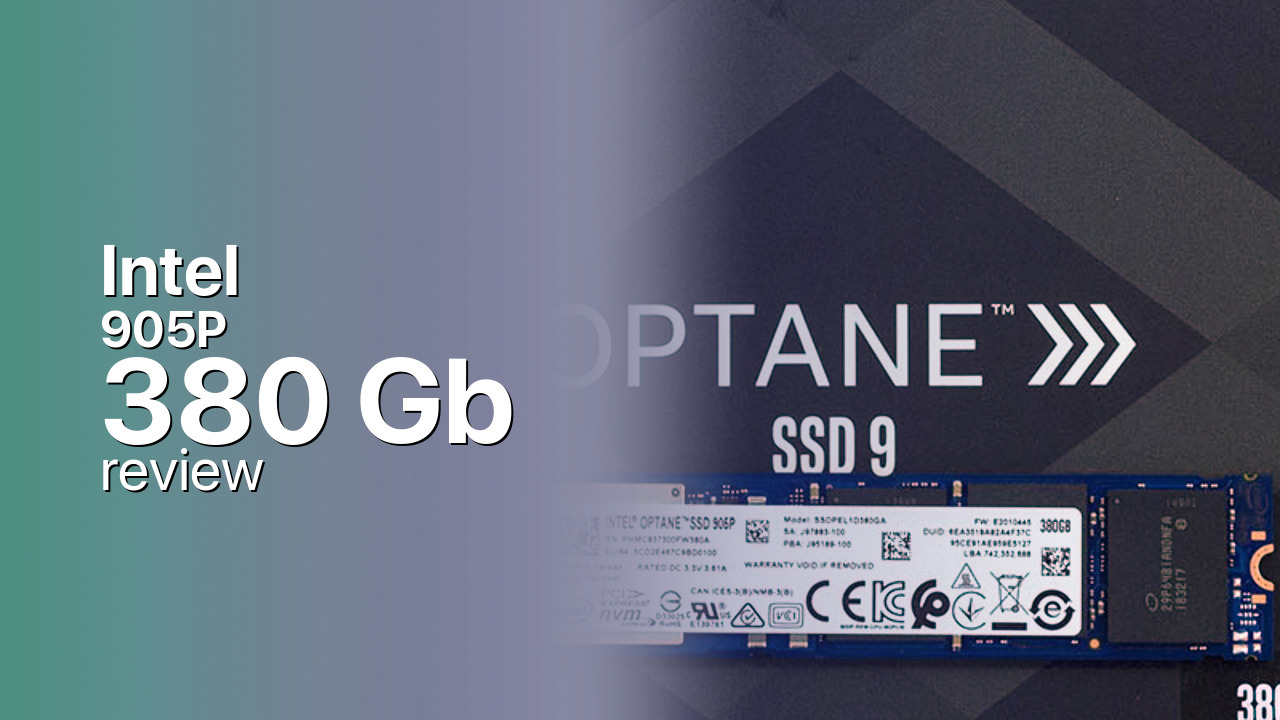
Controller & Memory
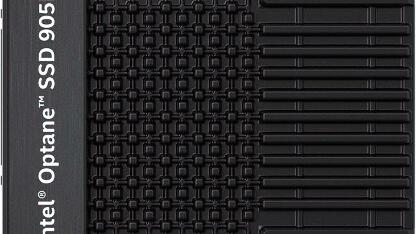
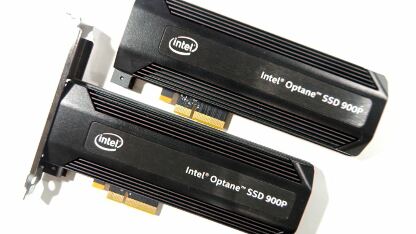
The 905P 380 GB uses Intel's second-generation 3D XPoint memory with the Intel EAU01D76 controller. Like the 900P, it is a phase-change memory device with bit-addressable media that delivers consistent random I/O latency without relying on an SLC write cache. The 905P ships in either an add-in card (AIC) or U.2 2.5-inch form factor over PCIe 3.0 x4.
Compared to the 900P, the 905P offers slightly higher sequential throughput (2,600 vs 2,500 MB/s reads, 2,200 vs 2,000 MB/s writes) and improved random IOPS (575,000 vs 550,000 reads, 550,000 vs 500,000 writes). Endurance is rated at 8,760 TBW, matching the 900P 480 GB. The 380 GB capacity targets the same niche as the 900P 280 GB but with more usable space.
The 905P also introduced an M.2 22110 form factor option in some capacities, though the 380 GB model is primarily AIC/U.2. It competes against nothing directly -- there is no other consumer 3D XPoint drive at this tier from a competing brand.
Storage Comparisons:
905P Performance & Benchmarks
Sequential reads hit 2,600 MB/s and writes 2,200 MB/s, a modest improvement over the 900P. Random IOPS reach 575,000 reads and 550,000 writes. The real advantage, as with all Optane drives, is latency consistency: these IOPS numbers are sustained regardless of queue depth, drive fill level, or write history. There is no SLC cache to fill, no garbage collection stall, and no performance cliff.
Intel 905P 380 GB vs PCIe 3.0 x 4 or U.2 2.5" peers
Switch between sequential throughput and random IOPS to see how this drive stacks up against other PCIe 3.0 x 4 or U.2 2.5" SSDs in our database. The highlighted bar is the drive on this page — click any other bar to open that drive.
- Intel 905P 380 GB (this drive): 2,600 MB/s read, 2,200 MB/s write
- Intel 905P 480 GB: 2,600 MB/s read, 2,200 MB/s write
- Intel 905P 960 GB: 2,600 MB/s read, 2,200 MB/s write
- Intel 900P 280 GB: 2,500 MB/s read, 2,000 MB/s write
- Intel 900P 480 GB: 2,500 MB/s read, 2,000 MB/s write
Independent reviewers found the 905P slightly faster than the 900P across most benchmarks, consistent with the rated spec improvements. HotHardware noted the 905P dominated NAND-based SSDs in real-world trace tests involving heavy random I/O, though its sequential throughput fell behind mainstream TLC NVMe drives like the Samsung 970 Pro.
For workloads that are random-I/O-bound rather than sequential-bandwidth-bound, the 905P delivers the best consumer SSD performance available.
Endurance, TBW & Warranty
Intel rates the 905P 380 GB at 8,760 TBW over its 5-year warranty. That equals roughly 4,789 GB of writes per day -- approximately 12.6 full drive writes daily. 3D XPoint's write endurance is far higher than NAND flash, which is why this figure is achievable. For any consumer or professional workload, the endurance limit is effectively unreachable. The 1.6 million hour MTBF is a population-level reliability estimate. Intel handles warranty through its standard RMA process.
Intel 905P 380 GB Specifications
| Category | Value |
|---|---|
| Capacity [?] | 380 GB |
| Interface [?] | PCIe 3.0 x 4 or U.2 2.5" |
| Controller [?] | Intel EAU01D76 |
| Memory type [?] | Intel 3D XPoint |
| DRAM [?] | No |
| Read speed (MB/s) [?] | 2600 |
| Write speed (MB/s) [?] | 2200 |
| Read IOPS [?] | 575000 |
| Write IOPS [?] | 550000 |
| Endurance (TBW) [?] | 8760 |
| MTBF (million hours) [?] | 1.6 |
| Warranty (years) [?] | 5 |
Verdict: Is the 905P Worth It in 2026?
The Intel Optane 905P 380GB is a specialized drive for users who need the lowest possible random I/O latency in a consumer form factor. Database professionals, developers with heavy compile workloads, and workstation users with random-I/O-bound tasks are the target audience. For general consumer use including gaming and content creation, a high-end TLC NVMe drive like the Samsung 990 Pro or WD Black SN850X delivers more sequential bandwidth and vastly more capacity per dollar. The 905P has been discontinued, making it a niche purchase from remaining stock.
+ Pros
- 575,000 random read IOPS with consistent latency
- 8,760 TBW endurance
- 2,600 MB/s sequential reads
- No SLC cache, uniform performance when full
- 3D XPoint memory with symmetric read/write latency
- Slightly faster than the 900P across all metrics
- Cons
- 380 GB capacity is small
- Very expensive per GB
- AIC or U.2 form factor limits compatibility
- Not compatible with PS5 or laptops
- Discontinued, only remaining stock available
- Sequential speed below mainstream TLC NVMe
Buy this or similar SSD Storage:



Video Review
Intel Optane 905P 380GB 110mm M.2 NVMe SSD Unboxing