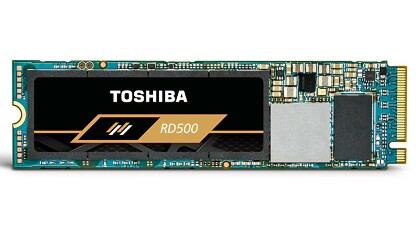
Kioxia BG4 512GB Review — Practical-Capacity OEM NVMe SSD (2026)
Quick answer
The Kioxia BG4 512GB is the most practical variant of the BG4 lineup — 512 GB provides enough space for real-world use, the 2,300 MB/s reads are solid for PCIe 3.0, and the 3D TLC NAND offers better endurance than QLC OEM alternatives.
Read: 2300 MB/s Write: 1800 MB/s Endurance: 480 TBW Warranty: 5 years Interface: M.2 3.0 x 4 2230 S3
The Kioxia BG4 512GB is the practical-capacity variant of Kioxia's ultra-compact OEM NVMe — 512 GB of 3D TLC storage in the tiny M.2 2230 form factor, with significantly better write performance than the 128 GB model.
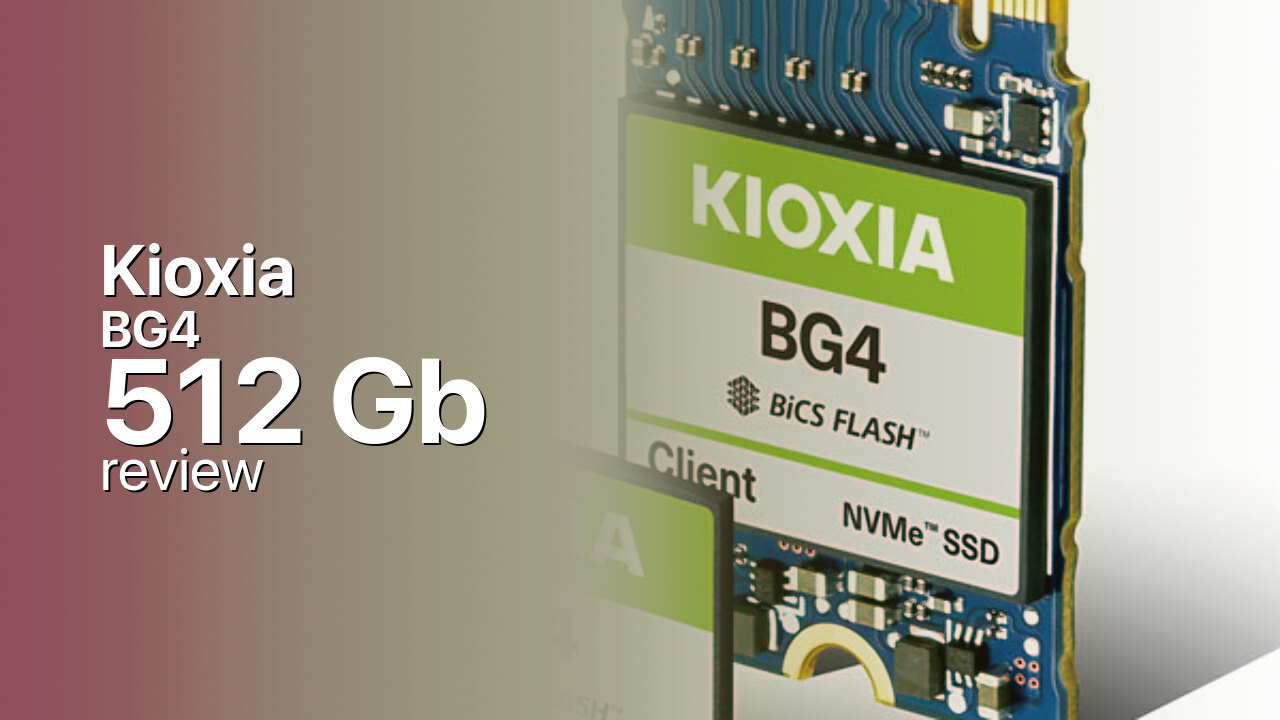
Controller & Memory
The BG4 512GB shares the same single-chip design, in-house Kioxia controller, and Toshiba 3D TLC NAND as the 128 GB variant, but the quadrupled capacity means four times as many NAND dies for the controller to address. This dramatically improves sustained write performance — while the rated 1,800 MB/s writes match the 128 GB model, the 512 GB's larger SLC cache and extra dies mean it maintains peak speeds much longer during sustained transfers. The DRAM-less architecture with HMB (host memory buffer) remains consistent across the lineup.
At 512 GB, the BG4 transforms from a cramped boot drive into a genuinely usable primary storage solution. After the OS and essential applications, roughly 420–440 GB remains — enough for a substantial photo library, several video projects, or a modest game collection. For users of Microsoft Surface devices, Lenovo ThinkPads, and other ultrabooks that ship with the BG4, the 512 GB variant is the capacity that makes the system genuinely useful without relying heavily on external or cloud storage.
The M.2 2230 form factor (22mm x 30mm) is the BG4's defining feature — it's one of the smallest NVMe SSDs available, fitting in devices where a standard 2280 M.2 drive simply won't fit. The single-chip design packages the controller and 3D TLC NAND together, saving space and reducing power consumption — critical for battery-powered ultrabooks and tablets.
The BG4 is an OEM-only drive, not available through normal retail channels. It competes with the WD SN530 512 GB, Samsung PM991 512 GB, and Intel 660p 512 GB in the OEM ultrabook segment. The 3D TLC NAND gives it an endurance advantage over QLC-based OEM alternatives, and the HMB design keeps power consumption low. Buyers sourcing this drive through secondary markets should verify warranty status, as OEM warranties typically don't transfer to end users.
Storage Comparisons:
BG4 Performance & Benchmarks
The Kioxia BG4 512GB is rated at up to 2,300 MB/s sequential reads and 1,800 MB/s sequential writes over its PCIe 3.0 x4 NVMe interface. The read speed is fixed by the controller and matches all BG4 capacities. The write speed is also rated identically, but the 512 GB variant's advantage is in sustained performance — with four times the NAND dies of the 128 GB model, the controller can maintain peak write speeds through significantly larger transfers before the SLC cache fills. The DRAM-less design with HMB means random 4K performance is modest — typically 40,000–70,000 IOPS reads and 30,000–50,000 IOPS writes, better than the 128 GB thanks to more NAND parallelism. The single-chip design is notably power-efficient, which is the BG4's primary design goal. Tom's Hardware's review praised the BG4's 'power-efficient' operation and 'speedy application performance,' noting that the DRAM-less design doesn't noticeably impact everyday responsiveness. Sustained write performance was rated as 'decent' — the 3D TLC maintains reasonable speeds after the SLC cache fills, unlike QLC drives that drop dramatically. For a 512 GB OEM drive in an ultrabook or tablet, the BG4's performance is well-matched to its role. It handles everyday computing — booting, application launches, web browsing, document editing — with responsive performance. For video editing or large file transfers, the 512 GB capacity's larger cache sustains performance better than the 128 GB model. Independent benchmark reviews of the BG4 are limited to a few tech publications, but the consensus is that it delivers solid efficiency-oriented performance for compact systems.
Kioxia BG4 512 GB vs M.2 3.0 x 4 2230 S3 peers
Switch between sequential throughput and random IOPS to see how this drive stacks up against other M.2 3.0 x 4 2230 S3 SSDs in our database. The highlighted bar is the drive on this page — click any other bar to open that drive.
- Kioxia BG4 512 GB (this drive): 2,300 MB/s read, 1,800 MB/s write
- Kioxia BG4 128 GB: 2,300 MB/s read, 1,800 MB/s write
- Kioxia BG4 256 GB: 2,300 MB/s read, 1,800 MB/s write
- Kioxia BG4 1 TB: 2,300 MB/s read, 1,800 MB/s write
Endurance, TBW & Warranty
The Kioxia BG4 is an OEM-only drive, so warranty terms depend on the original equipment manufacturer rather than Kioxia directly. The DB lists a 5-year warranty, which aligns with Kioxia's standard OEM contract terms for the BG4 series. However, end-user warranty coverage varies — if your laptop came with the BG4 pre-installed, your laptop manufacturer's warranty applies. If you sourced the drive separately from the secondary market, warranty coverage may be limited or nonexistent. Kioxia does not publish a TBW (terabytes written) endurance rating for the BG4 in public documentation. For a 512 GB drive using 3D TLC NAND, endurance is likely in the 200–350 TBW range based on comparable OEM drives. At a typical 25–50 GB per day write workload, the drive would last 11–38 years before reaching its estimated TBW limit. The 3D TLC NAND provides better endurance than QLC alternatives commonly found in OEM drives. An MTBF figure is not publicly published. For buyers sourcing this drive through secondary markets, the lack of direct-to-consumer warranty support is a consideration. The drive's inherent durability — backed by Kioxia's reputation as one of the world's largest NAND manufacturers — is the primary assurance of longevity.
Kioxia BG4 512 GB Specifications
| Category | Value |
|---|---|
| Capacity [?] | 512 GB |
| Interface [?] | M.2 3.0 x 4 2230 S3 |
| Controller [?] | Toshiba |
| Memory type [?] | Toshiba 3D TLC |
| DRAM [?] | HMB |
| Read speed (MB/s) [?] | 2300 |
| Write speed (MB/s) [?] | 1800 |
| Read IOPS [?] | 390000 |
| Write IOPS [?] | 200000 |
| Endurance (TBW) [?] | 480 |
| MTBF (million hours) [?] | 1.5 |
| Warranty (years) [?] | 5 |
Verdict: Is the BG4 Worth It in 2026?
The Kioxia BG4 512GB is the most practical variant of the BG4 lineup — 512 GB provides enough space for real-world use, the 2,300 MB/s reads are solid for PCIe 3.0, and the 3D TLC NAND offers better endurance than QLC OEM alternatives. The ultra-compact 2230 form factor fits devices where no other NVMe drive can. But the DRAM-less design caps random I/O performance, the OEM-only nature means inconsistent warranty support, and DIY builders are better served by retail drives with documented specs and direct warranty coverage. For users upgrading a laptop that uses the BG4, the 512 GB is the capacity that makes the system genuinely useful.
+ Pros
- 512 GB practical for real-world use
- Ultra-compact M.2 2230 form factor
- 2,300 MB/s reads for PCIe 3.0
- 3D TLC NAND better than QLC alternatives
- Power-efficient single-chip design
- Cons
- DRAM-less limits random I/O performance
- OEM-only — no direct retail warranty
- Not available through normal retail channels
- HMB borrows system RAM
Buy this or similar SSD Storage:



Video Review
The TINY 1TB SSD