Silicon Power UD70 2TB QLC NVMe SSD Review (2026)
Quick answer
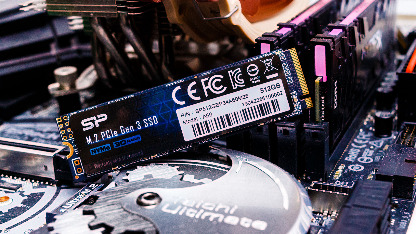
The Silicon Power UD70 2TB is a capacity-first QLC NVMe drive that delivers 3,400 MB/s reads at the lowest cost per GB in the UD70 range.
Read: 3400 MB/s Write: 3000 MB/s Endurance: 530 TBW Warranty: 5 years Interface: M.2 3.0 x 4
The Silicon Power UD70 2TB is the range-topping capacity of this budget QLC NVMe line, offering 3,400 MB/s reads and the highest sustained-write headroom in the UD70 family thanks to more NAND die for parallel writes.
Controller & Memory
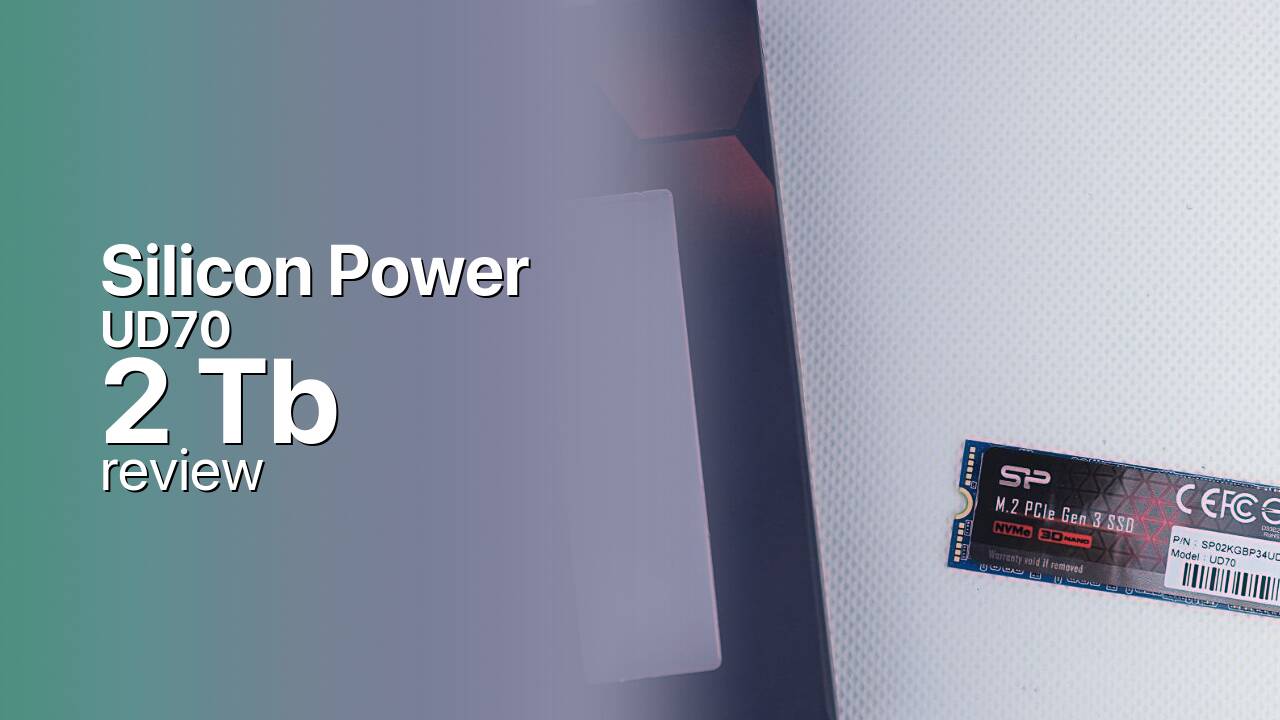
The UD70 2TB pairs the Phison PS5012-E12S-32 controller with Micron 3D QLC NAND and a DRAM cache buffer. QLC flash stores four bits per cell, maximizing density and minimizing cost, but at the expense of write endurance and native write speed. The 2TB model is the largest in the UD70 range, which also includes 500GB and 1TB capacities.
At 2TB, the drive benefits from having more NAND die available for parallel writes compared to smaller capacities. This means the SLC cache is larger (roughly 80–150 GB before folding) and the native QLC write speed after cache exhaustion is higher — typically 200–300 MB/s versus 100–200 MB/s on the 1TB model. Rated sequential reads are 3,400 MB/s and writes are 3,000 MB/s, matching the rest of the UD70 range.
The drive uses a double-sided M.2 2280 PCB to fit all the QLC packages, so verify clearance in slim laptop M.2 slots before purchasing. No heatsink is included. The UD70 2TB competes with other high-capacity QLC drives like the Crucial P1 2TB and Intel 660p 2TB, as well as entry-level TLC drives that may cost slightly more but offer better sustained write consistency.
Storage Comparisons:
UD70 Performance & Benchmarks
The UD70 2TB is rated for 3,400 MB/s sequential reads and 3,000 MB/s sequential writes. Within the dynamic SLC cache, the drive hits these numbers consistently. The 2TB model's larger cache absorbs more data before write speeds drop to native QLC rates, giving it the best sustained-write profile in the UD70 range. Native QLC writes on the 2TB model typically land around 200–300 MB/s after the cache fills — still below SATA SSD speeds, but better than the smaller capacities.
Silicon Power UD70 2 TB vs M.2 3.0 x 4 peers
Switch between sequential throughput and random IOPS to see how this drive stacks up against other M.2 3.0 x 4 SSDs in our database. The highlighted bar is the drive on this page — click any other bar to open that drive.
- ADATA SX 8800 Pro 512 GB: 3,500 MB/s read, 2,700 MB/s write
- ADATA SX 8800 Pro 1 TB: 3,500 MB/s read, 2,700 MB/s write
- ADATA XPG Spectrix S40G RGB 256 GB: 3,500 MB/s read, 3,000 MB/s write
- ADATA XPG Spectrix S40G RGB 512 GB: 3,500 MB/s read, 3,000 MB/s write
- Silicon Power UD70 2 TB (this drive): 3,400 MB/s read, 3,000 MB/s write
Read performance is consistent across the UD70 range regardless of capacity. Gaming load times, OS boot, and application launches are essentially the same as on any PCIe 3.0 NVMe drive. The 2TB capacity is large enough to hold 30–50 modern AAA titles, making it suitable as a combined boot and game drive. The practical limitation remains QLC's write characteristics: anyone regularly moving multi-gigabyte files or writing large datasets will notice the cache-exhaustion drop-off.
Silicon Power UD70 vs Competitors
See how the UD70 stacks up against other M.2 3.0 x 4 drives in our database:
Compare with rival drives:
Endurance, TBW & Warranty
Silicon Power covers the UD70 2TB with a five-year limited warranty. No specific TBW rating is published for the UD70 series. QLC NAND has lower write endurance than TLC — approximately 1,000 program-erase cycles versus 3,000 for TLC — but the 2TB capacity provides a large pool of cells to distribute writes across. For read-heavy desktop use, the drive should last well beyond the warranty period. Sustained-write-heavy workloads will deplete the write budget faster. Warranty service is handled through the retailer or Silicon Power's RMA portal.
Silicon Power UD70 2 TB Specifications
| Category | Value |
|---|---|
| Capacity [?] | 2 TB |
| Interface [?] | M.2 3.0 x 4 |
| Controller [?] | Phison PS5012-E12S-32 |
| Memory type [?] | Micron 3D QLC |
| DRAM [?] | SLC Caching DRAM Buffer |
| Read speed (MB/s) [?] | 3400 |
| Write speed (MB/s) [?] | 3000 |
| Read IOPS [?] | 250000 |
| Write IOPS [?] | 650000 |
| Endurance (TBW) [?] | 530 |
| MTBF (million hours) [?] | 1.8 |
| Warranty (years) [?] | 5 |
Verdict: Is the UD70 Worth It in 2026?
The Silicon Power UD70 2TB is a capacity-first QLC NVMe drive that delivers 3,400 MB/s reads at the lowest cost per GB in the UD70 range. The 2TB model is the best-performing variant thanks to more NAND die for parallel writes and a larger SLC cache. The QLC trade-off — slow writes after cache exhaustion and lower endurance — is the same as on all QLC drives. For budget builders who need 2TB of NVMe storage primarily for reading (game libraries, media storage, general desktop use), the UD70 gets the job done. Anyone who writes large files regularly should invest in a TLC alternative like the Silicon Power P34A80 or the WD Blue SN570, which offer more consistent write performance.
+ Pros
- 3,400 MB/s sequential reads on PCIe 3.0
- 2TB capacity at a competitive price per GB
- DRAM cache buffer included
- Larger SLC cache and better sustained writes than smaller UD70 models
- Five-year warranty coverage
- Cons
- QLC NAND — slow sustained writes after cache fills
- No published TBW endurance rating
- QLC write endurance lower than TLC alternatives
- Double-sided PCB may limit slim-laptop compatibility
- Not suitable for write-heavy workloads
Buy this or similar SSD Storage:
Video Review
Silicon Power UD70 2TB Gen3x4 M.2 SSD - review