Lite-On MU X1 2TB SSD — In-Depth Review & Specs (2026)
Quick answer
The Lite-On MU X1 2TB is the ultimate expression of the Phison E12 platform: full 8-channel throughput, 2 GB of DDR4 DRAM, 2 TB of TLC capacity, and 2,500 TBW endurance — all in a single-sided M.2 2280 form factor.
Read: 3400 MB/s Write: 3000 MB/s Endurance: 2500 TBW Warranty: 3 years Interface: M.2 3.0 x 4
The Lite-On MU X1 2TB is the maximum-capacity configuration of Lite-On's Phison E12 OEM NVMe platform. It combines the proven PS5012-E12 8-channel controller with 2 TB of 3D TLC NAND, a 2 GB DDR4 DRAM buffer, and a rated 2,500 TBW endurance — making it one of the highest-capacity PCIe 3.0 drives available on the used market. For builders who need bulk NVMe storage in a PCIe 3.0 system without spending retail prices, the MU X1 2TB is a compelling option.
Controller & Memory
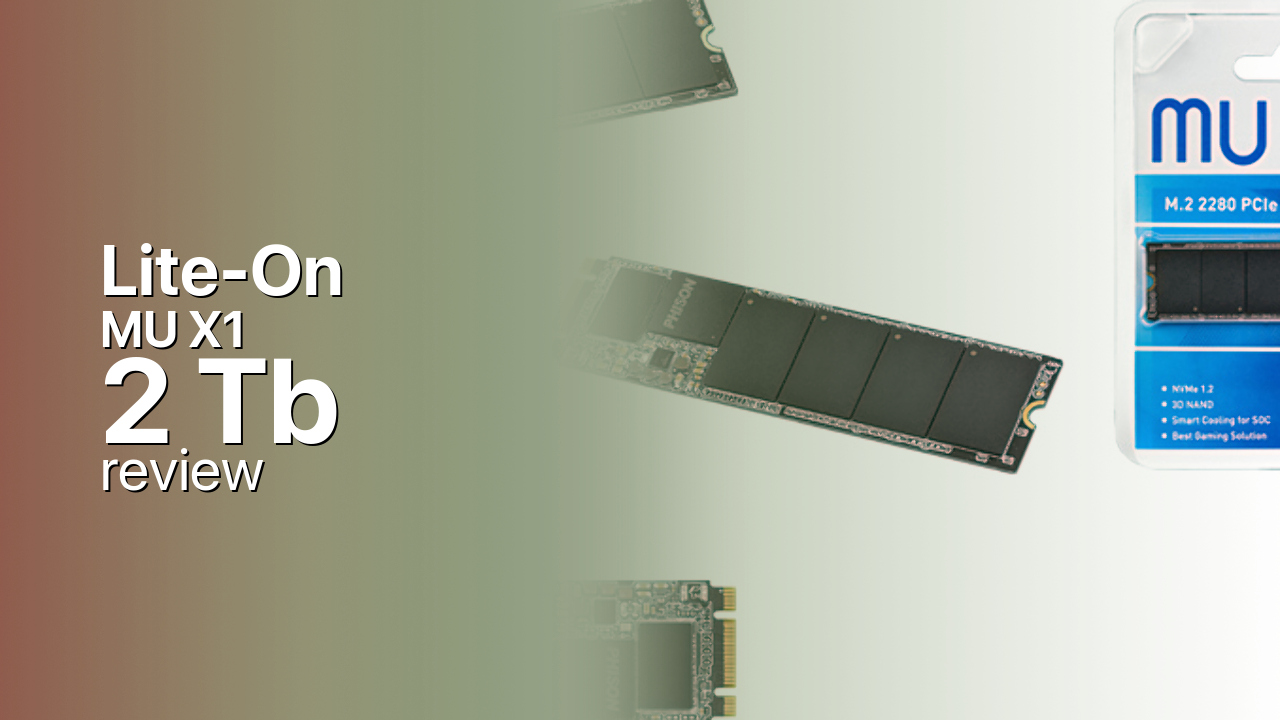
The Phison PS5012-E12 is at its best when fully configured with all eight NAND channels populated to their maximum die count — and the 2TB MU X1 is that fully-realized configuration. The E12 controller, fabricated on a 28nm process, delivers the full PCIe 3.0 x4 bandwidth of 3,400 MB/s read and 3,000 MB/s write. A 2 GB DDR4 DRAM chip (typically Nanya or SK Hynix DDR4-1866) handles the flash translation layer for consistent low-latency random access. The NAND is 3D TLC — the flash supplier varies by production batch but is sourced from top-tier manufacturers.
Lite-On is one of the world's largest OEM SSD manufacturers. The MU X1 shipped in high-end workstations and premium laptops from Dell, HP, and Lenovo, where the 2TB capacity was a premium configuration option. On the used market, these drives are typically pulls from decommissioned corporate workstations. There is no retail packaging, no end-user warranty from Lite-On, and no publicly available firmware updates.
At 2 TB, the MU X1 is large enough to serve as the only storage device in a system — operating system, creative applications, a large game library, and a media collection all fit without compromise. The 2,500 TBW endurance rating provides ample headroom even for write-intensive use cases. The single-sided M.2 2280 form factor is a notable achievement for a 2TB drive of this era and ensures compatibility with thin laptops that cannot accommodate double-sided designs.
Storage Comparisons:
MU X1 Performance & Benchmarks
With all eight NAND channels fully populated, the MU X1 2TB delivers the E12 platform's maximum throughput: 3,400 MB/s sequential read and 3,000 MB/s sequential write. Real-world performance on a PCIe 3.0 system lands around 3,100–3,300 MB/s read and 2,700–2,900 MB/s write. Random 4K performance in the 300,000–400,000 IOPS range is competitive with retail flagships of the Gen3 era.
Lite-On MU X1 2 TB vs M.2 3.0 x 4 peers
Switch between sequential throughput and random IOPS to see how this drive stacks up against other M.2 3.0 x 4 SSDs in our database. The highlighted bar is the drive on this page — click any other bar to open that drive.
- ADATA SX 8800 Pro 512 GB: 3,500 MB/s read, 2,700 MB/s write
- ADATA SX 8800 Pro 1 TB: 3,500 MB/s read, 2,700 MB/s write
- ADATA XPG Spectrix S40G RGB 256 GB: 3,500 MB/s read, 3,000 MB/s write
- ADATA XPG Spectrix S40G RGB 512 GB: 3,500 MB/s read, 3,000 MB/s write
- Lite-On MU X1 2 TB (this drive): 3,400 MB/s read, 3,000 MB/s write
The 2 GB DDR4 DRAM buffer is the standout feature — at this capacity, the FTL mapping table is large enough that DRAM-less HMB designs (limited to 32–64 MB of host memory) would struggle with latency consistency. The MU X1 handles sustained mixed workloads with aplomb: simultaneous reads and writes, multitasking with background processes, and database-like access patterns all benefit from the dedicated DRAM. The SLC write cache spans roughly 100–200 GB on the 2TB model, after which native TLC writes settle around 600–800 MB/s.
Thermal output is moderate. The 28nm controller under sustained full-load writes reaches 68–75°C without a heatsink. A basic motherboard M.2 heat spreader is recommended for desktop use and keeps temperatures in the 55–65°C range. Power consumption peaks at approximately 6.5 W under load.
Lite-On MU X1 vs Competitors
See how the MU X1 stacks up against other M.2 3.0 x 4 drives in our database:
Compare with rival drives:
Endurance, TBW & Warranty
OEM product — no direct end-user warranty from Lite-On. Warranty was originally through the system manufacturer. Used-market purchases are effectively warranty-free. Verify the seller's return policy and test thoroughly upon receipt.
Lite-On MU X1 2 TB Specifications
| Category | Value |
|---|---|
| Capacity [?] | 2 TB |
| Interface [?] | M.2 3.0 x 4 |
| Controller [?] | Phison PS5012-E12 |
| Memory type [?] | Toshiba 3D TLC |
| DRAM [?] | DDR4 |
| Read speed (MB/s) [?] | 3400 |
| Write speed (MB/s) [?] | 3000 |
| Read IOPS [?] | 440000 |
| Write IOPS [?] | 380000 |
| Endurance (TBW) [?] | 2500 |
| MTBF (million hours) [?] | 1.5 |
| Warranty (years) [?] | 3 |
Verdict: Is the MU X1 Worth It in 2026?
The Lite-On MU X1 2TB is the ultimate expression of the Phison E12 platform: full 8-channel throughput, 2 GB of DDR4 DRAM, 2 TB of TLC capacity, and 2,500 TBW endurance — all in a single-sided M.2 2280 form factor. On the used market, it represents extraordinary value for anyone building or upgrading a PCIe 3.0 system who needs capacity, performance, and DRAM-backed consistency without paying retail prices. The OEM caveats apply — no warranty, no firmware, unknown history — but for buyers comfortable with those trade-offs, the MU X1 2TB is one of the smartest SSD purchases available.
+ Pros
- Full E12 performance — 3,400/3,000 MB/s with 2 GB DDR4 DRAM
- 2 TB capacity in a single-sided M.2 2280 form factor
- 2,500 TBW endurance — ample for any consumer workload
- Exceptional used-market value vs. retail 2TB alternatives
- Dedicated DRAM handles large FTL table with low latency
- Cons
- OEM — no warranty, no firmware updates, no support
- 28nm controller runs warm under sustained load
- Unknown usage history on the secondary market
- Rare on the used market — 2TB OEM pulls are less common
- No hardware encryption or modern NVMe features
Buy this or similar SSD Storage:
Video Review
Nowy Lite-On MU X1 - tanie i szybkie dyski NVMe - test