Silicon Power XS70 4TB Review — A High-Capacity Phison E18 Value Pick (2026)
Quick answer
The Silicon Power XS70 4 TB is the right pick for a buyer who wants maximum PCIe 4.0 capacity at a minimum price and does not need the last few percent of performance or the warranty infrastructure of a tier-one brand.
Read: 7300 MB/s Write: 6800 MB/s Endurance: 3000 TBW Warranty: 5 years Interface: M.2 4.0 x 4
The Silicon Power XS70 4 TB is the rare PCIe 4.0 drive that combines a flagship Phison E18 platform with 176-layer TLC NAND at a price per gigabyte that undercuts nearly every name-brand competitor in the 4 TB tier.
Controller & Memory
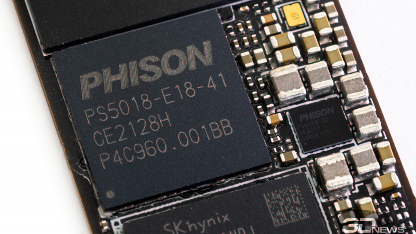
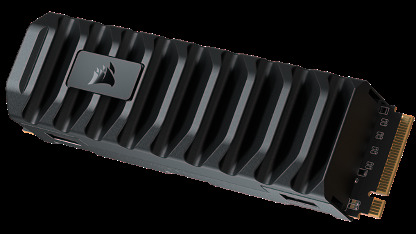
The Silicon Power XS70 uses the Phison PS5018-E18 controller — an eight-channel, quad-core ARM Cortex-R5 design on TSMC 12nm — paired with Micron 176-layer B47R 3D TLC NAND and Samsung DDR4 DRAM on a double-sided M.2 2280 PCB. This is the same foundational platform that powers the Kingston KC3000, Sabrent Rocket 4 Plus, and Seagate FireCuda 530, though Silicon Power's firmware tuning and DRAM selection differ from each. The XS70 supports NVMe 1.4 and is available both as a bare drive and with an included heatsink. The heatsink variant fits the PS5 expansion bay, though reviewers have noted the heatsink is more cosmetic than functional — it improves thermals modestly but is not a high-mass finned design.
At 4 TB, the XS70 benefits from full channel population across the E18's eight NAND channels, which means all performance metrics are at their peak. Sequential reads hit 7,300 MB/s, writes reach 6,800 MB/s, and random performance comes in at 750,000 IOPS reads and 1,000,000 IOPS writes. These numbers place the XS70 slightly below the very fastest E18 implementations — the Seagate FireCuda 530 edges it on both sequential and random metrics — but the gap is small enough to be invisible in real-world use. The 4 TB variant's big advantage over smaller capacities is sustained write performance: with more NAND dies to stripe across, the XS70 4 TB maintains high write speeds for longer transfers and recovers from cache exhaustion faster than its 1 TB and 2 TB siblings.
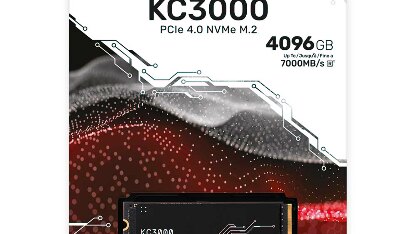
The XS70's market position is straightforward: it is the value option in the high-end 4 TB PCIe 4.0 segment. At typical sale prices it has dropped to roughly $200-215 for the 4 TB heatsink SKU, which makes it one of the cheapest dollars-per-gigabyte options among Phison E18 drives. It competes against the Kingston KC3000 4 TB (same E18, slightly faster firmware tuning, higher endurance at 3,200 TBW), the WD Black SN850X 4 TB (faster for gaming, more expensive), the Samsung 990 Pro 4 TB (faster random I/O, significantly more expensive), and the Seagate FireCuda 530 4 TB (highest endurance at 5,100 TBW, premium price). The XS70 does not win on performance or endurance — it wins on price, and for a game library or media drive where the last 5 percent of speed does not matter, that is a compelling argument.
Storage Comparisons:
XS70 Performance & Benchmarks
The Silicon Power XS70 4 TB is rated for 7,300 MB/s sequential reads and 6,800 MB/s sequential writes, with random performance of up to 750,000 IOPS reads and 1,000,000 IOPS writes. These are strong numbers that land in the upper tier of PCIe 4.0 drives, though the XS70 trails the fastest E18 implementations — the Seagate FireCuda 530 reaches 7,300/6,900 MB/s with higher IOPS, and the Kingston KC3000 4 TB hits 7,000/7,000 MB/s. The differences are academic in most consumer workloads: the XS70 loads games, transfers large video projects, and handles 4K media ingest at speeds indistinguishable from any other premium Gen4 drive.
Silicon Power XS70 4 TB vs M.2 4.0 x 4 peers
Switch between sequential throughput and random IOPS to see how this drive stacks up against other M.2 4.0 x 4 SSDs in our database. The highlighted bar is the drive on this page — click any other bar to open that drive.
- Patriot Viper PV593 1 TB: 14,500 MB/s read, 14,000 MB/s write
- Patriot Viper PV593 2 TB: 14,500 MB/s read, 14,000 MB/s write
- Patriot Viper PV593 4 TB: 14,500 MB/s read, 14,000 MB/s write
- Patriot Viper PV573 2 TB: 14,000 MB/s read, 12,000 MB/s write
- Silicon Power XS70 4 TB (this drive): 7,300 MB/s read, 6,800 MB/s write
The Phison E18's dynamic pSLC cache on the 4 TB variant is generously sized — with more NAND available for cache duty, the drive sustains full write speed for transfers well beyond what a 1 TB or 2 TB drive can manage before exhausting to direct-to-TLC mode. Once the cache fills, writes settle at approximately 1,500 to 1,800 MB/s, consistent with other E18 implementations using Micron 176-layer NAND. Independent reviewers at Tom's Hardware rated the XS70 4.5 out of 5, praising its combination of flagship performance and aggressive pricing, though noting that the heatsink is more aesthetic than functional and that the drive trails the KC3000 and FireCuda 530 in some sustained-write and mixed-workload tests. For the PS5, the XS70 with the heatsink SKU fits the expansion bay and returns approximately 6,500 MB/s in the console's built-in speed test, safely above Sony's 5,500 MB/s minimum. The drive runs at typical E18 temperatures — mid-70s Celsius under sustained load without additional cooling, dropping to the 60s with a motherboard M.2 cover or the included heatsink.
Silicon Power XS70 vs Competitors
See how the XS70 stacks up against other M.2 4.0 x 4 drives in our database:
Compare with rival drives:
Endurance, TBW & Warranty
Silicon Power backs the XS70 4 TB with a 5-year limited warranty and an endurance rating of 3,000 TBW. At 3,000 TBW, the drive is rated to absorb roughly 1.6 TB of writes per day for the full warranty period — an endurance envelope that covers even demanding workstation use. At a typical consumer workload of 30 GB/day, the endurance stretches beyond 270 years, making write exhaustion functionally irrelevant. The TBW scales proportionally across the lineup: approximately 750 TBW for 1 TB, 1,500 TBW for 2 TB, and 3,000 TBW for 4 TB. The MTBF is rated at 1.6 million hours, a standard population statistic. Silicon Power is a smaller brand than Samsung or WD, and its warranty support infrastructure is less globally established — buyers who prioritize warranty service experience should factor this into the decision. The XS70 does not include hardware-based AES-256 encryption.
Silicon Power XS70 4 TB Specifications
| Category | Value |
|---|---|
| Capacity [?] | 4 TB |
| Interface [?] | M.2 4.0 x 4 |
| Controller [?] | Phison PS5018-E18 |
| Memory type [?] | Micron 3D TLC |
| DRAM [?] | Samsung DDR4 |
| Read speed (MB/s) [?] | 7300 |
| Write speed (MB/s) [?] | 6800 |
| Read IOPS [?] | 750000 |
| Write IOPS [?] | 1000000 |
| Endurance (TBW) [?] | 3000 |
| MTBF (million hours) [?] | 1600000 |
| Warranty (years) [?] | 5 |
Verdict: Is the XS70 Worth It in 2026?
The Silicon Power XS70 4 TB is the right pick for a buyer who wants maximum PCIe 4.0 capacity at a minimum price and does not need the last few percent of performance or the warranty infrastructure of a tier-one brand. The Phison E18 and Micron 176-layer TLC combination is proven and reliable, and the 3,000 TBW endurance rating is more than sufficient for any consumer workload including video editing and large dataset processing. Buy it as a game library, media archive, or content-creation scratch disk where $/GB matters more than benchmark leadership. Skip it if endurance is your top priority — the Seagate FireCuda 530 offers 5,100 TBW at 4 TB with data recovery services — or if you want the absolute fastest E18 implementation, in which case the Kingston KC3000 and WD Black SN850X are better tuned. The XS70's value proposition is simple: flagship-tier hardware at a price that often dips below mid-range competitors.
+ Pros
- 7,300 MB/s reads — flagship PCIe 4.0 throughput
- 4 TB capacity at aggressive sale pricing (often $200-215)
- Phison E18 + Micron 176L TLC is a proven, reliable platform
- 3,000 TBW endurance with 5-year warranty
- PS5 compatible with heatsink SKU
- Full channel saturation on 4 TB ensures peak sustained write performance
- Cons
- Trails other E18 drives (KC3000, FireCuda 530) in some sustained and random tests
- Included heatsink is more cosmetic than functional per multiple reviewers
- Silicon Power is a smaller brand — warranty support less proven than Samsung/WD/Crucial
- No AES 256-bit hardware encryption
- Power efficiency is average — not ideal for laptops under battery
Buy this or similar SSD Storage:



Video Review
Silicon Power XS70 SSD Review, PC Benchmarks & PS5 Testing