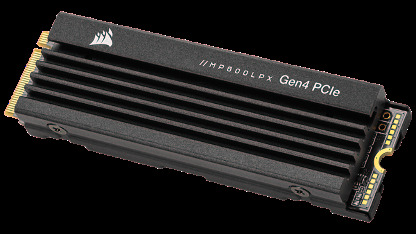
Sabrent Rocket 4 Plus-G 4TB - DirectStorage PCIe 4.0 SSD (2026)
Quick answer
The Sabrent Rocket 4 Plus-G 4 TB is a strong pick for gamers and creators who want the largest practical PCIe 4.0 NVMe capacity and Microsoft DirectStorage firmware tuning that distinguishes the drive from generic Phison E18 implementations.
Read: 7200 MB/s Write: 7000 MB/s Endurance: 2800 TBW Warranty: 5 years Interface: M.2 4.0 x 4
The Sabrent Rocket 4 Plus-G 4TB is a DirectStorage-optimised flagship PCIe 4.0 NVMe - Phison E18 controller, Micron 176-layer TLC, custom O2GO firmware tuned for Microsoft DirectStorage, and 2,800 TBW endurance over five years.
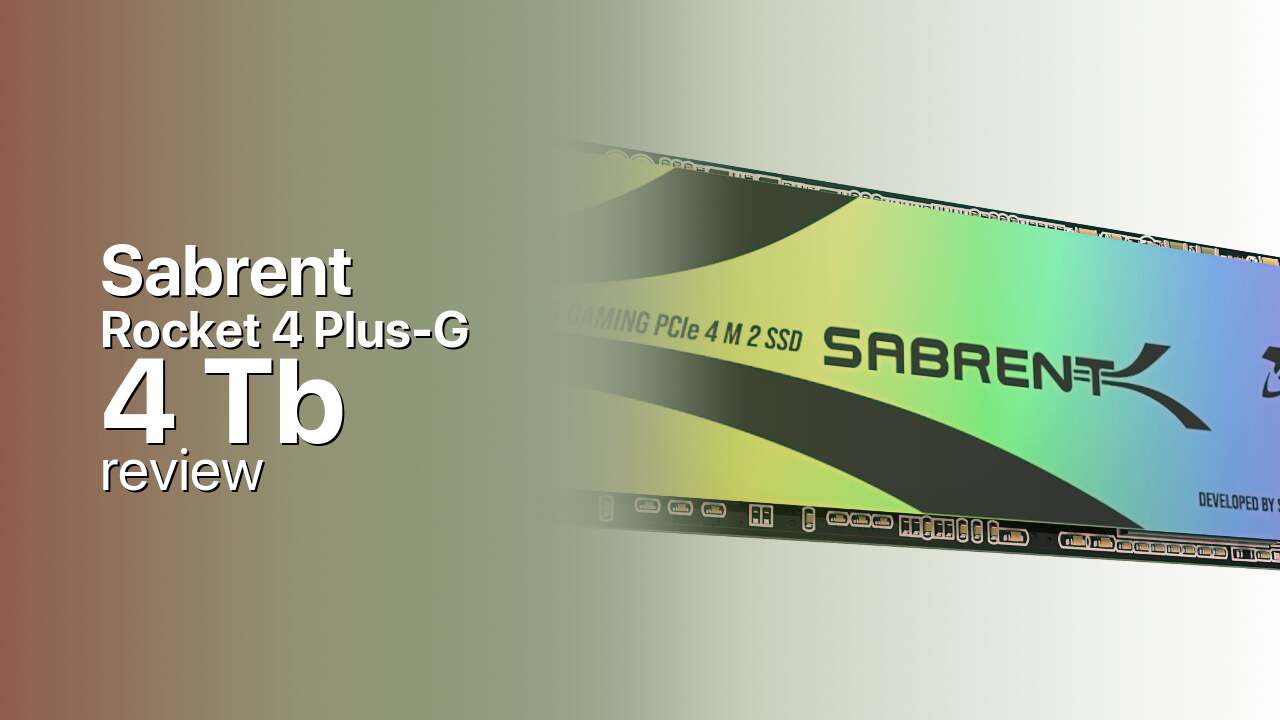
Controller & Memory
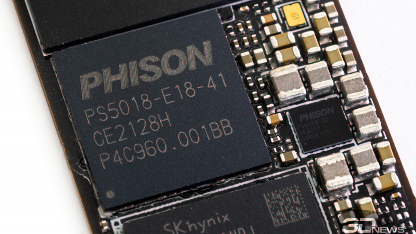
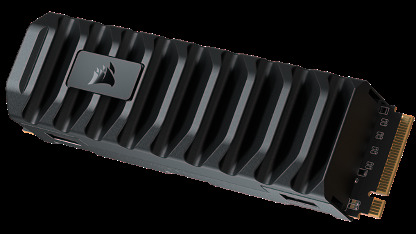
The Sabrent Rocket 4 Plus-G 4 TB pairs the Phison PS5018-E18 eight-channel PCIe 4.0 controller with 176-layer Micron 3D TLC NAND, 4 GB of DDR4 DRAM cache, and Phison's I/O+ firmware customised by Sabrent under the O2GO label specifically for Microsoft DirectStorage workloads. The 'G' in the name stands for Gaming - the platform is engineered to maintain sustained random-read latency in patterns that DirectStorage GPU decompression demands, distinguishing the Plus-G from the standard Rocket 4 Plus that uses Phison's reference firmware. The PCB is M.2 2280 single-sided, with an optional copper heatsink available separately.
Sabrent ships the Rocket 4 Plus-G in 1 TB, 2 TB, and 4 TB capacities. The 4 TB SKU on this page reaches the highest peak speeds in the line at 7,200 MB/s reads and 6,850 MB/s writes, and carries the largest absolute SLC pseudocache, which lets it sustain longer continuous writes than the smaller siblings. Endurance scales linearly across the range at 700 TBW per terabyte of capacity. Sabrent's distribution focuses on North America via Amazon and direct sales, with growing European retail through Amazon EU and select system integrators.
The Rocket 4 Plus-G 4 TB targets gamers and content creators who want the largest practical PCIe 4.0 capacity and firmware tuned for the latest gaming I/O workloads. Direct rivals are the WD Black SN850X 4 TB (different in-house controller, similar capacity, higher TBW at 2,400), the Seagate FireCuda 530 4 TB (same Phison E18 platform, higher 5,100 TBW endurance, bundled Rescue service), and the Crucial T500 2 TB (4 TB not available, but 2 TB at lower price). At 4 TB the field is narrow because most consumer flagships stop at 2 TB.
Storage Comparisons:
Rocket 4 Plus-G Performance & Benchmarks
Manufacturer ratings for the Rocket 4 Plus-G 4 TB land at 7,200 MB/s sequential reads and 6,850 MB/s sequential writes, with random performance up to 650,000 read and 700,000 write IOPS at high queue depths. Tom's Hardware specifically tested DirectStorage workloads and confirmed the O2GO firmware delivers measurably better random-read latency under DirectStorage GPU decompression patterns than the stock Phison E18 reference firmware - real-world gaming load times match or beat the WD Black SN850X 4 TB in supported titles.
Sabrent Rocket 4 Plus-G 4 TB vs M.2 4.0 x 4 peers
Switch between sequential throughput and random IOPS to see how this drive stacks up against other M.2 4.0 x 4 SSDs in our database. The highlighted bar is the drive on this page — click any other bar to open that drive.
- Patriot Viper PV593 1 TB: 14,500 MB/s read, 14,000 MB/s write
- Patriot Viper PV593 2 TB: 14,500 MB/s read, 14,000 MB/s write
- Patriot Viper PV593 4 TB: 14,500 MB/s read, 14,000 MB/s write
- Patriot Viper PV573 2 TB: 14,000 MB/s read, 12,000 MB/s write
- Sabrent Rocket 4 Plus-G 4 TB (this drive): 7,200 MB/s read, 7,000 MB/s write
Sustained writes are exceptional at this capacity. The 4 GB DRAM and large SLC pseudocache allow the drive to absorb roughly 600-800 GB of continuous writes before the cache exhausts on a near-empty 4 TB, after which writes fall toward the underlying Micron TLC direct-write rate around 1,800-2,200 MB/s. For boot, gaming, and application workloads that profile is invisible; for large video transfers or 4K capture the 4 TB SLC cache is one of the largest available in any consumer SSD. The Phison E18 runs warm under sustained load - reviewers recommend the optional copper heatsink for ITX, laptop, or PS5 expansion installs. DirectStorage operates as expected and benefits specifically from the O2GO firmware tuning.
Sabrent Rocket 4 Plus-G vs Competitors
See how the Rocket 4 Plus-G stacks up against other M.2 4.0 x 4 drives in our database:
Compare with rival drives:
Endurance, TBW & Warranty
Sabrent backs the Rocket 4 Plus-G 4 TB with a five-year limited warranty (the standard one-year warranty is extended to five years through registration at sabrent.com) and a 2,800 TBW endurance budget - 700 TBW per terabyte of capacity. At a heavy 50 GB/day sustained write workload that budget lasts roughly 153 years, far past the warranty period and any realistic service life. The Seagate FireCuda 530 4 TB rates higher at 5,100 TBW and bundles three years of Rescue data recovery; the WD Black SN850X 4 TB rates 2,400 TBW. Sabrent does not publish an explicit MTBF figure on the consumer Rocket 4 Plus-G spec sheet, though comparable Phison E18 drives quote 1.6-1.7 million hours. RMA handling runs through sabrent.com support - the process is competent for North American buyers and slower for international claims. The five-year warranty is competitive with the segment but only after registration.
Sabrent Rocket 4 Plus-G 4 TB Specifications
| Category | Value |
|---|---|
| Capacity [?] | 4 TB |
| Interface [?] | M.2 4.0 x 4 |
| Controller [?] | Phison PS5018-E18 |
| Memory type [?] | Micron 176-L TLC |
| DRAM [?] | DDR4 |
| Read speed (MB/s) [?] | 7200 |
| Write speed (MB/s) [?] | 7000 |
| Read IOPS [?] | 650000 |
| Write IOPS [?] | 700000 |
| Endurance (TBW) [?] | 2800 |
| MTBF (million hours) [?] | 2000000 |
| Warranty (years) [?] | 5 |
Verdict: Is the Rocket 4 Plus-G Worth It in 2026?
The Sabrent Rocket 4 Plus-G 4 TB is a strong pick for gamers and creators who want the largest practical PCIe 4.0 NVMe capacity and Microsoft DirectStorage firmware tuning that distinguishes the drive from generic Phison E18 implementations. Buyers chasing the highest TBW endurance should look at the Seagate FireCuda 530 4 TB (5,100 TBW) instead, and PS5 owners who need a thinner package should consider the WD Black SN850X 2 TB or 4 TB. Skip the Rocket 4 Plus-G if you do not run DirectStorage workloads - the O2GO firmware advantage disappears outside supported titles, and the plain Rocket 4 Plus is typically cheaper. As a flagship PCIe 4.0 NVMe at 4 TB with the largest SLC cache window in the segment, the Plus-G is one of the cleanest choices for heavy-capacity creator and gamer builds.
+ Pros
- 7,200 MB/s reads with DirectStorage-tuned firmware
- 4 TB capacity for large game library and creator work
- 4 GB DDR4 DRAM cache
- 2,800 TBW endurance with 5-year warranty
- Massive SLC cache window (600+ GB on 4 TB)
- O2GO custom Phison I/O+ firmware for DirectStorage
- Cons
- No included heatsink, copper accessory sold separately
- TBW lower than Seagate FireCuda 530 4 TB (5,100 TBW)
- Phison E18 runs warm under sustained workloads
- 5-year warranty requires registration at sabrent.com
- Limited retail availability outside North America
- O2GO firmware advantage limited to DirectStorage titles
Buy this or similar SSD Storage:



Video Review
Sabrent Rocket 4 Plus G | Future SSD For Gaming Now!