Transcend PCIe SSD 110S 512GB Review (2026)
Quick answer
The Transcend PCIe SSD 110S 512GB is a serviceable entry-level NVMe drive that delivers a tangible upgrade over SATA SSDs without a premium price tag.
Read: 1700 MB/s Write: 1500 MB/s Endurance: 800 TBW Warranty: 5 years Interface: PCIe 3.0 x 4
The Transcend PCIe SSD 110S 512GB is a budget NVMe drive that offers a step up from SATA speeds at a price point that competes with entry-level SSDs.
Controller & Memory
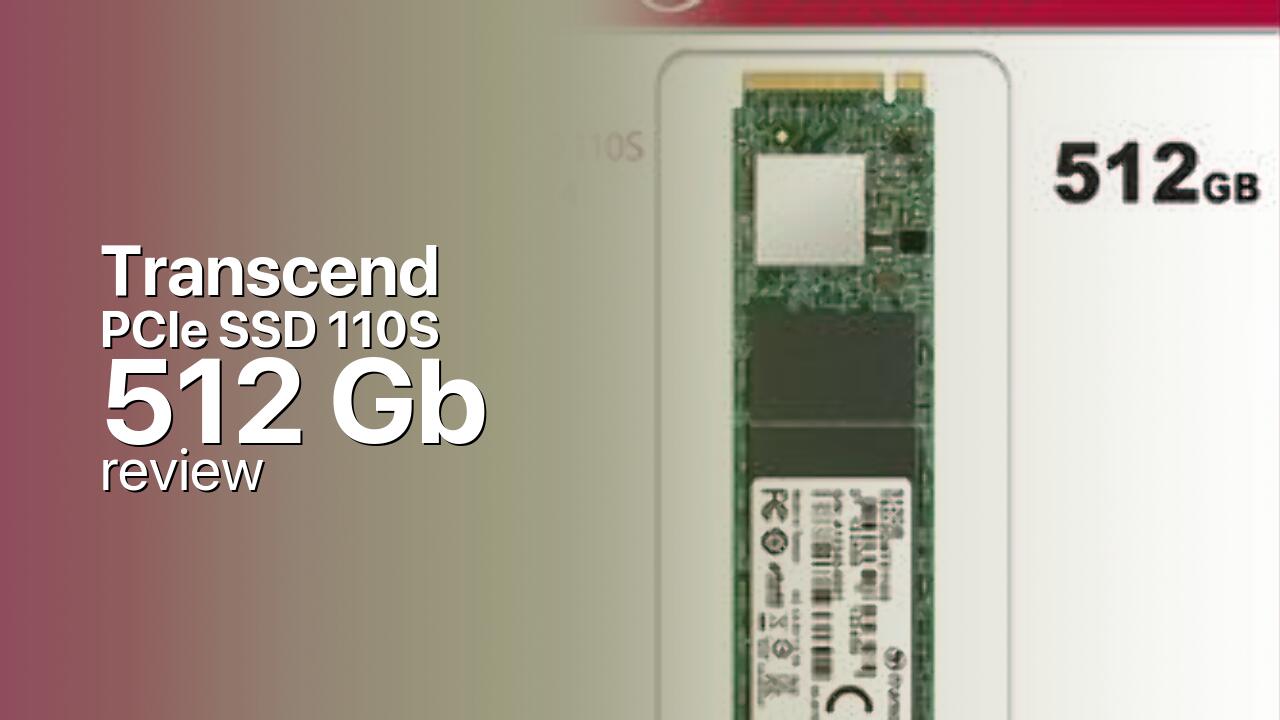
Transcend positions the PCIe SSD 110S (also marketed as the MTE110S) as an entry-level NVMe drive for users upgrading from SATA SSDs. The 512GB capacity represents the top of the 110S lineup, which also includes 128GB and 256GB variants. All three share the same 1,700 MB/s read and 1,500 MB/s write ratings.
The 110S uses a DRAM-less controller architecture, relying on the NVMe Host Memory Buffer (HMB) feature to borrow system RAM for mapping tables. This is a cost-saving measure common in budget NVMe drives, and it works well for typical desktop workloads. The drive uses 3D NAND flash in the M.2 2280 single-sided form factor, fitting into any desktop or laptop with an NVMe M.2 slot.
The 512GB capacity is large enough for a Windows 11 installation plus a moderate collection of applications and a few games. Users with large game libraries or media collections should consider it a boot drive paired with secondary storage rather than a standalone solution. Transcend rates the endurance at 800 TBW, which is generous for this segment and more than adequate for typical consumer use over the 5-year warranty period.
Storage Comparisons:
PCIe SSD 110S Performance & Benchmarks
The Transcend PCIe SSD 110S 512GB is rated at 1,700 MB/s sequential reads and 1,500 MB/s sequential writes. These speeds place it firmly in the entry-level NVMe tier, roughly 3x faster than SATA SSDs in sequential throughput but well below the 3,000+ MB/s that premium PCIe 3.0 drives achieve. The gap versus SATA is most noticeable during large file transfers, OS installation, and game loading.
Transcend PCIe SSD 110S 512 GB vs PCIe 3.0 x 4 peers
Switch between sequential throughput and random IOPS to see how this drive stacks up against other PCIe 3.0 x 4 SSDs in our database. The highlighted bar is the drive on this page — click any other bar to open that drive.
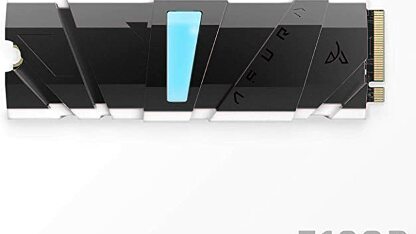
- Asura Genesis Xtreme 256 GB: 3,400 MB/s read, 3,000 MB/s write
- Asura Genesis Xtreme 512 GB: 3,400 MB/s read, 3,000 MB/s write
- Asura Genesis Xtreme 1 TB: 3,400 MB/s read, 3,000 MB/s write
- Asura Genesis Xtreme 2 TB: 3,400 MB/s read, 3,000 MB/s write
- Transcend PCIe SSD 110S 512 GB (this drive): 1,700 MB/s read, 1,500 MB/s write
The DRAM-less architecture means random 4K performance is modest compared to drives with dedicated DRAM caches. For typical desktop workloads like web browsing, document editing, and application launches, the difference is barely noticeable. The drive leverages the NVMe Host Memory Buffer to maintain acceptable random I/O consistency. In sustained write scenarios, the SLC cache absorbs initial bursts before performance settles to native NAND write speeds.
For users moving from a SATA SSD or mechanical HDD, the 110S 512GB delivers a meaningful improvement in everyday responsiveness. Boot times, application launches, and file operations all feel snappier. However, users accustomed to high-end NVMe drives like the Samsung 970 EVO Plus or WD Black SN750 will notice the lower sequential throughput and reduced random I/O performance under heavy multitasking.
Transcend PCIe SSD 110S vs Competitors
See how the PCIe SSD 110S stacks up against other PCIe 3.0 x 4 drives in our database:
Compare with rival drives:
Endurance, TBW & Warranty
Transcend backs the PCIe SSD 110S series with a 5-year limited warranty. The 512GB model is rated at 800 TBW, which is the total bytes written endurance metric. In practical terms, writing 50 GB per day would take roughly 43 years to reach 800 TBW. Even power users writing 100 GB daily would need over 21 years to exhaust the endurance rating.
The 5-year warranty is standard for consumer NVMe drives and matches offerings from Samsung, WD, and Crucial. Transcend handles warranty claims through its regional support channels. The drive includes built-in S.M.A.R.T. health monitoring and wear-leveling to distribute writes evenly across NAND cells, maximizing the effective lifespan.
Transcend PCIe SSD 110S 512 GB Specifications
| Category | Value |
|---|---|
| Capacity [?] | 512 GB |
| Interface [?] | PCIe 3.0 x 4 |
| Controller [?] | Silicon Motion SM2263XT |
| Memory type [?] | MLC |
| DRAM [?] | HMB |
| Read speed (MB/s) [?] | 1700 |
| Write speed (MB/s) [?] | 1500 |
| Read IOPS [?] | 150000 |
| Write IOPS [?] | 250000 |
| Endurance (TBW) [?] | 800 |
| MTBF (million hours) [?] | 2000000 |
| Warranty (years) [?] | 5 |
Verdict: Is the PCIe SSD 110S Worth It in 2026?
The Transcend PCIe SSD 110S 512GB is a serviceable entry-level NVMe drive that delivers a tangible upgrade over SATA SSDs without a premium price tag. The 1,700/1,500 MB/s sequential speeds are modest by NVMe standards but represent a real improvement in daily use. Buy it if you are on a strict budget and need more capacity than speed, or if you are upgrading an older system from SATA to NVMe for the first time.
Skip it if you can spend a bit more, because drives like the Kingston NV2, WD Blue SN580, or Team Group MP33 offer better performance per dollar in the current market. The 110S 512GB is best suited as a drop-in upgrade for laptops or prebuilt systems where the cheapest NVMe option is the priority.
+ Pros
- 1,700 MB/s reads, 1,500 MB/s writes — 3x faster than SATA
- 512GB capacity sufficient for OS plus moderate application library
- 800 TBW endurance generous for the price segment
- M.2 2280 single-sided form factor fits laptops
- 5-year warranty
- Cons
- DRAM-less design limits random I/O consistency
- 1,700 MB/s well below premium PCIe 3.0 drives (3,000+ MB/s)
- Entry-level performance tier for NVMe
- No dedicated software toolbox from Transcend
Buy this or similar SSD Storage:
Video Review
Best Budget NVMe SSD? - Transcend MTE220S Review