Addlink H90 1TB Review — Phison E16 PCIe 4.0 NVMe SSD (2026)
Quick answer
The Addlink H90 1 TB is a fully documented Phison E16 drive from a smaller brand — and that documentation matters.
Read: 5000 MB/s Write: 4400 MB/s Endurance: 1800 TBW Warranty: 5 years Interface: M.2 4.0 x 4
The Addlink H90 1 TB is another Phison E16 drive from Addlink's early PCIe 4.0 lineup, and it carries the same 1,800 TBW endurance rating that made the E16 platform's longevity numbers look like misprints — triple what a modern flagship offers.
Controller & Memory
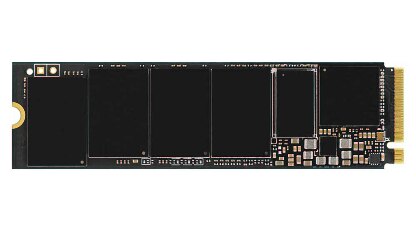
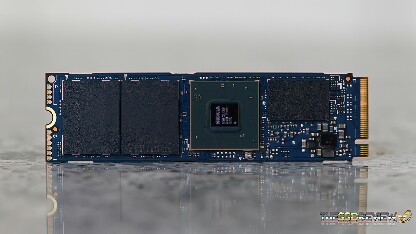
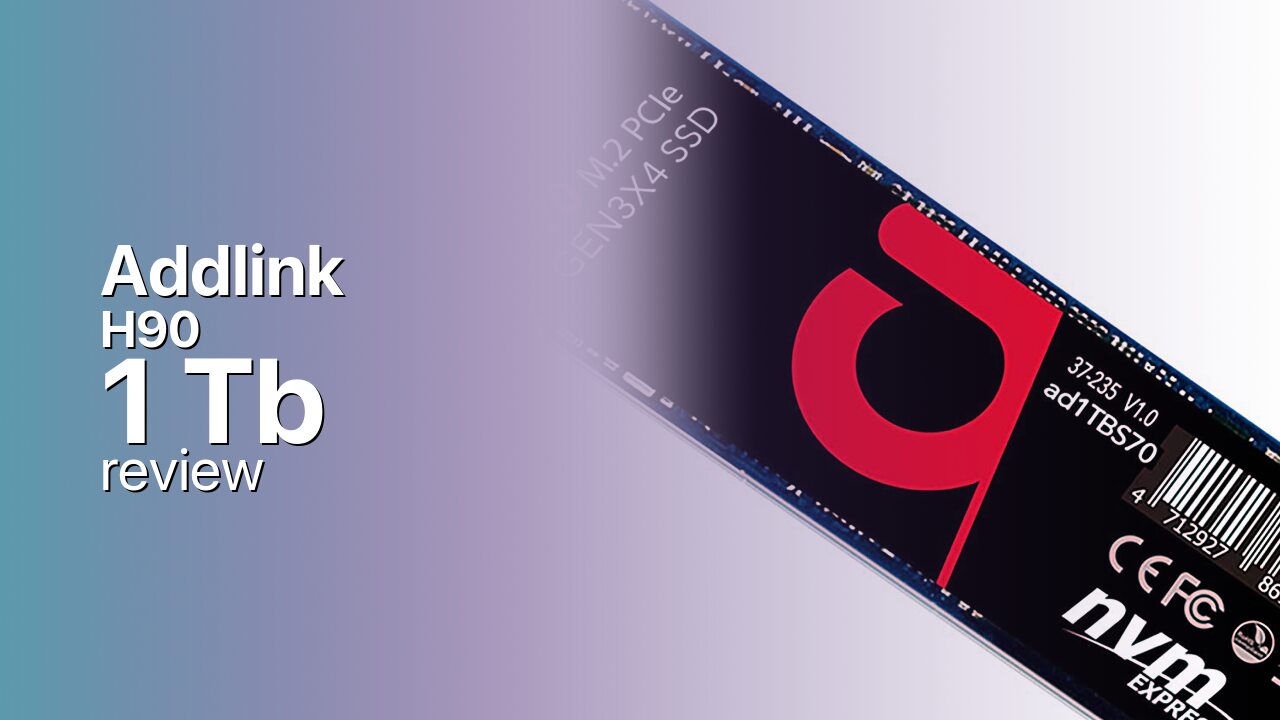
The Addlink H90 is built on the Phison PS5016-E16, the first-generation PCIe 4.0 controller that Addlink used across multiple product lines (S90, S92, H90) with different NAND and DRAM configurations. The H90 pairs the 8-channel E16 with DDR4 DRAM and 3D TLC NAND, delivering rated speeds of 5,000 MB/s sequential read and 4,400 MB/s sequential write. The drive uses the M.2 2280 form factor with the PCIe 4.0 x4 interface. The H90 is also available in a 2 TB capacity.
The H90 sits alongside the S90 in Addlink's early portfolio — both E16 TLC drives with DDR4 DRAM, but the H90 carries published IOPS and TBW figures that the S90 lacked. The 1 TB variant reviewed here is rated at an impressive 1,800 TBW endurance, a figure born from the E16 platform's conservative over-provisioning that makes modern drives look stingy by comparison. The H90 competes against other E16 drives like the Corsair MP600, Sabrent Rocket 4.0, and ADATA XPG Gammix S50 — all of which are essentially the same reference design with minor firmware and NAND vendor differences.
The H90 is a fully documented E16 drive from a smaller brand, which puts it in a better position than the S90: the published endurance and IOPS figures give buyers concrete numbers to evaluate. The E16 controller requires a heatsink for sustained writes, and the drive is a desktop-only proposition due to thermals. For a budget-conscious builder who wants PCIe 4.0 with DRAM, published endurance, and a 5-year warranty, the H90 delivers E16 performance with a spec sheet you can actually read.
Storage Comparisons:
H90 Performance & Benchmarks
The H90 1 TB is rated at up to 5,000 MB/s sequential reads and 4,400 MB/s sequential writes — the standard ceiling of the Phison E16 platform. Random performance is rated at up to 750,000 read IOPS and 700,000 write IOPS, figures that reflect the E16's 8-channel architecture and dedicated DDR4 DRAM. In real-world use, game loads, OS boots, and application launches are indistinguishable from any PCIe 4.0 NVMe drive.
Addlink H90 1 TB vs M.2 4.0 x 4 peers
Switch between sequential throughput and random IOPS to see how this drive stacks up against other M.2 4.0 x 4 SSDs in our database. The highlighted bar is the drive on this page — click any other bar to open that drive.
- Patriot Viper PV593 1 TB: 14,500 MB/s read, 14,000 MB/s write
- Patriot Viper PV593 2 TB: 14,500 MB/s read, 14,000 MB/s write
- Patriot Viper PV593 4 TB: 14,500 MB/s read, 14,000 MB/s write
- Patriot Viper PV573 2 TB: 14,000 MB/s read, 12,000 MB/s write
- Addlink H90 1 TB (this drive): 5,000 MB/s read, 4,400 MB/s write
The E16 uses a large SLC write cache — roughly 150—200 GB on the 1 TB model — and direct-to-TLC writes settle in the 1,200—1,500 MB/s range after the cache fills. This is fast enough that only large sustained transfers expose the post-cache speed. The E16 controller runs hot: sustained sequential writes will push the controller past 75 °C within minutes without a heatsink. A motherboard M.2 heatsink with case airflow is essential. The drive is not suitable for laptops or fanless enclosures.
Addlink H90 vs Competitors
See how the H90 stacks up against other M.2 4.0 x 4 drives in our database:
Compare with rival drives:
Endurance, TBW & Warranty
The 1 TB Addlink H90 carries a 1,800 TBW endurance rating and a 5-year limited warranty — one of the highest endurance figures ever offered on a 1 TB consumer SSD. At a typical desktop write rate of 20—50 GB per day, this translates to roughly 100 to 250 years of usable life. The MTBF is rated at 1.8 million hours. For context, the Samsung 990 Pro 1 TB is rated at 600 TBW and the WD Black SN850X 1 TB at 600 TBW — the H90 offers triple the endurance. The Phison E16 platform achieved these figures through heavy over-provisioning and conservative NAND management. The 2 TB variant doubles endurance to 3,600 TBW. Addlink handles warranty claims through its distribution network.
Addlink H90 1 TB Specifications
| Category | Value |
|---|---|
| Capacity [?] | 1 TB |
| Interface [?] | M.2 4.0 x 4 |
| Controller [?] | Phison PS5016-E16 |
| Memory type [?] | 3D TLC |
| DRAM [?] | DDR4 Cache |
| Read speed (MB/s) [?] | 5000 |
| Write speed (MB/s) [?] | 4400 |
| Read IOPS [?] | 750000 |
| Write IOPS [?] | 700000 |
| Endurance (TBW) [?] | 1800 |
| MTBF (million hours) [?] | 1.8 |
| Warranty (years) [?] | 5 |
Verdict: Is the H90 Worth It in 2026?
The Addlink H90 1 TB is a fully documented Phison E16 drive from a smaller brand — and that documentation matters. It publishes the 1,800 TBW endurance rating that the S90 omits, the 750K/700K IOPS that most budget drives gloss over, and backs it all with a 5-year warranty. Buy the H90 if you want E16 performance with a complete spec sheet at a budget price and have the desktop cooling to handle an E16 controller. Skip it for laptops, fanless builds, or if you need modern PCIe 4.0 speeds — the second-gen E18 drives (Addlink S95, Sabrent Rocket 4 Plus) offer significantly higher throughput. The H90 is a time capsule from the first wave of PCIe 4.0, and for the right desktop build it still holds up on endurance and consistency.
+ Pros
- 1,800 TBW endurance — triple most modern 1 TB SSDs
- 5,000 MB/s reads on the Phison E16 PCIe 4.0 controller
- DDR4 DRAM cache for consistent mixed-workload latency
- 750,000 read IOPS and 700,000 write IOPS — published and competitive
- 5-year warranty with a fully documented spec sheet
- 8-channel controller handles sustained workloads well
- Cons
- Phison E16 runs hot — heatsink and airflow required
- 4,400 MB/s writes trail second-gen PCIe 4.0 drives
- Desktop-only — unsuitable for laptops or fanless enclosures
- Limited retail availability from a smaller brand
- First-gen PCIe 4.0 speeds surpassed by budget DRAM-less drives
Buy this or similar SSD Storage:



Video Review
Hướng dẫn biến Google Drive thành ổ cứng với RaiDrive