Addlink S90 2TB Review — Phison E16 PCIe 4.0 NVMe SSD (2026)
Quick answer
The Addlink S90 2 TB is a capable Phison E16 drive let down by an incomplete spec sheet.
Read: 5000 MB/s Write: 4400 MB/s Endurance: 1400 TBW Warranty: 5 years Interface: M.2 4.0 x 4
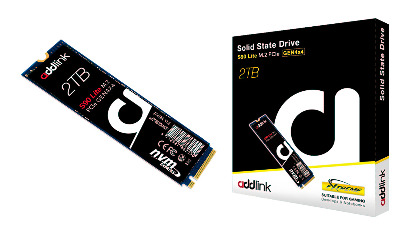
The Addlink S90 2 TB is a budget 2 TB PCIe 4.0 drive with a Phison E16 controller and DDR4 DRAM — enough storage for a game library and enough throughput for any consumer workload, even if the spec sheet has more blanks than a brand-name competitor would tolerate.
Controller & Memory
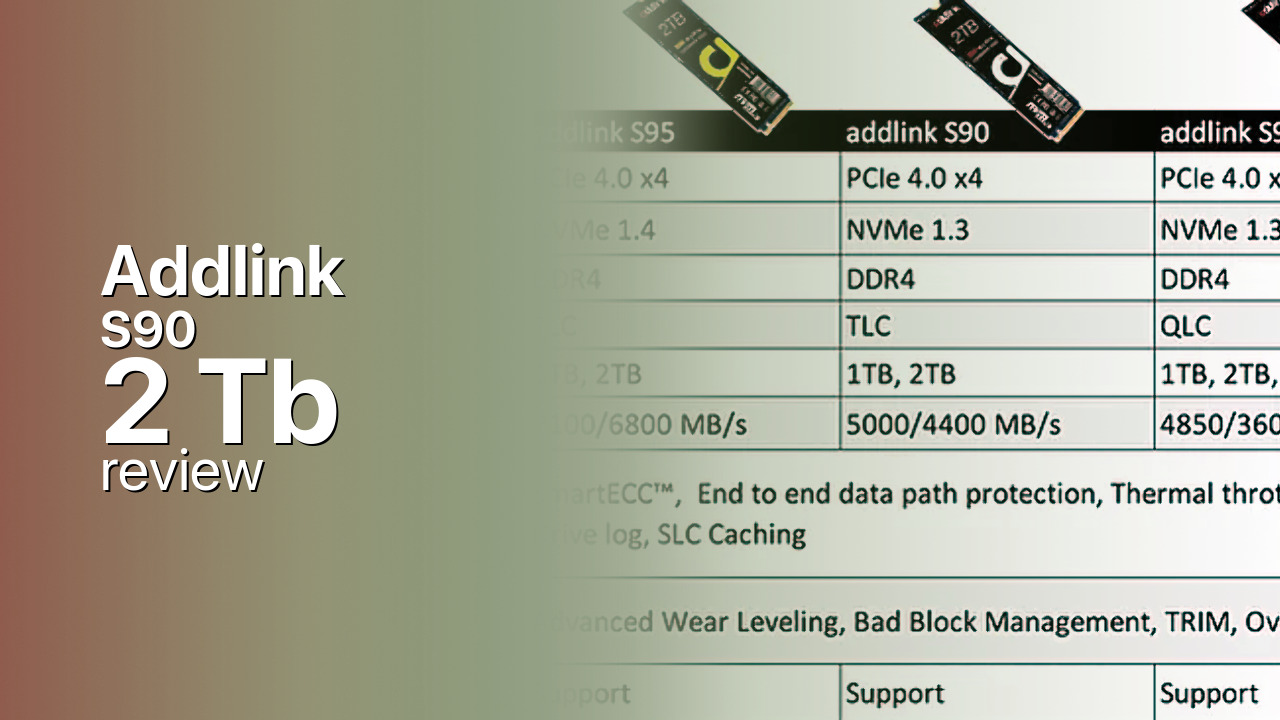
The 2 TB Addlink S90 is built on the Phison PS5016-E16, the first-gen PCIe 4.0 controller that shares silicon with the Corsair MP600 and Sabrent Rocket 4.0. It pairs the 8-channel E16 with DDR4 DRAM and 3D TLC NAND across both sides of the M.2 2280 PCB. Rated speeds are 5,000 MB/s sequential read and 4,400 MB/s sequential write — identical to the 1 TB variant, as the E16 controller ceiling does not scale with capacity. Addlink does not publish TBW endurance or random IOPS figures for the S90 series, a documentation gap that limits its appeal to buyers who research before purchasing.
The S90 family includes 1 TB and 2 TB capacities. The 2 TB reviewed here is the practical pick — enough space for an OS, a substantial game library, and media without the capacity anxiety of a 1 TB drive. The S90 competes against other first-gen E16 2 TB drives like the Corsair MP600 2 TB and Sabrent Rocket 4.0 2 TB, as well as modern budget PCIe 4.0 drives like the WD Black SN770 2 TB. The S90's hardware is proven: the E16 is a mature controller with an excellent track record. The risk is in what Addlink does not document — endurance, IOPS, and NAND specifics are all unpublished, which makes it harder to recommend over a fully documented alternative.
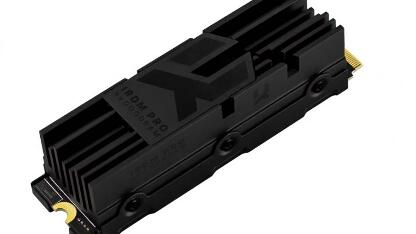
The S90 2 TB is best suited to a buyer who finds it at a clearance price, understands the E16 platform, and plans to use it as a secondary drive rather than a boot drive. The 2 TB capacity and DRAM cache make it viable for a game library or media archive where writes are infrequent and reads dominate. The E16's thermal profile means a heatsink is necessary, and the double-sided PCB may not fit in some thin M.2 slots.
Storage Comparisons:
S90 Performance & Benchmarks
The S90 2 TB is rated at up to 5,000 MB/s sequential reads and 4,400 MB/s sequential writes — the same as the 1 TB. Random IOPS are not published, but the E16 platform with TLC typically delivers 700,000—750,000 IOPS for both reads and writes when all NAND channels are populated. The 2 TB capacity benefits from a larger SLC write cache than the 1 TB — likely 300—400 GB based on E16 platform behaviour — and the additional NAND parallelism helps sustain higher post-cache write speeds.
Addlink S90 2 TB vs M.2 4.0 x 4 peers
Switch between sequential throughput and random IOPS to see how this drive stacks up against other M.2 4.0 x 4 SSDs in our database. The highlighted bar is the drive on this page — click any other bar to open that drive.
- Patriot Viper PV593 1 TB: 14,500 MB/s read, 14,000 MB/s write
- Patriot Viper PV593 2 TB: 14,500 MB/s read, 14,000 MB/s write
- Patriot Viper PV593 4 TB: 14,500 MB/s read, 14,000 MB/s write
- Patriot Viper PV573 2 TB: 14,000 MB/s read, 12,000 MB/s write
- Addlink S90 2 TB (this drive): 5,000 MB/s read, 4,400 MB/s write
In practice, the S90 2 TB handles gaming and desktop workloads identically to any PCIe 4.0 NVMe drive — game loads are CPU-bottlenecked, OS boots complete in seconds, and the DRAM cache keeps latency low during background tasks. Sustained writes benefit from the larger cache and greater NAND parallelism: the 2 TB model will sustain full-speed writes across larger transfers before the SLC cache exhausts. The E16 controller runs hot regardless of capacity — a motherboard M.2 heatsink is mandatory for sustained writes. The 2 TB variant's double-sided PCB may also complicate heatsink mounting in tight M.2 slots.
Addlink S90 vs Competitors
See how the S90 stacks up against other M.2 4.0 x 4 drives in our database:
Compare with rival drives:
Endurance, TBW & Warranty
Addlink does not publish a TBW endurance rating for the S90 2 TB — the specification sheet omits endurance entirely. The drive carries a 5-year warranty with a 1.8 million hour MTBF. The absence of a TBW figure is uncommon for a PCIe 4.0 SSD and complicates the purchase decision for buyers concerned about write endurance. For reference, other 2 TB Phison E16 TLC drives were rated at 1,400—3,600 TBW depending on NAND grade and over-provisioning. Without Addlink's published number, there is no way to know where the S90 falls on that spectrum. Addlink handles warranty claims through its distribution network. Buyers prioritising documented endurance should consider the Addlink S95 or a brand-name E18 alternative.
Addlink S90 2 TB Specifications
| Category | Value |
|---|---|
| Capacity [?] | 2 TB |
| Interface [?] | M.2 4.0 x 4 |
| Controller [?] | Phison PS5016-E16 |
| Memory type [?] | 3D TLC |
| DRAM [?] | DDR4 Cache |
| Read speed (MB/s) [?] | 5000 |
| Write speed (MB/s) [?] | 4400 |
| Read IOPS [?] | 750000 |
| Write IOPS [?] | 700000 |
| Endurance (TBW) [?] | 1400 |
| MTBF (million hours) [?] | 1.8 |
| Warranty (years) [?] | 5 |
Verdict: Is the S90 Worth It in 2026?
The Addlink S90 2 TB is a capable Phison E16 drive let down by an incomplete spec sheet. The hardware — 8-channel E16 controller, DDR4 DRAM, TLC NAND, 5,000/4,400 MB/s speeds — is the same silicon found in drives that cost more and document more. But the absence of published TBW and IOPS figures makes it difficult to recommend over a competitor whose specifications are transparent. Buy the S90 2 TB if you find it at a steep discount, understand the E16 platform, and plan to use it as a secondary game or media drive where endurance is a theoretical concern. Skip it if you want a fully documented product with guaranteed endurance — the Addlink S95 2 TB, Corsair MP600 2 TB, or a modern DRAM-less TLC alternative like the WD Black SN770 2 TB are safer bets at similar prices.
+ Pros
- 5,000 MB/s reads on the proven Phison E16 PCIe 4.0 controller
- DDR4 DRAM cache for consistent latency under load
- 2 TB capacity at a budget price point
- 8-channel controller with mature, stable firmware
- 5-year warranty
- Larger SLC cache than the 1 TB variant for sustained bursts
- Cons
- No published TBW endurance rating
- No published random IOPS figures
- Phison E16 runs hot — heatsink required
- Double-sided PCB may not fit some thin M.2 slots
- Limited documentation compared to brand-name competitors
Buy this or similar SSD Storage:



Video Review
Can an Amazon 1TB SSD compete with a Samsung EVO? Actually... yes | Hardware