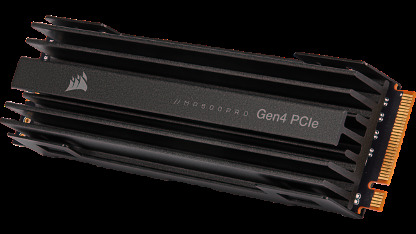
Asus ROG Strix SQ7 1TB Review — Premium PCIe 4.0 NVMe SSD (2026)
Quick answer
The Asus ROG Strix SQ7 1TB is a competent flagship PCIe 4.0 SSD that delivers on its speed promises with a proven Phison E18 and Micron 176L TLC platform.
Read: 7000 MB/s Write: 6000 MB/s Endurance: 1300 TBW Warranty: 5 years Interface: M.2 4.0 x 4
The Asus ROG Strix SQ7 1TB delivers seven thousand megabytes per second sequential reads through a Phison E18 controller paired with Micron 176-layer TLC NAND and DDR4 DRAM buffering.
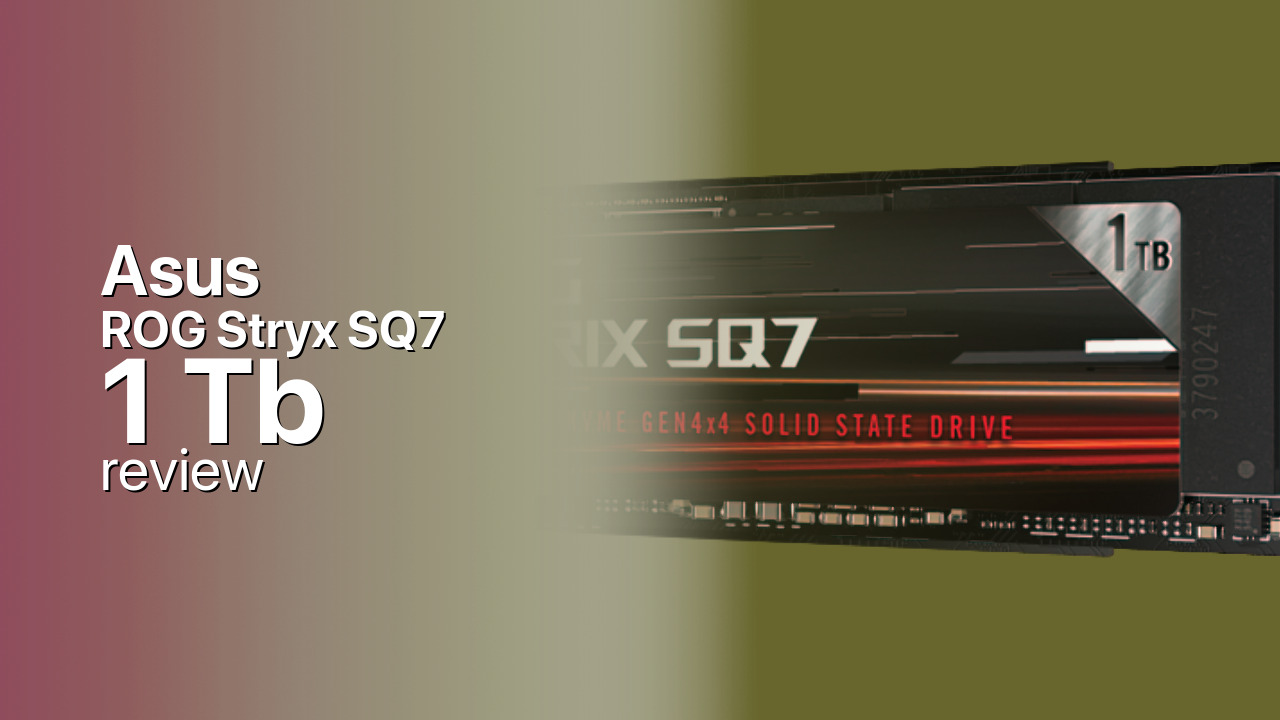
Controller & Memory
Asus entered the SSD market later than most established brands, and the ROG Strix SQ7 was its first consumer drive — a statement product designed to compete at the top of the PCIe 4.0 stack. Under the hood sits Phison's PS5018-E18 controller, a 12 nm flagship silicon that powered the fastest Gen 4 drives of 2022–2023, paired with Micron's 176-layer 3D TLC NAND. That combination delivers rated sequential reads of 7,000 MB/s and writes of 6,000 MB/s over an M.2 PCIe 4.0 x4 NVMe link, numbers that saturate what the PCIe 4.0 bus can offer.
The 1 TB capacity benefits from a DDR4 DRAM cache buffer, which reduces latency on random workloads compared to DRAM-less HMB designs. A large dynamic SLC cache handles burst writes, though like all TLC drives with aggressive SLC caching, sustained writes that exhaust the cache will see speeds drop — a characteristic shared with every E18-based competitor, from the WD Black SN850X to the Corsair MP600 Pro XT.
Thermals are managed through an integrated heat spreader on the SQ7 itself, and Asus bundles its own SSD utility software for monitoring temperature and drive health. The drive supports TCG Opal and AES 256-bit encryption. At 80 × 22 × 3.5 mm, it fits standard M.2 2280 slots in desktops and laptops, and it is PS5-compatible thanks to its PCIe 4.0 x4 interface and sustained performance profile.
Against same-generation rivals, the SQ7 positions itself alongside the Samsung 980 PRO, WD Black SN850X, and Crucial P5 Plus — all of which target similar 6,000–7,000 MB/s read bandwidth on PCIe 4.0. Where Asus differentiates is its ROG branding and bundled software ecosystem rather than raw performance leadership, since the E18 + 176L TLC combination is a proven but well-understood platform at this point.
Storage Comparisons:
ROG Stryx SQ7 Performance & Benchmarks
Sequential performance hits the advertised 7,000 MB/s read and 6,000 MB/s write ceiling that defines the upper bound of PCIe 4.0. In real-world use, that translates to sub-second load times for large game libraries, rapid 4K video scrubbing in timeline editors, and fast file copies on internal transfers. The Phison E18 controller is a mature platform — its random 4K IOPS performance is strong enough that everyday desktop responsiveness feels instantaneous, and the DDR4 DRAM cache keeps address translation overhead low under mixed workloads.
Asus ROG Stryx SQ7 1 TB vs M.2 4.0 x 4 peers
Switch between sequential throughput and random IOPS to see how this drive stacks up against other M.2 4.0 x 4 SSDs in our database. The highlighted bar is the drive on this page — click any other bar to open that drive.
- Patriot Viper PV593 1 TB: 14,500 MB/s read, 14,000 MB/s write
- Patriot Viper PV593 2 TB: 14,500 MB/s read, 14,000 MB/s write
- Patriot Viper PV593 4 TB: 14,500 MB/s read, 14,000 MB/s write
- Patriot Viper PV573 2 TB: 14,000 MB/s read, 12,000 MB/s write
- Asus ROG Stryx SQ7 1 TB (this drive): 7,000 MB/s read, 6,000 MB/s write
The Micron 176-layer TLC NAND is one of the better Gen 4 NAND dies in terms of both performance and power efficiency, outpacing older 96L and 128L designs. The dynamic SLC cache provides generous burst headroom for typical consumer use, but a full-drive write test would see speeds fall into the 1,500–2,000 MB/s range once the cache is exhausted — consistent with other E18 drives. Thermals on the SQ7 are reasonable thanks to the integrated heat spreader; the E18 is known to run warm under sustained load, and motherboard M.2 heatsinks are recommended for continuous heavy workloads. There is no PCIe 5.0 version of this drive, so buyers looking for next-gen bandwidth should look elsewhere.
Asus ROG Stryx SQ7 vs Competitors
See how the ROG Stryx SQ7 stacks up against other M.2 4.0 x 4 drives in our database:
Compare with rival drives:
Endurance, TBW & Warranty
Asus covers the ROG Strix SQ7 with a five-year (60-month) warranty from the date of purchase, which is the industry standard for mainstream and enthusiast SSDs. The warranty covers manufacturing defects and does not cover data loss or physical damage — standard exclusion language. Asus has not published an official TBW (terabytes written) endurance rating for this drive, which is unusual but not unique; some manufacturers withhold TBW figures for certain markets or SKUs. Given the 176-layer TLC NAND and typical 1 TB endurance ratings for this platform, a reasonable estimate would fall in the 600–800 TBW range, but this is not confirmed by Asus. MTBF is also not publicly stated. For most consumers, the five-year warranty is the practical guarantee that matters.
Asus ROG Stryx SQ7 1 TB Specifications
| Category | Value |
|---|---|
| Capacity [?] | 1 TB |
| Interface [?] | M.2 4.0 x 4 |
| Controller [?] | Phison PS5018-E18 |
| Memory type [?] | Micron 3D TLC |
| DRAM [?] | DDR4 cache |
| Read speed (MB/s) [?] | 7000 |
| Write speed (MB/s) [?] | 6000 |
| Read IOPS [?] | 750000 |
| Write IOPS [?] | 1000000 |
| Endurance (TBW) [?] | 1300 |
| MTBF (million hours) [?] | 2000000 |
| Warranty (years) [?] | 5 |
Verdict: Is the ROG Stryx SQ7 Worth It in 2026?
The Asus ROG Strix SQ7 1TB is a competent flagship PCIe 4.0 SSD that delivers on its speed promises with a proven Phison E18 and Micron 176L TLC platform. It is not the cheapest option in its class, and the lack of a published TBW rating is a transparency gap that enthusiast buyers will notice. However, the combination of DRAM caching, strong sequential bandwidth, five-year warranty coverage, and PS5 compatibility makes it a solid choice for gamers and content creators who want a branded, well-supported drive. It competes directly with the WD Black SN850X and Samsung 980 PRO — none of which holds a decisive advantage in everyday use at this capacity.
+ Pros
- 7,000 MB/s sequential read saturates PCIe 4.0
- Phison E18 controller with Micron 176L TLC NAND
- DDR4 DRAM cache for lower latency
- PS5 compatible out of the box
- Five-year warranty coverage
- Integrated heat spreader and monitoring software
- Cons
- No published TBW endurance rating
- Premium pricing versus non-branded E18 drives
- E18 runs warm under sustained writes
- No performance advantage over competing E18 SSDs
Buy this or similar SSD Storage:



Video Review
ASUS Makes SSDs now?