Intel SSD 660P 1TB QLC NVMe Review (2026)
Quick answer
The Intel 660P 1TB is an adequate budget NVMe SSD for read-heavy use cases like game libraries and media storage.
Read: 1800 MB/s Write: 1800 MB/s Endurance: 200 TBW Warranty: 5 years Interface: M.2 3.0 x 4
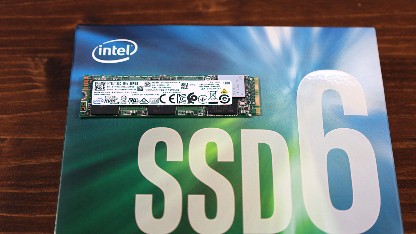
The Intel 660P 1TB is the mid-capacity model of Intel's first-generation QLC NVMe line, offering a balance of cost, capacity, and the 200 TBW endurance that makes it viable as a general-purpose drive.
Controller & Memory
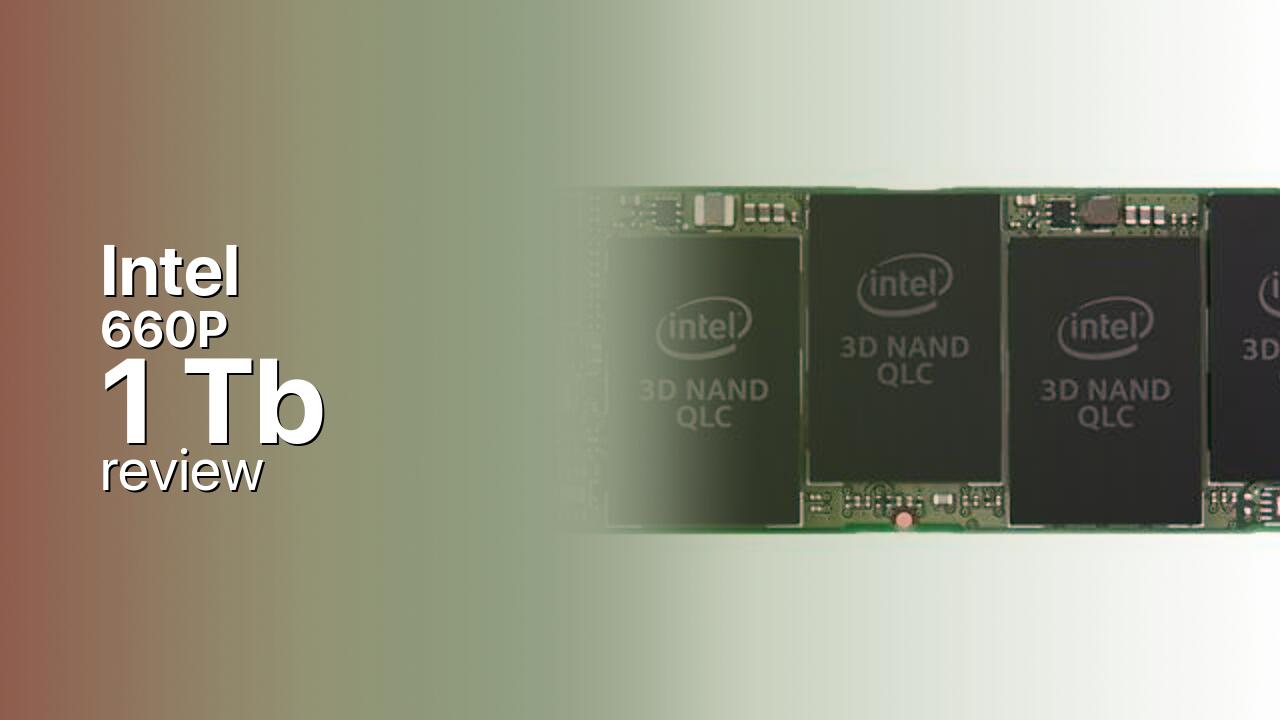
The 660P 1 TB combines Intel's 64-layer 1 Tbit 3D QLC NAND with the Silicon Motion SM2263 4-channel controller and a 256 MB Nanya DDR3 DRAM chip. The single-sided M.2 2280 form factor fits any laptop or desktop with an NVMe slot.
All 660P capacities share the same rated performance: up to 1,800 MB/s sequential reads and writes, and 220,000 read and write IOPS. These are SLC-cached numbers; native QLC performance is far lower. Endurance for the 1 TB is 200 TBW over a 5-year warranty, double the 512 GB model. The SLC cache ranges from 12 GB minimum up to 140 GB on an empty drive.
The 660P competes with budget QLC NVMe drives like the Crucial P1 and entry-level TLC drives like the Kingston A2000. Its main selling point is low cost per GB; its main weakness is QLC's inherent write performance drop once the SLC cache fills.
Storage Comparisons:
660P Performance & Benchmarks
Rated at up to 1,800 MB/s sequential reads and writes, the 660P 1 TB performs well within its SLC cache. The 12 GB minimum cache (140 GB maximum) is larger than the 512 GB model's, giving more headroom for burst writes. AnandTech measured native QLC write speed at roughly 100 MB/s after cache exhaustion on their 1 TB sample -- a dramatic drop from the cached 1,800 MB/s.
Intel 660P 1 TB vs M.2 3.0 x 4 peers
Switch between sequential throughput and random IOPS to see how this drive stacks up against other M.2 3.0 x 4 SSDs in our database. The highlighted bar is the drive on this page — click any other bar to open that drive.
- ADATA SX 8800 Pro 512 GB: 3,500 MB/s read, 2,700 MB/s write
- ADATA SX 8800 Pro 1 TB: 3,500 MB/s read, 2,700 MB/s write
- ADATA XPG Spectrix S40G RGB 256 GB: 3,500 MB/s read, 3,000 MB/s write
- ADATA XPG Spectrix S40G RGB 512 GB: 3,500 MB/s read, 3,000 MB/s write
- Intel 660P 1 TB (this drive): 1,800 MB/s read, 1,800 MB/s write
Random IOPS of 220,000 for both reads and writes are cached figures. Native QLC random performance is a small fraction of this. The SM2263 controller's 667 MT/s flash interface limits maximum throughput to about 2.4 GB/s, which explains why the 660P cannot reach the 3,500 MB/s that PCIe 3.0 x4 is theoretically capable of.
In everyday use -- booting, app launches, web browsing -- the SLC cache handles most operations and the 660P feels comparable to a budget TLC drive. The performance gap only appears during sustained writes, such as copying a large game or downloading a multi-gigabyte file.
Intel 660P vs Competitors
See how the 660P stacks up against other M.2 3.0 x 4 drives in our database:
Compare with rival drives:
Endurance, TBW & Warranty
Intel rates the 660P 1 TB at 200 TBW over its 5-year warranty, which equals roughly 110 GB of writes per day. At 0.1 drive writes per day, this is lower than the 0.3 DWPD typical of TLC drives, but for a budget QLC drive it is adequate for light to moderate consumer workloads. The 1.6 million hour MTBF is a population-level reliability statistic. Intel handles warranty service through its standard RMA process.
Intel 660P 1 TB Specifications
| Category | Value |
|---|---|
| Capacity [?] | 1 TB |
| Interface [?] | M.2 3.0 x 4 |
| Controller [?] | Silicon Motion 2263 |
| Memory type [?] | Intel QLC |
| DRAM [?] | Nanya 256MB DDR3 |
| Read speed (MB/s) [?] | 1800 |
| Write speed (MB/s) [?] | 1800 |
| Read IOPS [?] | 220000 |
| Write IOPS [?] | 220000 |
| Endurance (TBW) [?] | 200 |
| MTBF (million hours) [?] | 1.6 |
| Warranty (years) [?] | 5 |
Verdict: Is the 660P Worth It in 2026?
The Intel 660P 1TB is an adequate budget NVMe SSD for read-heavy use cases like game libraries and media storage. Its 200 TBW endurance and 1,800 MB/s cached speeds are serviceable, but the 100 MB/s native QLC write speed and the aging SM2263 controller make it a poor choice for write-intensive tasks. The newer Intel 670P 1TB, with its 144-layer QLC, faster SM2265G controller, and 370 TBW endurance, is the better choice if available at a similar price. Budget TLC alternatives like the Kingston A2000 1TB offer more consistent write performance at comparable cost.
+ Pros
- 1,800 MB/s sequential reads (SLC cached)
- 200 TBW endurance
- DRAM cache (256 MB Nanya DDR3)
- Single-sided M.2 2280 fits thin laptops
- 5-year warranty
- Low cost per GB
- 12 GB minimum SLC cache
- Cons
- QLC native write speed around 100 MB/s
- SM2263 controller capped at ~2.4 GB/s
- 0.1 DWPD, a third of TLC endurance
- Older 64-layer QLC, surpassed by 670P
- PCIe 3.0 only
Buy this or similar SSD Storage:



Video Review
Intel 660p NVMe SSD — Should You Buy One? — Review