Kioxia BG8 1 TB PCIe 5.0 NVMe SSD Review (2026)
Quick answer
The Kioxia BG8 1 TB is the right drive for a buyer who wants a balanced PCIe 5.0 NVMe with enough capacity for a working game library and a serious application set, paired with TLC endurance that comfortably outlasts QLC alternatives at this capacity.
Read: 10300 MB/s Write: 10000 MB/s Endurance: 1200 TBW Warranty: 5 years Interface: M.2 5.0 x 4
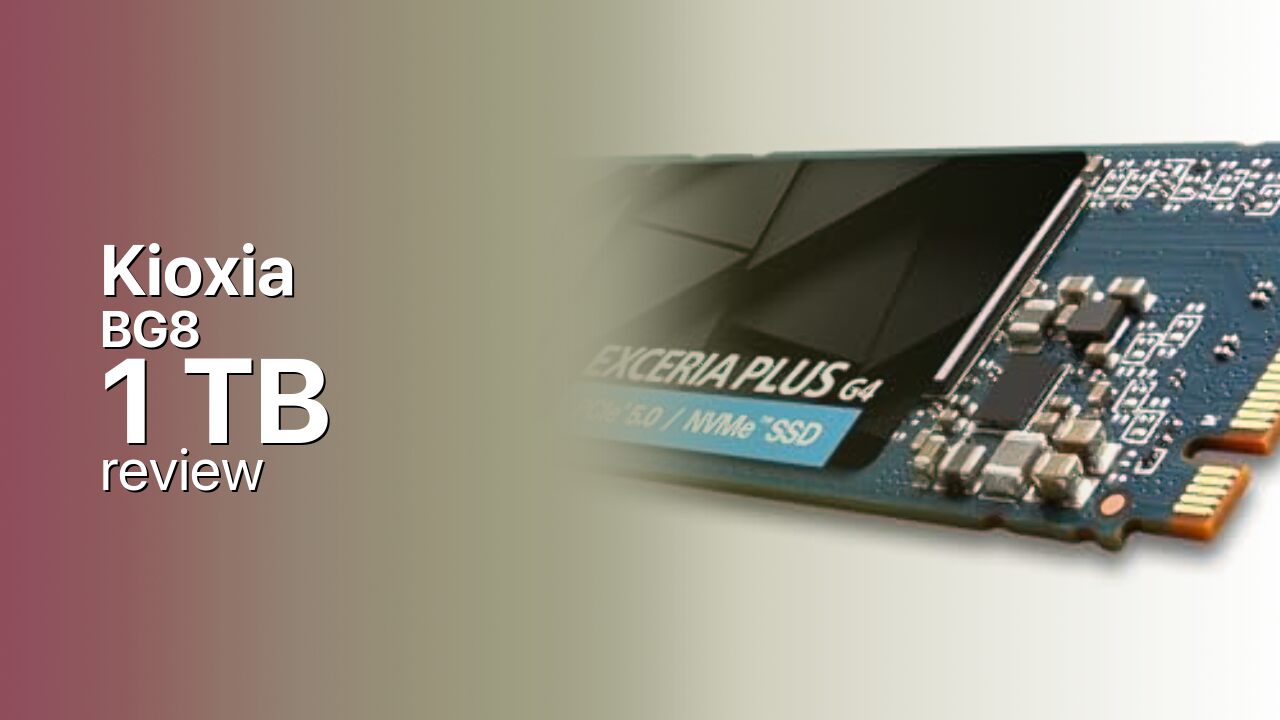
The Kioxia BG8 1 TB is the mid-capacity variant of Kioxia's first mainstream PCIe 5.0 client SSD, pairing BiCS8 TLC NAND with a DRAM-less Phison E31T controller and a generous 1,200 TBW endurance rating aimed at OEM laptops and desktops.
Controller & Memory
Kioxia announced the BG8 Series on 23 April 2026 as a PCIe 5.0 evolution of its mainstream client SSD lineup for PC OEM customers, and the 1 TB model is the middle of three capacities alongside 512 GB and 2 TB variants. Where the simultaneously launched Kioxia EG7 uses BiCS8 QLC NAND for the value tier, the BG8 is built on Kioxia's BiCS FLASH generation 8 TLC 3D flash memory on a 218-layer CBA process that bonds the CMOS logic layer directly to the memory array, which translates into higher sustained write performance and roughly double the write endurance per gigabyte that QLC can offer.
The BG8 is built around the Phison PS5031-E31T controller, a TSMC 7nm PCIe Gen5 x4 DRAM-less part that leans on a mature Host Memory Buffer (HMB) implementation to borrow a small slice of host DRAM for the NAND mapping table rather than fitting onboard DRAM. The drive is NVMe 2.0d compliant and ships in an optional Self-Encrypting Drive SKU compliant with TCG Opal 2.02 for commercial buyers who need hardware-encrypted storage at the fleet level. The DRAM-less architecture is a deliberate cost and power decision aimed at OEM laptops and desktops, and it is the main reason the BG8 sits below flagship retail PCIe 5.0 drives such as the Crucial T705 on raw sustained performance.
Form factor flexibility is a genuine strength. Kioxia ships the BG8 in M.2 2230, 2242 and 2280 lengths, so the same drive can drop into a compact handheld or Steam Deck-style device, a thin-and-light notebook with a 2242 slot, or a standard desktop motherboard. The 1 TB capacity covered here hits a useful sweet spot: enough NAND dies to push close to the family peak on sequential throughput, a roomier SLC cache than the 512 GB variant, and a 1,200 TBW endurance rating that is double what most QLC drives at this capacity can claim. Kioxia's headline figures of up to 10,300 MB/s sequential read and 10,000 MB/s sequential write are measured on the flagship 2 TB, so the 1 TB lands just under those peaks in practice.
Direct retail competitors in the value PCIe 5.0 tier are still emerging in mid-2026, but the natural peers to benchmark the BG8 1 TB against are the Crucial T710 and the WD Black SN8100 in PCIe 5.0 DRAM-less territory, while the cheaper PCIe 4.0 alternatives such as the Crucial P3 Plus, WD Blue SN5800 and Samsung 990 remain the practical comparison for buyers whose motherboards do not yet expose a Gen5 slot. The BG8's pitch is PCIe 5.0 readiness at OEM-friendly pricing rather than class-leading performance, and the 1 TB variant is the most balanced capacity in the family for buyers who want both headroom and value.
Storage Comparisons:
BG8 Performance & Benchmarks
Kioxia rates the BG8 Series at up to 10,300 MB/s sequential read and 10,000 MB/s sequential write across the family, with up to 1.4 million random read IOPS and 1.3 million random write IOPS. Those numbers are measured on the flagship 2 TB model, and the 1 TB variant lands just below the family peak thanks to its reasonably parallel NAND die configuration, which makes it the sweet-spot capacity for buyers who want flagship-class numbers without paying for the 2 TB.
Kioxia BG8 1 TB vs M.2 5.0 x 4 peers
Switch between sequential throughput and random IOPS to see how this drive stacks up against other M.2 5.0 x 4 SSDs in our database. The highlighted bar is the drive on this page — click any other bar to open that drive.
- Kioxia Exceria Pro G2 2 TB: 14,900 MB/s read, 13,400 MB/s write
- Kioxia Exceria Pro G2 4 TB: 14,900 MB/s read, 13,700 MB/s write
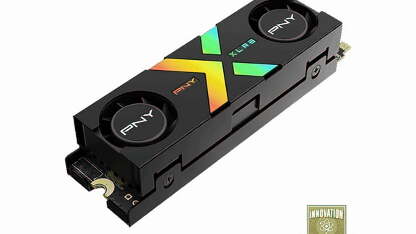
- PNY XLR8 CS3250 1 TB: 14,900 MB/s read, 13,500 MB/s write
- PNY XLR8 CS3250 2 TB: 14,900 MB/s read, 14,000 MB/s write
- Kioxia BG8 1 TB (this drive): 10,300 MB/s read, 10,000 MB/s write
Independent benchmark results for the BG8 1 TB were not yet available at launch because the drive is OEM-sampling first with shipments expected from the second quarter of 2026, so verified third-party CrystalDiskMark or 3DMark Storage scores cannot be quoted yet. Based on the Phison E31T platform and the BiCS8 TLC architecture, reviewers expect PCIe 5.0 DRAM-less drives to saturate the Gen5 x4 link on sequential reads, hold strong burst writes while the SLC cache is warm, and then settle to a lower steady-state write speed once the cache is exhausted. That post-cache write floor is the behaviour anyone moving tens of gigabytes at a time should plan around, and the 1 TB variant carries enough SLC cache headroom that the cliff arrives later than it does on the 512 GB.
For everyday client workloads such as booting Windows, launching large applications, and juggling browser tabs alongside office productivity, the 1 TB BG8 will feel indistinguishable from any other competent PCIe 5.0 boot drive. The capacity sweet spot also makes it a credible game library drive: a Windows install plus four to six modern AAA titles fit comfortably, and titles that use DirectStorage benefit directly from the Gen5 link for asset streaming from NVMe into GPU memory without staging through system RAM.
Kioxia BG8 vs Competitors
See how the BG8 stacks up against other M.2 5.0 x 4 drives in our database:
Compare with rival drives:
Endurance, TBW & Warranty
Kioxia rates the 1 TB BG8 at 1,200 TBW of write endurance over the drive's warranted life, which is double what Kioxia's own QLC EG7 offers at the same capacity and double the 600 TBW rating of the 512 GB BG8 variant. The TLC BiCS8 NAND is the reason the BG8 family endurance scales above what QLC drives can deliver, and it is the explicit differentiator Kioxia uses to position the BG8 above the value-tier EG7 despite both sharing the BiCS8 generation. Endurance is TBW-limited, so the warranty ends when either the year limit or the TBW budget is exhausted, whichever comes first.
TechPowerUp lists the BG8 Series with a five-year limited warranty, which is the standard term for mainstream client SSDs and matches what Kioxia has historically offered on the BG series. At a typical 20 to 50 GB of host writes per day, the 1,200 TBW budget translates to roughly 66 to 164 years before the endurance ceiling is reached, so for the laptop and desktop buyer the BG8 1 TB will be functionally end-of-life on capacity grounds long before it is on endurance grounds. The drive's 1.5 million hour MTBF figure is a population-reliability statistic for the product family rather than a per-unit lifetime promise, and it should be read as a confidence indicator that the underlying BiCS8 TLC and Phison E31T platform are mature silicon. Warranty service for OEM-installed BG8 drives is typically handled through the system vendor rather than directly through Kioxia, which is worth confirming before purchase.
Kioxia BG8 1 TB Specifications
| Category | Value |
|---|---|
| Capacity [?] | 1 TB |
| Interface [?] | M.2 5.0 x 4 |
| Controller [?] | Phison PS5031-E31T |
| Memory type [?] | BiCS8 TLC |
| DRAM [?] | HMB (DRAM-less) |
| Read speed (MB/s) [?] | 10300 |
| Write speed (MB/s) [?] | 10000 |
| Read IOPS [?] | 1400000 |
| Write IOPS [?] | 1300000 |
| Endurance (TBW) [?] | 1200 |
| MTBF (million hours) [?] | 1500000 |
| Warranty (years) [?] | 5 |
Verdict: Is the BG8 Worth It in 2026?
The Kioxia BG8 1 TB is the right drive for a buyer who wants a balanced PCIe 5.0 NVMe with enough capacity for a working game library and a serious application set, paired with TLC endurance that comfortably outlasts QLC alternatives at this capacity. Buyers who regularly move more than 150 GB of large files in a single session, or who want a single-drive boot-plus-library setup for a content workflow, should step up to the 2 TB variant, which carries a 2,400 TBW rating and capacity-specific peak speeds closer to the family maximum. If raw sustained performance under heavy write load is the priority and a flagship retail Gen5 drive is on the table, the Crucial T710 or WD Black SN8100 will out-write the BG8 1 TB, though at a meaningfully higher price. The BG8 1 TB's case rests on hitting the capacity sweet spot with credible PCIe 5.0 TLC performance and a five-year warranty at mainstream OEM pricing, and on that mandate it is the strongest variant in the family.
+ Pros
- PCIe 5.0 x4 Gen5 interface
- BiCS8 TLC NAND, not QLC
- 1,200 TBW endurance rating
- Five-year limited warranty
- M.2 2230, 2242 and 2280 lengths
- Optional TCG Opal 2.02 encryption
- DRAM-less HMB keeps cost low
- Cons
- Slightly below 2 TB family peak speeds
- No onboard DRAM cache
- OEM-focused, thin retail availability
- SLC cache smaller than 2 TB variant
- No heatsink included
Buy this or similar SSD Storage:



Video Review
Best SSDs for PC & Playstation 5