Klevv C950 4TB PCIe 5.0 NVMe SSD Review (2026)
Quick answer
The Klevv C950 4TB is the capacity for the buyer who needs both top-tier Gen5 speed and genuine bulk, typically a content creator working with 4K or 8K media, a workstation builder, or an enthusiast who refuses to manage library space for the next console and GPU generation.
Read: 14000 MB/s Write: 12000 MB/s Endurance: 3000 TBW Warranty: 5 years Interface: M.2 5.0 x 4
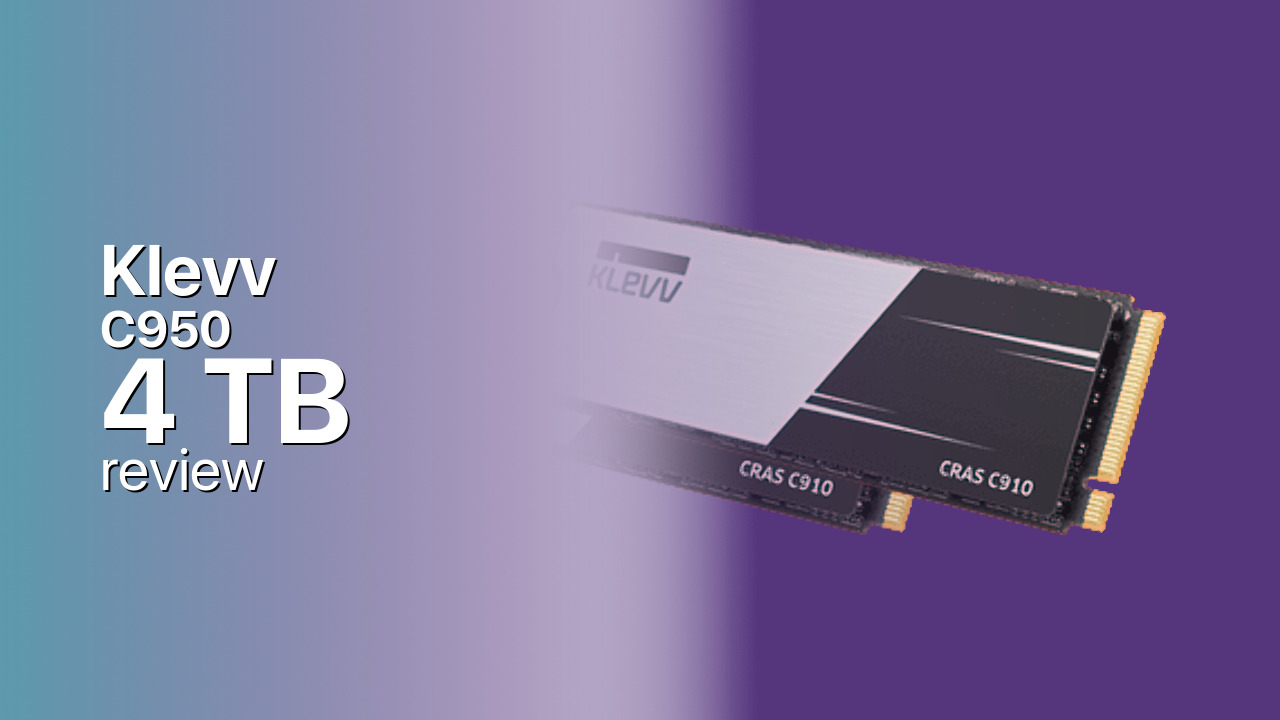
The Klevv C950 4TB is the flagship capacity of Klevv's PCIe 5.0 line, pairing a Phison E26 controller with 3,000 TBW of endurance and a pre-installed heatsink for creators who need bulk fast storage.
Controller & Memory
Klevv's C950 family is the brand's PCIe 5.0 flagship, sold under the GENUINE G560 name in some regions and built around the Phison PS5026-E26 eight-channel controller that defines the mainstream Gen5 segment. The 4TB variant is the largest of three capacities (also sold in 1TB and 2TB) and, alongside the 2TB SKU, reaches the rated platform ceiling of 14,000 MB/s sequential read and 12,000 MB/s sequential write. Where the 4TB separates itself is endurance and sustained-write headroom, both of which scale with the NAND stack.
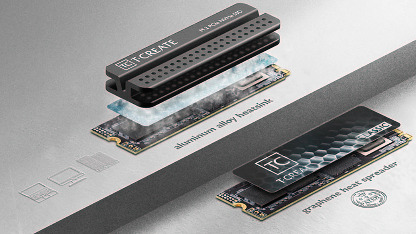
Inside the 4TB model you get strictly-selected 3D TLC NAND running at 2,400 MT/s with a DRAM cache buffer that the Phison controller uses for flash translation and sustained-workload acceleration. Klevv ships the drive with a pre-installed duotone aluminum heatsink, a dual-layered thermal pad, and a stabilizing protective base. At 17.8 mm tall and 68 grams with the heatsink, this is a desktop-only part, not a candidate for a laptop or a cramped ITX board with low-profile M.2 clearance. It is the right shape for a workstation or high-end gaming build with a CPU-wired PCIe 5.0 M.2 slot. Microsoft DirectStorage and AES 256-bit hardware encryption are both supported.
The 4TB C950 is aimed at the content creator, the workstation builder, and the deep game-library enthusiast who needs a single drive that holds an OS, several large game installs, and an active working set of project media without capacity anxiety or speed compromise. At 4TB the SLC cache region is also the largest in the line, which means sustained writes hold peak speed longer before falling to native TLC. Direct rivals at this capacity include the Crucial T700 4TB, the Corsair MP700 4TB, and the GOODRAM IRDM Pro Gen 5, all of which ride the same Phison E26 platform and land within a few hundred MB/s of each other on sequential throughput.
Storage Comparisons:
C950 Performance & Benchmarks
On Klevv's official spec sheet the 4TB C950 is rated for up to 14,000 MB/s sequential read and 12,000 MB/s sequential write, with 1,400K random read IOPS and 1,400K random write IOPS. These are the headline numbers that define the current E26 mainstream, and they roughly double the bandwidth of the fastest PCIe 4.0 drives. For a video editor moving 200 GB of RAW footage or a 3D artist shuffling large cache directories between drives, that translates to transfers that previously took minutes now finishing in tens of seconds.
Klevv C950 4 TB vs M.2 5.0 x 4 peers
Switch between sequential throughput and random IOPS to see how this drive stacks up against other M.2 5.0 x 4 SSDs in our database. The highlighted bar is the drive on this page — click any other bar to open that drive.
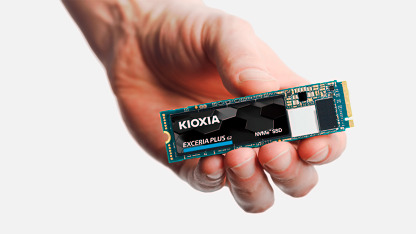
- Kioxia Exceria Pro G2 2 TB: 14,900 MB/s read, 13,400 MB/s write
- Kioxia Exceria Pro G2 4 TB: 14,900 MB/s read, 13,700 MB/s write
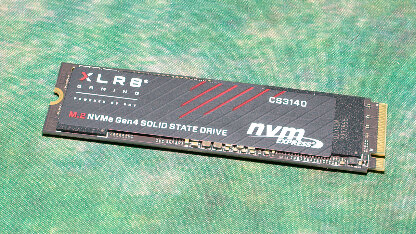
- PNY XLR8 CS3250 1 TB: 14,900 MB/s read, 13,500 MB/s write
- PNY XLR8 CS3250 2 TB: 14,900 MB/s read, 14,000 MB/s write
- Klevv C950 4 TB (this drive): 14,000 MB/s read, 12,000 MB/s write
The honest caveats for any 4TB Gen5 drive apply here. First, the rated numbers are burst figures measured under Klevv's reference conditions; sustained workloads that exceed the SLC cache will fall to native TLC write speed, which on E26 platforms typically settles in the 1,500 to 2,500 MB/s range. The good news is that on a 4TB drive that cache region is large enough that typical daily workloads never reach the fall-off, and even heavy creative sessions of a few hundred GB stay in cache. Second, Phison E26 drives are genuinely power-hungry and run hot. The integrated heatsink is not optional and the controller will throttle aggressively in a poorly ventilated case, dragging sequential throughput back toward PCIe 4.0 levels. Independent reviewers across multiple E26 brands consistently find this same thermal-cliff behavior. Finally, on a PCIe 4.0-only motherboard the drive downshifts to Gen4 speeds, wiping out the reason to buy it.
Klevv C950 vs Competitors
See how the C950 stacks up against other M.2 5.0 x 4 drives in our database:
Compare with rival drives:
Endurance, TBW & Warranty
Klevv rates the 4TB C950 at 3,000 TBW (terabytes written) of endurance and backs it with a 5-year limited warranty, whichever comes first. To put 3,000 TBW in perspective, it equals roughly 1.6 TB of writes every single day for five years, which is well beyond what any consumer or typical prosumer workflow will generate. A heavy creative workload writing 300 GB per day would still take roughly 27 years to reach the rated TBW, far longer than the warranty term. The drive carries a 2 million hour MTBF figure, which is a population-reliability statistic rather than a per-unit lifetime promise, so read it as Klevv certifying the platform to that reliability tier, not as a literal hours-of-operation guarantee. Klevv warranty claims are handled through the retailer or directly via Essencore (Klevv's parent) RMA depending on region. Retain the proof of purchase, since TBW-based denials are the most common reason an otherwise-functional Gen5 SSD is rejected on claim. The 3,000 TBW rating also makes this capacity a defensible pick for a small NAS cache or a working scratch disk, even though the drive is marketed at consumers.
Klevv C950 4 TB Specifications
| Category | Value |
|---|---|
| Capacity [?] | 4 TB |
| Interface [?] | M.2 5.0 x 4 |
| Controller [?] | Phison PS5026-E26 8 Channel |
| Memory type [?] | Micron 232-L TLC |
| DRAM [?] | Yes |
| Read speed (MB/s) [?] | 14000 |
| Write speed (MB/s) [?] | 12000 |
| Read IOPS [?] | 1400000 |
| Write IOPS [?] | 1400000 |
| Endurance (TBW) [?] | 3000 |
| MTBF (million hours) [?] | 2000000 |
| Warranty (years) [?] | 5 |
Verdict: Is the C950 Worth It in 2026?
The Klevv C950 4TB is the capacity for the buyer who needs both top-tier Gen5 speed and genuine bulk, typically a content creator working with 4K or 8K media, a workstation builder, or an enthusiast who refuses to manage library space for the next console and GPU generation. It is the right pick when a 2TB Gen5 drive would fill up too quickly and you want one drive to do the job of two. Skip it if your workload fits in 2TB, since the 4TB carries a meaningful price premium and the rated sequential speeds are identical to the cheaper 2TB SKU. The most direct alternative is the Crucial T700 4TB, which shares the Phison E26 silicon and has the widest retail availability, alongside the GOODRAM IRDM Pro Gen 5 if you want a European alternative at the same tier. For buyers who actually need 4TB of fast TLC and have already committed to a Gen5 platform, this is the top of the Klevv line and a defensible long-term purchase.
+ Pros
- 14,000 MB/s rated sequential reads
- 3,000 TBW endurance rating
- 5-year limited warranty
- Phison E26 with DRAM cache
- Largest SLC cache in the line
- Pre-installed aluminum heatsink
- Cons
- Tall 17.8 mm heatsink limits fit
- Highest price per GB in the line
- Needs a PCIe 5.0 platform to pay off
- Hot and power-hungry under load
Buy this or similar SSD Storage:



Video Review
Phison E26 Gen5 SSD Saturation Continues - The KLEVV CRAS C950