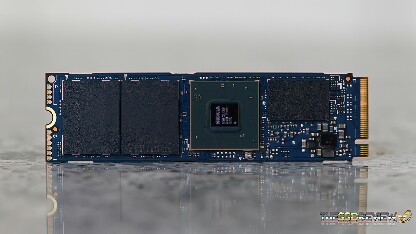
Fanxiang S770 1TB Review — PCIe 4.0 NVMe with DRAM Cache (2026)
Quick answer
The Fanxiang S770 1 TB is the right pick for a buyer who wants flagship-adjacent sequential speeds at a budget price and can tolerate a support and quality-control lottery.
Read: 7300 MB/s Write: 5400 MB/s Endurance: 700 TBW Warranty: 5 years Interface: M.2 4.0 x 4
The Fanxiang S770 1 TB is a PCIe 4.0 drive that looks like a flagship on paper but comes with the kind of quality-control asterisks that make a buyer pause — here is what you actually get.
Controller & Memory
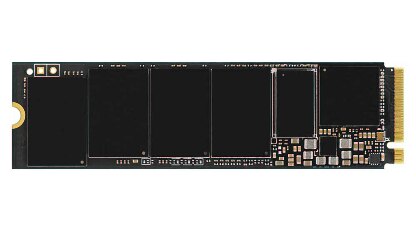
Under the sticker, the S770 runs an InnoGrit IG5236 (Rainier) controller — the same quad-core ARM design found in several enthusiast PCIe 4.0 drives — paired with a dedicated DDR4 DRAM cache. The NAND is YMTC 128-layer TLC built on the company's Xtacking 2.0 process. It is a double-sided M.2 2280 PCB, so clearance in thin laptops is worth checking, though Fanxiang ships the drive with a heatsink, thermal pads, and even a small screwdriver in the box.
The 1 TB variant is the entry point of the S770 stack, which also includes 2 TB and 4 TB capacities. Crucially, the 1 TB model's sequential write speed is 5,400 MB/s — not the 6,800 MB/s figure that gets quoted for the 2 TB version. The read speed sits at 7,300 MB/s across all capacities, and all three share the same IG5236-plus-DRAM architecture, so the core performance profile is consistent.
This drive competes in the crowded budget-to-mid-range PCIe 4.0 segment alongside the Silicon Power US75, Team Group MP44L, and Kingston NV3. The S770's selling point is raw sequential throughput at a low price. The trade-off — and it is a meaningful one — is that Fanxiang has a documented pattern of swapping NAND and controller revisions between production batches without notice. The drive you buy today may not match the drive a reviewer tested six months ago.
Storage Comparisons:
S770 Performance & Benchmarks
The S770 1 TB is rated for 7,300 MB/s sequential reads and 5,400 MB/s sequential writes over PCIe 4.0 x4, with random IOPS in the neighbourhood of 860,000 reads and 675,000 writes. Those numbers put it in the same postcode as first-wave PCIe 4.0 flagships — impressive for a budget-brand drive, though the gap between rated and sustained performance matters here.
Fanxiang S770 1 TB vs M.2 4.0 x 4 peers
Switch between sequential throughput and random IOPS to see how this drive stacks up against other M.2 4.0 x 4 SSDs in our database. The highlighted bar is the drive on this page — click any other bar to open that drive.
- Patriot Viper PV593 1 TB: 14,500 MB/s read, 14,000 MB/s write
- Patriot Viper PV593 2 TB: 14,500 MB/s read, 14,000 MB/s write
- Patriot Viper PV593 4 TB: 14,500 MB/s read, 14,000 MB/s write
- Patriot Viper PV573 2 TB: 14,000 MB/s read, 12,000 MB/s write
- Fanxiang S770 1 TB (this drive): 7,300 MB/s read, 5,400 MB/s write
Like most modern NVMe drives, the S770 uses a pseudo-SLC write cache to hit its advertised speeds. Once that cache fills — on the 1 TB model, independent testing suggests roughly 340 GB of cache capacity — write performance drops to native TLC speed, which is substantially lower. For a typical gaming or boot-drive workload this is invisible; the cache recovers during idle periods and most transfers are well under the cache threshold. For sustained large-file workflows like 4K video ingest or multi-hundred-gigabyte game library migrations, the post-cache dip is noticeable. This is not unique to the S770 — it is standard NVMe behaviour — but it is worth knowing if your workload involves frequent large transfers.
Fanxiang S770 vs Competitors
See how the S770 stacks up against other M.2 4.0 x 4 drives in our database:
Compare with rival drives:
Endurance, TBW & Warranty
Fanxiang backs the S770 1 TB with a 5-year warranty capped at 700 TBW of endurance. At a typical consumer workload of 30 GB per day, that works out to roughly 64 years before hitting the TBW ceiling — the warranty period will expire long before the endurance budget does. The MTBF is rated at 2 million hours, though like all MTBF figures this is a population-level statistic, not a per-drive lifespan prediction. The practical warranty concern is not the numbers on the spec sheet but Fanxiang's support track record: multiple user reports describe unresponsive customer service and warranty claims that went unanswered until Amazon intervened. For a drive storing irreplaceable data, that support gap matters more than the TBW rating.
Fanxiang S770 1 TB Specifications
| Category | Value |
|---|---|
| Capacity [?] | 1 TB |
| Interface [?] | M.2 4.0 x 4 |
| Controller [?] | Innogrit IG5236 |
| Memory type [?] | YMTC 128-l TLC |
| DRAM [?] | Yes |
| Read speed (MB/s) [?] | 7300 |
| Write speed (MB/s) [?] | 5400 |
| Read IOPS [?] | 860000 |
| Write IOPS [?] | 675000 |
| Endurance (TBW) [?] | 700 |
| MTBF (million hours) [?] | 2000000 |
| Warranty (years) [?] | 5 |
Verdict: Is the S770 Worth It in 2026?
The Fanxiang S770 1 TB is the right pick for a buyer who wants flagship-adjacent sequential speeds at a budget price and can tolerate a support and quality-control lottery. It belongs in a gaming rig or as a fast secondary drive where the data is backed up elsewhere. Buyers who value long-term reliability, consistent component sourcing, and reachable warranty support should stretch to a Silicon Power US75 or Kingston NV3 instead — both offer comparable performance from companies with established RMA pipelines. The S770 is a capable drive let down by the company behind it.
+ Pros
- 7,300 MB/s sequential reads on PCIe 4.0
- Dedicated DDR4 DRAM cache, not HMB
- Includes heatsink, pads, and screwdriver in the box
- 5-year warranty with 700 TBW endurance on the 1 TB model
- Cons
- NAND and controller revisions swapped between production batches without notice
- Customer support is effectively unreachable for warranty claims per user reports
- Double-sided PCB may not fit thin laptops
- YMTC 128L TLC has a history of forum-reported corruption issues
- 1 TB write speed (5,400 MB/s) is a step down from the 2 TB variant (6,800 MB/s)
Buy this or similar SSD Storage:



Video Review
Fanxiang m.2 SSD - Worth it?