Sabrent Rocket 5 4TB NVMe specifications (2026)
Quick answer
The Sabrent Rocket 5 4 TB is the highest-capacity PCIe 5.0 SSD in Sabrent's portfolio and one of the most capacious Gen5 drives available.
Read: 14000 MB/s Write: 11000 MB/s Endurance: 2400 TBW Warranty: 5 years Interface: M.2 5.0 x 4
The Sabrent Rocket 5 4 TB combines PCIe 5.0 sequential reads up to 14,000 MB/s with a massive 2,400 TBW endurance rating, making it a high-capacity NVMe SSD for demanding workloads.
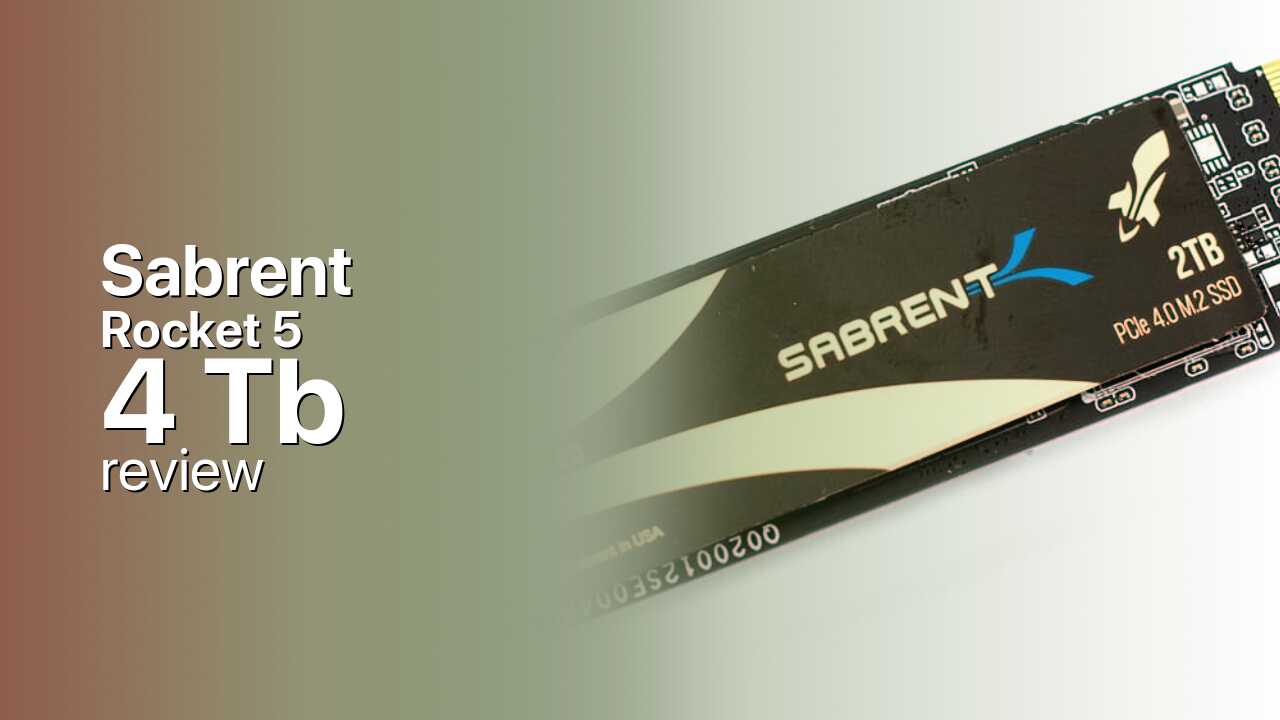
Controller & Memory
The Sabrent Rocket 5 4 TB represents the top capacity in Sabrent's PCIe 5.0 SSD lineup. It is built on the Phison PS5026-E26 eight-channel controller with Micron 232-layer TLC NAND flash and a DDR4 DRAM cache. At 4 TB, the drive has the maximum number of NAND dies per channel, which provides the highest degree of parallelism and the most consistent sustained write performance across the Rocket 5 family.
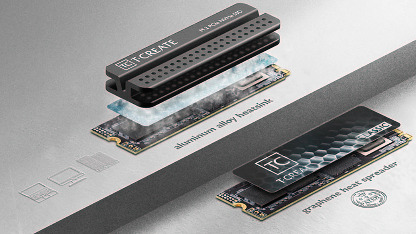
The M.2 2280 form factor keeps the Rocket 5 compatible with standard motherboard M.2 slots, though double-sided NAND modules can create clearance issues with some aftermarket heatsinks. The drive is backward-compatible with PCIe 4.0 and 3.0, though rated speeds require a PCIe 5.0 x4 connection. Power draw at 4 TB is higher than the smaller capacities, so adequate cooling is essential to prevent thermal throttling during extended writes.
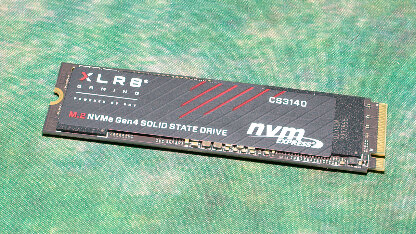
Competitors at 4 TB include the PNY XLR8 CS3250 4 TB, which uses the newer Phison E28 controller for slightly higher peak reads, and the Crucial T705 4 TB, another E26-based drive. The Samsung 990 Pro 4 TB is a strong PCIe 4.0 alternative for users who do not need PCIe 5.0 speeds but want proven reliability at high capacity. At 4 TB, the Rocket 5 provides enough storage for large game libraries, 4K video projects, and professional creative workflows without relying on secondary storage.
Storage Comparisons:
Rocket 5 Performance & Benchmarks
The 4 TB Sabrent Rocket 5 reaches sequential read speeds up to 14,000 MB/s and sequential writes up to 11,000 MB/s over PCIe 5.0 x4. Random performance peaks at approximately 1,400K read IOPS and 1,800K write IOPS. With all eight NAND channels fully populated, the 4 TB model delivers the most consistent performance across the Rocket 5 family.
Sabrent Rocket 5 4 TB vs M.2 5.0 x 4 peers
Switch between sequential throughput and random IOPS to see how this drive stacks up against other M.2 5.0 x 4 SSDs in our database. The highlighted bar is the drive on this page — click any other bar to open that drive.
- Kioxia Exceria Pro G2 2 TB: 14,900 MB/s read, 13,400 MB/s write
- Kioxia Exceria Pro G2 4 TB: 14,900 MB/s read, 13,700 MB/s write
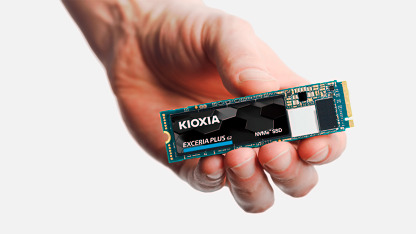
- PNY XLR8 CS3250 1 TB: 14,900 MB/s read, 13,500 MB/s write
- PNY XLR8 CS3250 2 TB: 14,900 MB/s read, 14,000 MB/s write
- Sabrent Rocket 5 4 TB (this drive): 14,000 MB/s read, 11,000 MB/s write
The large SLC cache buffer at 4 TB absorbs sustained write bursts for extended periods before transitioning to native TLC writes, which themselves remain strong thanks to the high die count. In practice, the 4 TB Rocket 5 rarely encounters a scenario where write performance drops to problematic levels during consumer workloads. 4K random read performance at high queue depths outpaces any PCIe 4.0 drive, though at typical desktop queue depths of QD1 to QD4 the improvement over premium PCIe 4.0 drives like the Samsung 990 Pro is modest. Real-world file transfers between PCIe 5.0 drives can sustain peak write throughput for the duration of the transfer, making the 4 TB model well-suited for data-intensive professional environments.
Sabrent Rocket 5 vs Competitors
See how the Rocket 5 stacks up against other M.2 5.0 x 4 drives in our database:
Compare with rival drives:
Endurance, TBW & Warranty
Sabrent covers the Rocket 5 4 TB with a five-year warranty and a 2,400 TBW endurance rating. This allows approximately 1,315 GB of writes per day for five consecutive years before hitting the endurance limit. For users writing 20 to 50 GB daily, the drive will last many times beyond the warranty period. The 2 million hour MTBF rating further underscores the drive's reliability engineering. Product registration is required for the full warranty term. The TBW threshold scales linearly with capacity across the Rocket 5 lineup. Buyers who do not register the product may receive a shorter warranty period, so completing registration through Sabrent's website is advisable.
Sabrent Rocket 5 4 TB Specifications
| Category | Value |
|---|---|
| Capacity [?] | 4 TB |
| Interface [?] | M.2 5.0 x 4 |
| Controller [?] | Phison PS5026-E26 8 Channel |
| Memory type [?] | Micron 232-L TLC |
| DRAM [?] | Yes |
| Read speed (MB/s) [?] | 14000 |
| Write speed (MB/s) [?] | 11000 |
| Read IOPS [?] | 1400000 |
| Write IOPS [?] | 1800000 |
| Endurance (TBW) [?] | 2400 |
| MTBF (million hours) [?] | 2000000 |
| Warranty (years) [?] | 5 |
Verdict: Is the Rocket 5 Worth It in 2026?
The Sabrent Rocket 5 4 TB is the highest-capacity PCIe 5.0 SSD in Sabrent's portfolio and one of the most capacious Gen5 drives available. Its combination of 14,000 MB/s reads, 2,400 TBW endurance, and full NAND channel utilization makes it ideal for users with large storage needs and PCIe 5.0-capable hardware.
Most buyers do not need PCIe 5.0 bandwidth at 4 TB. If your workflow does not involve frequent large file transfers, the Samsung 990 Pro 4 TB or WD Black SN850X 4 TB on PCIe 4.0 deliver comparable everyday performance at lower cost and power. The Rocket 5 4 TB is best suited for professionals working with 4K and 8K video, large datasets, or anyone who regularly moves tens or hundreds of gigabytes between fast drives.
+ Pros
- Up to 14,000 MB/s sequential read speed
- 2,400 TBW endurance rating at 4 TB
- Maximum NAND channel utilization
- Phison E26 controller with DDR4 DRAM
- Consistent sustained write performance
- Five-year warranty with registration
- Cons
- Requires PCIe 5.0 motherboard for full speed
- Higher power draw than smaller capacities
- Double-sided PCB may limit heatsink compatibility
- Premium pricing at the 4 TB capacity
- Runs hot under sustained writes
Buy this or similar SSD Storage:



Video Review
Sabrent Rocket 4 Plus 4TB Gen4 PCIe M.2 NVMe Unboxing - Worlds Fastest SSD