Patriot Viper VPN110 1TB Review — A Gen3 Veteran Under a Heatshield (2026)
Quick answer
The Patriot Viper VPN110 1TB makes sense in one scenario: a PCIe 3.0 system that needs a like-for-like replacement while old stock is still findable.
Read: 3300 MB/s Write: 3000 MB/s Endurance: 800 TBW Warranty: 5 years Interface: M.2 3.0 x 4
The Patriot Viper VPN110 1TB is a discontinued Gen3 veteran — 3,300/3,000 MB/s ratings, 500K IOPS and 800 TBW endurance beneath a factory heatshield.
Controller & Memory
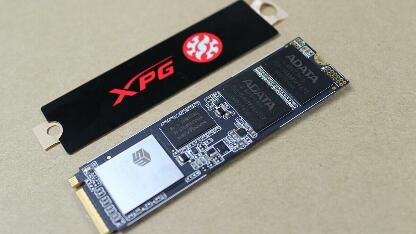
The Patriot Viper VPN110 1TB is a PCIe 3.0 x4 NVMe drive from the generation that retired SATA: Phison's E12S controller, Kioxia 3D TLC NAND and a DRAM cache sized to the capacity, on a standard 2280 PCB. Cooling was part of the design rather than an accessory — Patriot fits a built-in aluminum heatshield with six thermal fins and a dedicated thermal sensor — and the E12S platform carries AES-256 hardware encryption support. Patriot's ratings are 3,300 MB/s sequential reads, 3,000 MB/s writes and up to 500K IOPS for 4K random reads and writes. The line ran from 512 GB to 2 TB, with the 512GB model carrying lower ratings and the 1TB and 2TB sharing the full 3,300/3,000 figure set.
Status matters here: Patriot lists the VPN110 as discontinued, so new units surface only as remaining stock or on the used market. The audience is accordingly specific — owners of PCIe 3.0 platforms such as AMD's B450 and X470 boards or Intel's 400-series chipsets replacing a failed drive, and buyers weighing leftover old stock against current Gen4 alternatives. In its day the VPN110 fought the Samsung 970 EVO Plus, ADATA XPG SX8200 Pro and WD Black SN750, and reviewers placed it as a competent mid-pack performer rather than a class leader. Patriot's Viper VP4300 family is the direct modern successor, adding PCIe 4.0 throughput and current NAND; PlayStation 5 upgraders should head straight there, since Sony's program requires Gen4 drives. The finned shield also adds stack height, so the drive suits open desktop slots far better than slim laptop bays.
Storage Comparisons:
Viper VPN110 Performance & Benchmarks
Patriot rated the VPN110 1TB at 3,300 MB/s sequential reads, 3,000 MB/s writes and up to 500K IOPS for 4K random reads and writes — a balanced mid-tier Gen3 profile. Independent testing matched the character: Hardware Asylum's review described a drive that was not the fastest in Patriot's own lineup but no slouch, with ATTO and CrystalDiskMark results running at the rated figures. The DRAM cache and heatshield matter for consistency — the thermal sensor and finned shield kept the drive inside its 0 to 70 C operating envelope during testing, and the E12S platform's pseudo-SLC cache handles desktop bursts comfortably before settling to native TLC rates on very long transfers. The rated 500K IOPS in both directions, dependent on that DRAM cache, kept everyday multitasking responsive in the era's testing.
PATRIOT Viper VPN110 1 TB vs M.2 3.0 x 4 peers
Switch between sequential throughput and random IOPS to see how this drive stacks up against other M.2 3.0 x 4 SSDs in our database. The highlighted bar is the drive on this page — click any other bar to open that drive.
- ADATA SX 8800 Pro 512 GB: 3,500 MB/s read, 2,700 MB/s write
- ADATA SX 8800 Pro 1 TB: 3,500 MB/s read, 2,700 MB/s write
- ADATA XPG Spectrix S40G RGB 256 GB: 3,500 MB/s read, 3,000 MB/s write
- ADATA XPG Spectrix S40G RGB 512 GB: 3,500 MB/s read, 3,000 MB/s write
- PATRIOT Viper VPN110 1 TB (this drive): 3,300 MB/s read, 3,000 MB/s write
Judged against current expectations, the numbers are dated: PCIe 4.0 drives roughly double the sequential throughput, and newer controllers push random performance further. On a Gen3-only board, though, none of that headroom is usable — the VPN110 still swamps anything a SATA drive could do several times over, and game loading differs far less from a Gen4 drive than the spec sheet implies.
PATRIOT Viper VPN110 vs Competitors
See how the Viper VPN110 stacks up against other M.2 3.0 x 4 drives in our database:
Compare with rival drives:
Endurance, TBW & Warranty
Patriot's official warranty table lists the VPN110-1TBM28H at 800 TBW endurance with a five-year warranty, whichever arrives first — the same terms as the 512GB (400 TBW) and 2TB (1,600 TBW) models. The figure is worth pinning down because some retail listings and reviews cite a three-year term for this drive; Patriot's own warranty documentation is the governing source, and it says five. At 20 GB of writes per day, 800 TBW represents more than a century of service, so the warranty term is the practical limit by decades. Listings quote a 2,000,000-hour MTBF rating — a population statistic, not a promise about any individual drive, and one Patriot itself does not publish for this model — and as a discontinued product, claims follow Patriot's standard RMA process, with substitutions of equivalent value when exact replacements are gone.
PATRIOT Viper VPN110 1 TB Specifications
| Category | Value |
|---|---|
| Capacity [?] | 1 TB |
| Interface [?] | M.2 3.0 x 4 |
| Controller [?] | Phison E12S 4 Channel |
| Memory type [?] | Kioxia TLC |
| DRAM [?] | Yes |
| Read speed (MB/s) [?] | 3300 |
| Write speed (MB/s) [?] | 3000 |
| Read IOPS [?] | 500000 |
| Write IOPS [?] | 500000 |
| Endurance (TBW) [?] | 800 |
| MTBF (million hours) [?] | 2000000 |
| Warranty (years) [?] | 5 |
Verdict: Is the Viper VPN110 Worth It in 2026?
The Patriot Viper VPN110 1TB makes sense in one scenario: a PCIe 3.0 system that needs a like-for-like replacement while old stock is still findable. For any new build, skip it — Patriot's own VP4300 family delivers Gen4 speed on current NAND, and the WD Black SN770 is the safer 1 TB default at this tier. As a piece of the Gen3 era it has aged gracefully: the ratings hold up, the heatshield was thoughtful engineering, and the endurance terms were ahead of their time — but a discontinued drive is a niche purchase, not a plan, and every alternative above is newer, faster and still supported, so treat it strictly as a stopgap.
+ Pros
- 3,300/3,000 MB/s rated speeds
- 500K IOPS random read and write ratings
- 800 TBW endurance rating
- Factory heatshield with six thermal fins
- Dedicated thermal sensor
- E12S platform AES-256 encryption support
- Cons
- Discontinued — remaining stock or used only
- PCIe 3.0 caps sequential throughput
- Fails PS5 requirements (Gen4 required)
- Heatshield adds height in tight slots
- 512GB sibling carries slower ratings
Buy this or similar SSD Storage:
Video Review
Elgato 4K60 Pro MK.2 + Dysk SSD Patriot Viper VPN110 1 TB M.2 - Unboxing