Team Group Cardea A440 Pro 1TB PCIe 4.0 NVMe SSD (2026)
Quick answer
The Cardea A440 Pro 1 TB is the right pick for PC gamers and Phison-E18 fans who want a DRAM-equipped PCIe 4.0 drive at the 1 TB tier and are happy to live with a 6,000 MB/s write rating in exchange for a sometimes-better price than the Samsung 990 Pro or WD Black SN850X.
Read: 7200 MB/s Write: 6000 MB/s Endurance: 700 TBW Warranty: 5 years Interface: M.2 4.0 x 4
The Team Group Cardea A440 Pro 1 TB pairs the flagship Phison E18 controller with Micron 176-layer TLC NAND and a full DRAM cache, sitting just below the very fastest PCIe 4.0 drives at the same capacity.
Controller & Memory
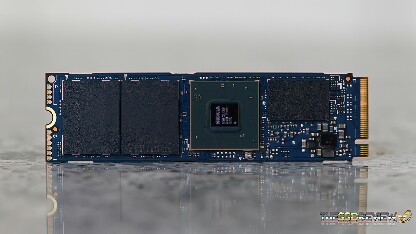
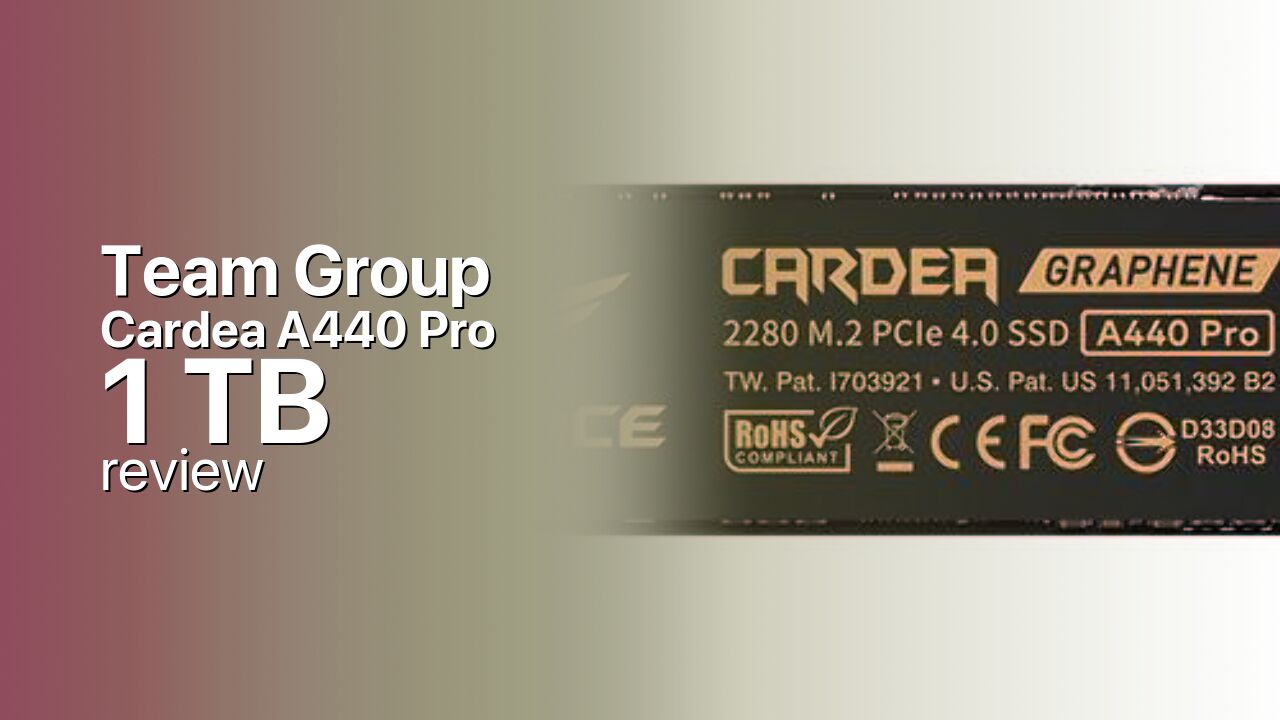
Team Group builds the Cardea A440 Pro 1 TB around the eight-channel Phison PS5018-E18 controller, the same silicon that powers the Kingston KC3000, Seagate FireCuda 530 and Sabrent Rocket 4 Plus. NAND is Micron's B47R 176-layer 3D TLC, and the 1 TB model carries 1 GB of SK Hynix DDR4-2666 DRAM as a mapping-table cache. The drive ships as a single-sided M.2 2280 board and is sold in two flavours: a thin graphene heat-spreader version (3.7 mm tall) and an aluminium fin heatsink version that adds about 16 mm of height for desktop installs.
The 1 TB sits at the bottom of the A440 Pro line-up, with 2 TB and 4 TB variants stepping up sequential write speed and endurance. Because eight NAND dies populate fewer planes at this capacity, the 1 TB is rated 7,200 MB/s reads and 6,000 MB/s writes rather than the 7,400/6,900 MB/s the larger 2 TB and 4 TB models reach. Random IOPS are unchanged at up to 1 million read and write. The graphene-cooler variant is dimensioned specifically for the PS5's M.2 slot lid, while the aluminium version will not fit and is meant for PC towers and laptops with airflow.
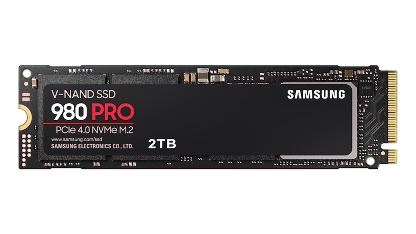
Direct rivals at this capacity include the WD Black SN850X 1 TB, Samsung 990 Pro 1 TB, Crucial T500 1 TB and the cheaper Lexar NM790 1 TB. The A440 Pro slots in slightly behind the SN850X and 990 Pro on the write spec sheet at this size, but matches them on controller class and DRAM behaviour. Independent reviewers, including Tom's Hardware, have flagged the 1 TB as the slowest of the Pro line — buyers chasing the headline 7,400/6,900 figure should step up to the 2 TB.
Storage Comparisons:
Cardea A440 Pro Performance & Benchmarks
Team Group rates the Cardea A440 Pro 1 TB at up to 7,200 MB/s sequential reads and up to 6,000 MB/s sequential writes over PCIe 4.0 x4, with random performance quoted at up to 1,000,000 IOPS for both reads and writes. In practical terms that is enough headroom for sub-second OS boots on Windows 11, near-instant game level loads on PCIe 4.0 desktops and laptops, and a clean fit with Microsoft's DirectStorage stack — the bottleneck on modern AAA titles is usually GPU decompression, not the drive.
Team Group Cardea A440 Pro 1 TB vs M.2 4.0 x 4 peers
Switch between sequential throughput and random IOPS to see how this drive stacks up against other M.2 4.0 x 4 SSDs in our database. The highlighted bar is the drive on this page — click any other bar to open that drive.
- Patriot Viper PV593 1 TB: 14,500 MB/s read, 14,000 MB/s write
- Patriot Viper PV593 2 TB: 14,500 MB/s read, 14,000 MB/s write
- Patriot Viper PV593 4 TB: 14,500 MB/s read, 14,000 MB/s write
- Patriot Viper PV573 2 TB: 14,000 MB/s read, 12,000 MB/s write
- Team Group Cardea A440 Pro 1 TB (this drive): 7,200 MB/s read, 6,000 MB/s write
Like all current TLC-based NVMe drives, the A440 Pro uses a dynamic SLC write cache to deliver its peak figures. Once the SLC region fills during sustained transfers, native TLC writes drop sharply; independent reviewers consistently note that the E18 platform settles into the low-gigabytes-per-second range after the cache exhausts, on par with sibling E18 drives like the KC3000 and FireCuda 530. For boot, productivity and game-library use this is invisible — the cache rarely fills. For 50 GB+ continuous writes such as 4K video ingest or cloning a full game install, the 1 TB will tail off sooner than the 2 TB and 4 TB variants because the cache scales with capacity. Thermal throttling on the bare graphene-cooler version is realistic under heavy desktop loads, so a third-party heatsink or motherboard cover is worth using.
Team Group Cardea A440 Pro vs Competitors
See how the Cardea A440 Pro stacks up against other M.2 4.0 x 4 drives in our database:
Compare with rival drives:
Endurance, TBW & Warranty
Team Group rates the Cardea A440 Pro 1 TB at 700 TBW (terabytes written) and backs it with a 5-year limited warranty that ends at whichever limit you hit first. At a heavy enthusiast write workload of 40 GB per day, 700 TBW works out to roughly 48 years of writes — comfortably beyond the warranty window. For a typical desktop where most writes are application updates, browser cache and game patches (closer to 10–20 GB per day), the TBW ceiling is effectively unreachable. Buyers planning to use the 1 TB as a video-editing scratch disk or cache for heavy database work should think about the 2 TB at 1,400 TBW or the 4 TB at 3,000 TBW instead, since those workloads can push 100 GB per day without much effort. MTBF is rated at three million hours, a population-level reliability projection rather than a per-drive lifetime guarantee.
Team Group Cardea A440 Pro 1 TB Specifications
| Category | Value |
|---|---|
| Capacity [?] | 1 TB |
| Interface [?] | M.2 4.0 x 4 |
| Controller [?] | Phison PS5018-E18 |
| Memory type [?] | Micron 3D TLC |
| DRAM [?] | SK Hynix DDR4 |
| Read speed (MB/s) [?] | 7200 |
| Write speed (MB/s) [?] | 6000 |
| Read IOPS [?] | 1000000 |
| Write IOPS [?] | 1000000 |
| Endurance (TBW) [?] | 700 |
| MTBF (million hours) [?] | 3 |
| Warranty (years) [?] | 5 |
Verdict: Is the Cardea A440 Pro Worth It in 2026?
The Cardea A440 Pro 1 TB is the right pick for PC gamers and Phison-E18 fans who want a DRAM-equipped PCIe 4.0 drive at the 1 TB tier and are happy to live with a 6,000 MB/s write rating in exchange for a sometimes-better price than the Samsung 990 Pro or WD Black SN850X. Shoppers who specifically want PS5 expansion should buy the A440 Pro Special graphene version of this drive instead, since the regular Pro's aluminium heatsink will not fit under the console's slot lid. If sustained writes after the SLC cache matter to you, the Seagate FireCuda 530 1 TB is the better E18 sibling. Overall it is a competent 1 TB option, but the 2 TB and 4 TB versions are where the A440 Pro really makes its case.
+ Pros
- 7,200 MB/s sequential reads on PCIe 4.0 x4
- Phison E18 controller with full SK Hynix DDR4 DRAM cache
- Micron 176-layer B47R 3D TLC NAND
- 5-year warranty with 700 TBW endurance
- Choice of thin graphene or aluminium heatsink at purchase
- Single-sided M.2 2280 PCB fits thin laptops
- Cons
- 6,000 MB/s write rating trails 2 TB and 4 TB siblings
- Aluminium heatsink version does not fit the PS5 slot
- SLC cache exhausts faster on the 1 TB than larger capacities
- 700 TBW is mid-pack for a Phison E18 drive at this size
- No hardware encryption support
Buy this or similar SSD Storage:
Video Review
TeamGroup T-Force Cardea A440 SSD Review & Benchmark - Bringing it's A Game