ADATA XPG SX8200 Pro 512GB Review — Top-Tier PCIe 3.0 NVMe (2026)
Quick answer
The ADATA XPG SX8200 Pro 512GB is a top-tier PCIe 3.0 NVMe SSD that delivers near-saturating interface speeds with the consistency benefits of a DRAM cache.
Read: 3500 MB/s Write: 3000 MB/s Endurance: 320 TBW Warranty: 5 years Interface: M.2 3.0 x 4
The ADATA XPG SX8200 Pro 512GB is a high-performance PCIe 3.0 NVMe SSD that near-saturates the interface with DRAM-backed consistency.
Controller & Memory
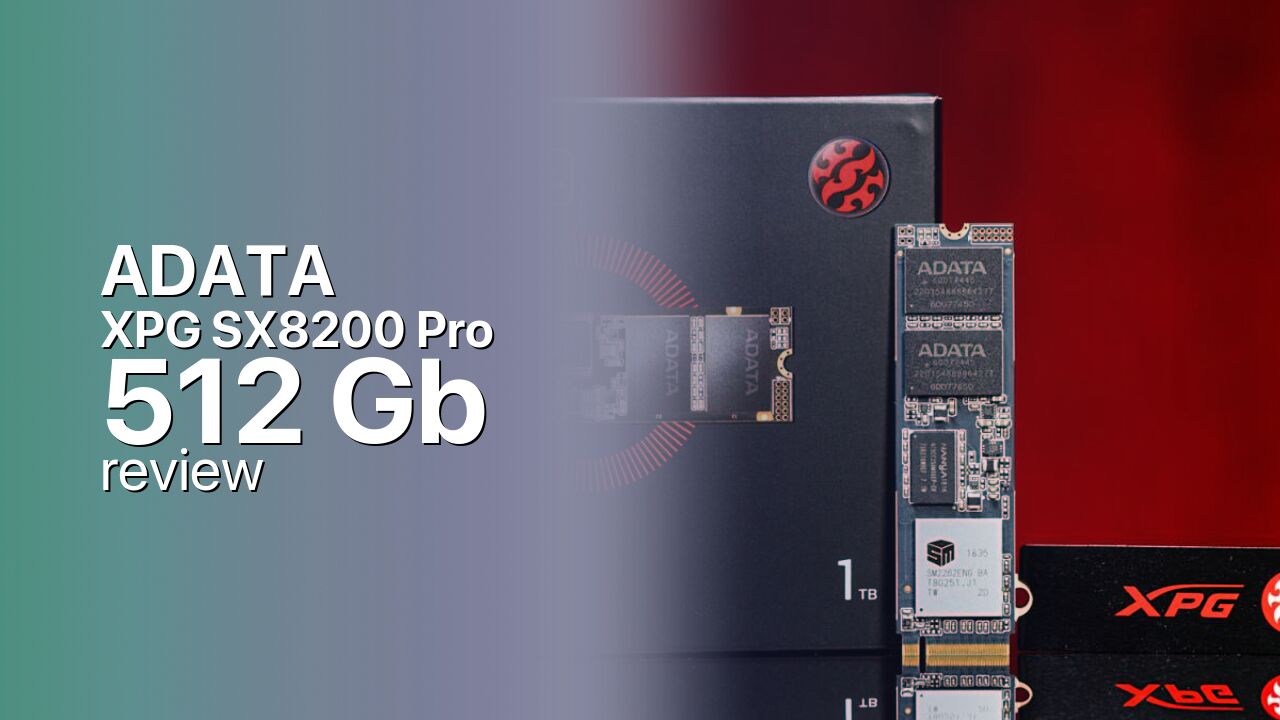
The 512 GB SX8200 Pro uses Silicon Motion's SM2262EN controller — an eight-channel PCIe 3.0 design — paired with Micron 3D TLC NAND and 256 MB of Nanya DDR3L DRAM on an M.2 2280 PCB. Unlike the Gammix S11 Pro, the SX8200 Pro ships without a heatsink, making it thinner and better suited for laptops and compact builds where clearance matters. The bare PCB design means users should ensure adequate case airflow or rely on their motherboard's M.2 thermal solution.
ADATA rates the 512 GB model at 3,500 MB/s sequential reads and 3,000 MB/s sequential writes, with a 320 TBW endurance rating backed by a five-year warranty. The read speed sits near the PCIe 3.0 x4 interface ceiling of roughly 3,900 MB/s, and the write speed is nearly triple what the 256 GB variant manages — a benefit of having more NAND dies operating in parallel.
The SX8200 Pro occupies the top tier of ADATA's PCIe 3.0 consumer lineup. It shares the SM2262EN controller with the Gammix S11 Pro but benefits from more aggressive firmware optimization. The drive has undergone internal component revisions during its production run — early batches used Micron NAND while later ones sourced from different vendors — but ADATA's firmware maintains consistent rated performance across hardware revisions.
The 512 GB capacity is a practical sweet spot for enthusiasts and power users. It holds the operating system, a large application stack, and a substantial game library. The dedicated DRAM cache gives it consistent random I/O performance that DRAM-less HMB drives struggle to match under sustained mixed workloads.
Direct competitors include the Samsung 970 EVO Plus 500GB (faster sustained writes, higher price), the Crucial P5 500GB (Micron-backed, comparable performance), and the WD Black SN750 500GB (WD's own controller, strong gaming performance).
Storage Comparisons:
XPG SX8200 Pro Performance & Benchmarks
The ADATA XPG SX8200 Pro 512GB is rated at 3,500 MB/s sequential reads and 3,000 MB/s sequential writes, positioning it near the top of what PCIe 3.0 x4 can deliver. In independent testing, the drive approaches these figures in CrystalDiskMark, with measured reads typically in the 3,300-3,400 MB/s range and writes around 2,800-2,900 MB/s — small deviations that reflect test environment overhead rather than drive limitations.
ADATA XPG SX8200 Pro 512 GB vs M.2 3.0 x 4 peers
Switch between sequential throughput and random IOPS to see how this drive stacks up against other M.2 3.0 x 4 SSDs in our database. The highlighted bar is the drive on this page — click any other bar to open that drive.
- ADATA XPG SX8200 Pro 512 GB (this drive): 3,500 MB/s read, 3,000 MB/s write
- ADATA SX 8800 Pro 512 GB: 3,500 MB/s read, 2,700 MB/s write
- ADATA SX 8800 Pro 1 TB: 3,500 MB/s read, 2,700 MB/s write
- ADATA XPG Spectrix S40G RGB 256 GB: 3,500 MB/s read, 3,000 MB/s write
- ADATA XPG Spectrix S40G RGB 512 GB: 3,500 MB/s read, 3,000 MB/s write
The SM2262EN controller manages the Micron TLC NAND through eight parallel channels, with 256 MB of DDR3L DRAM storing the flash translation table on-die. The dedicated DRAM eliminates the need to borrow system RAM via Host Memory Buffer, giving the SX8200 Pro more consistent random I/O under mixed workloads. This matters most during multitasking — running a game while a background download writes to disk, or compiling code while a virus scanner indexes files.
Like all TLC drives, the SX8200 Pro uses SLC caching to accelerate writes. The 512 GB model has a significantly larger SLC buffer than the 256 GB variant — where the smaller drive's cache exhausts after roughly 3 GB, the 512 GB model sustains SLC-speed writes for a much longer period before dropping to native TLC throughput. For everyday use, the cache is effectively transparent. Even during large game installations or multi-gigabyte file transfers, most users won't hit the exhaustion point.
Thermal management is the one area where the SX8200 Pro's bare PCB design shows its limitations. Under sustained loads, the SM2262EN controller can run warm enough to trigger throttling if airflow is poor. Users with motherboards that include M.2 heatsinks or armor plates should take advantage of them. In a well-ventilated case, the drive maintains its rated speeds without issue.
ADATA XPG SX8200 Pro vs Competitors
See how the XPG SX8200 Pro stacks up against other M.2 3.0 x 4 drives in our database:
Compare with rival drives:
Endurance, TBW & Warranty
ADATA covers the SX8200 Pro 512GB with a five-year limited warranty, rated at 320 TBW (terabytes written). At a typical consumer workload of 20 GB per day, the 320 TBW endurance translates to roughly 44 years of use before reaching the TBW limit. At a heavier 50 GB per day, the drive survives over 17 years. For essentially all users, the five-year warranty expires decades before endurance becomes a concern. The 320 TBW rating is mid-pack for a 512 GB PCIe 3.0 drive — the Samsung 970 EVO Plus 500GB carries 300 TBW, and the Crucial P5 500GB is rated at 300 TBW as well. ADATA's SSD Toolbox utility provides firmware updates, S.M.A.R.T. monitoring, and drive health diagnostics. The warranty is limited to the TBW cap or five years from purchase, whichever comes first.
ADATA XPG SX8200 Pro 512 GB Specifications
| Category | Value |
|---|---|
| Capacity [?] | 512 GB |
| Interface [?] | M.2 3.0 x 4 |
| Controller [?] | Silicon Motion SM2262EN |
| Memory type [?] | Micron 3D TLC |
| DRAM [?] | NANYA 256MB DDR3L |
| Read speed (MB/s) [?] | 3500 |
| Write speed (MB/s) [?] | 3000 |
| Read IOPS [?] | 390000 |
| Write IOPS [?] | 380000 |
| Endurance (TBW) [?] | 320 |
| MTBF (million hours) [?] | 2 |
| Warranty (years) [?] | 5 |
Verdict: Is the XPG SX8200 Pro Worth It in 2026?
The ADATA XPG SX8200 Pro 512GB is a top-tier PCIe 3.0 NVMe SSD that delivers near-saturating interface speeds with the consistency benefits of a DRAM cache. It's an excellent choice for enthusiasts and power users who want fast storage without stepping up to PCIe 4.0 pricing. The lack of an included heatsink keeps the drive thin enough for laptops but means desktop users should plan for adequate cooling. The Samsung 970 EVO Plus 500GB offers slightly faster sustained writes at a premium, while the Crucial P5 500GB matches performance at a similar price. The SX8200 Pro earns its place as a proven, well-reviewed drive that aged gracefully — PCIe 3.0 may no longer be the latest generation, but it remains more than fast enough for gaming, content creation, and everyday computing.
+ Pros
- 3,500/3,000 MB/s near-saturates PCIe 3.0 x4
- 256 MB DDR3L DRAM cache for consistent I/O
- SM2262EN controller with proven track record
- No heatsink — fits laptops and slim builds
- 320 TBW endurance for 512 GB capacity
- Five-year limited warranty
- Cons
- No heatsink included — relies on motherboard cooling
- Component revisions may vary (NAND vendor)
- PCIe 3.0 — outpaced by newer PCIe 4.0 drives
- SM2262EN can run warm under sustained loads
Buy this or similar SSD Storage:



Video Review
NVME Tested in Real World Performance featuring XPG SX8200 Pro 512GB