Gigabyte Aorus 2TB NVMe Gen4 SSD — Review (2026)
Quick answer
The Gigabyte Aorus 2TB was an excellent first-generation PCIe 4.0 drive with class-leading endurance, but it has been surpassed by newer, faster, and cheaper Gen4 alternatives.
Read: 5000 MB/s Write: 4000 MB/s Endurance: 3600 TBW Warranty: 5 years Interface: M.2 4.0 x 4
The Gigabyte Aorus 2TB was among the first PCIe 4.0 SSDs to ship, packing Phison's E16 controller and Toshiba 64L TLC behind a finned aluminum heatsink with 3,600 TBW endurance.
Controller & Memory
The Aorus 2TB is the flagship capacity of Gigabyte's first-generation PCIe 4.0 lineup, launched alongside AMD's X570 chipset in mid-2019. It shares the Phison PS5016-E16 controller with the rest of the Aorus family — a dual-core Arm Cortex-R5 running at 733 MHz with two auxiliary co-processors for NAND management. At 2TB, the drive carries 2 GB of SK Hynix DDR4 DRAM (split across both PCB sides) and Toshiba BiCS3 64-layer 3D TLC NAND with 16 dies across eight packages.
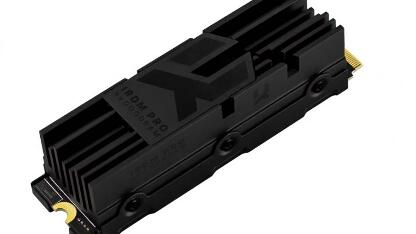
Gigabyte rates the 2TB at the same 5,000 MB/s sequential read and 4,000 MB/s sequential write as the 1TB, because the E16 controller tops out at roughly 5 GB/s regardless of capacity. Random performance holds at 750,000 read and 700,000 write IOPS. The included heatsink is tall and finned — effective for cooling, but it blocks some motherboard M.2 heatsinks and will not fit in laptops or the PS5 without removal.
Competitors from the same launch window include the Corsair Force MP600 2TB, Sabrent Rocket 4.0 2TB, and Patriot Viper VP4100 2TB — all E16 drives with near-identical performance. Newer PCIe 4.0 drives on the Phison E18 or Samsung Elpis controllers deliver meaningfully higher speeds at similar or lower prices.
Storage Comparisons:
Aorus Performance & Benchmarks
The Aorus 2TB delivers 5,000 MB/s sequential read and 4,000 MB/s sequential write — the E16 controller's ceiling. Reviews from Lab501, Vortez, and The PC Enthusiast confirm these figures in CrystalDiskMark on a fresh, empty drive. The drive behaves identically to other E16-based 2TB drives in real-world testing, which is expected since the platform is a reference design with minor firmware tweaks.
Gigabyte Aorus 2 TB vs M.2 4.0 x 4 peers
Switch between sequential throughput and random IOPS to see how this drive stacks up against other M.2 4.0 x 4 SSDs in our database. The highlighted bar is the drive on this page — click any other bar to open that drive.
- Patriot Viper PV593 1 TB: 14,500 MB/s read, 14,000 MB/s write
- Patriot Viper PV593 2 TB: 14,500 MB/s read, 14,000 MB/s write
- Patriot Viper PV593 4 TB: 14,500 MB/s read, 14,000 MB/s write
- Patriot Viper PV573 2 TB: 14,000 MB/s read, 12,000 MB/s write
- Gigabyte Aorus 2 TB (this drive): 5,000 MB/s read, 4,000 MB/s write
Sustained writes follow the familiar Phison pattern: peak speed within the SLC cache (roughly one-third of usable capacity), then a drop to approximately 1,500 MB/s for TLC writes. The large 2TB capacity means a generous SLC cache of roughly 660 GB, which is more than enough for consumer and prosumer workloads. Random 4K performance at low queue depths is comparable to other E16 drives and meaningfully faster than any PCIe 3.0 drive, but trails the E18 generation by 30 to 40 percent in peak random IOPS.
Gigabyte Aorus vs Competitors
See how the Aorus stacks up against other M.2 4.0 x 4 drives in our database:
Compare with rival drives:
Endurance, TBW & Warranty
The 2TB model carries a 3,600 TBW endurance rating — double the 1TB's 1,800 TBW and five times the newer Aorus 7000S 2TB's 1,400 TBW. This high endurance reflects the BiCS3 64-layer TLC, which is rated for more program-erase cycles than the faster 96-layer flash used in E18 drives. The warranty is 5 years, limited by whichever comes first: the warranty period or the TBW rating. At 100 GB of daily writes — a heavy content-creator workload — the 3,600 TBW rating translates to roughly 99 years. The MTBF is 1.7 million hours.
Gigabyte Aorus 2 TB Specifications
| Category | Value |
|---|---|
| Capacity [?] | 2 TB |
| Interface [?] | M.2 4.0 x 4 |
| Controller [?] | Phison PS5016-E16 |
| Memory type [?] | Toshiba 3D TLC |
| DRAM [?] | SK Hynix 2GB DDR4 |
| Read speed (MB/s) [?] | 5000 |
| Write speed (MB/s) [?] | 4000 |
| Read IOPS [?] | 750000 |
| Write IOPS [?] | 700000 |
| Endurance (TBW) [?] | 3600 |
| MTBF (million hours) [?] | 1.7 |
| Warranty (years) [?] | 5 |
Verdict: Is the Aorus Worth It in 2026?
The Gigabyte Aorus 2TB was an excellent first-generation PCIe 4.0 drive with class-leading endurance, but it has been surpassed by newer, faster, and cheaper Gen4 alternatives. The 3,600 TBW endurance rating remains a standout spec that even modern drives struggle to match. For existing owners, the drive still performs well and will outlast the system it is installed in. New buyers should consider the Aorus 7000S 2TB, Samsung 980 Pro 2TB, or Sabrent Rocket 4 Plus 2TB for meaningfully higher throughput at competitive prices.
+ Pros
- 5,000 MB/s sequential read on PCIe 4.0
- 3,600 TBW endurance is class-leading
- Bundled heatsink prevents thermal throttling
- AES-256 hardware encryption
- 5-year warranty
- Cons
- E16 generation surpassed by E18 and newer
- 4,000 MB/s write speed is slow for Gen4
- Tall heatsink incompatible with some motherboards
- Double-sided PCB limits laptop use
Buy this or similar SSD Storage:



Video Review
PCIe Gen 4 SSDs - Aorus 2TB Gen4 M.2 Review