Netac NV7000 4TB — PCIe 4.0 NVMe SSD Review (2026)
Quick answer
The Netac NV7000 4 TB is a pragmatic choice for buyers who need 4 TB of PCIe 4.0 NVMe storage and are willing to trade a tier-one brand name for a lower price.
Read: 7500 MB/s Write: 5500 MB/s Endurance: 3000 TBW Warranty: 5 years Interface: M.2 4.0 x 4
The Netac NV7000 4 TB is a Phison E18-based PCIe 4.0 drive from one of China's established flash storage manufacturers, offering the maximum consumer M.2 capacity on the proven E18 platform with 3,000 TBW of endurance.
Controller & Memory
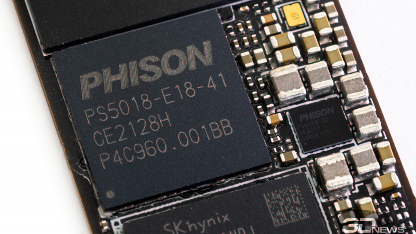
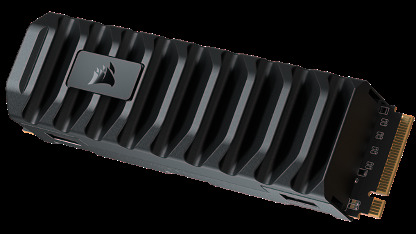
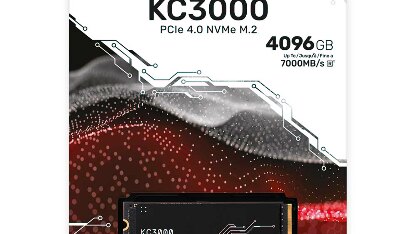
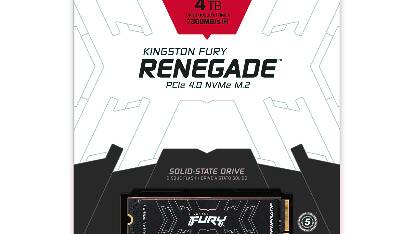
Netac is a Shenzhen-based storage manufacturer with over two decades of history in the Chinese domestic market, best known internationally for USB flash drives and memory cards. The NV7000 marks the company's push into the high-end NVMe segment, built on the Phison PS5018-E18 — the same eight-channel PCIe 4.0 x4 controller used by Sabrent, Corsair, and Kingston for their flagship drives. Netac pairs the E18 with 3D TLC NAND and SK Hynix DDR4-2666 DRAM, a configuration that delivers rated speeds of 7,500 MB/s read and 5,500 MB/s write with 940,000/1,000,000 random IOPS.
The 4 TB capacity is the ceiling of the NV7000 lineup and one of the few E18-based consumer drives to reach this capacity. At 4 TB, the drive uses a double-sided M.2 2280 PCB — necessary to accommodate the eight NAND packages required for the capacity — and includes a factory-installed graphene heat spreader. The 5,500 MB/s sequential write rating is notably lower than the 6,800–7,000 MB/s typical of 2 TB E18 drives, a consequence of the controller managing twice the NAND capacity on the same eight channels. Endurance is rated at 3,000 TBW, a 750-TBW-per-terabyte ratio that is consistent with the E18 platform's consumer TLC norms.
The NV7000 competes in a thin field of 4 TB PCIe 4.0 consumer drives. The Samsung 990 Pro 4 TB and WD Black SN850X 4 TB are the primary Western-market alternatives, both offering higher peak write speeds and more established brand recognition. The NV7000's value proposition is straightforward: E18 performance at 4 TB with pricing that typically undercuts Samsung and WD at equivalent capacity. For buyers who need 4 TB of fast NVMe storage and are comfortable with a less-established brand, the NV7000 delivers the underlying hardware performance of the mature E18 platform at a competitive price.
Storage Comparisons:
NV7000 Performance & Benchmarks
Netac rates the 4 TB NV7000 at 7,500 MB/s sequential reads and 5,500 MB/s sequential writes with 940,000 IOPS random read and 1,000,000 IOPS random write. The read figure is slightly above the typical 7,400 MB/s E18 ceiling, suggesting aggressive firmware tuning or a measurement methodology that rounds up. The write figure of 5,500 MB/s is materially lower than E18 2 TB drives — a trade-off of capacity for per-channel throughput that is expected at 4 TB.
Netac NV7000 4 TB vs M.2 4.0 x 4 peers
Switch between sequential throughput and random IOPS to see how this drive stacks up against other M.2 4.0 x 4 SSDs in our database. The highlighted bar is the drive on this page — click any other bar to open that drive.
- Patriot Viper PV593 1 TB: 14,500 MB/s read, 14,000 MB/s write
- Patriot Viper PV593 2 TB: 14,500 MB/s read, 14,000 MB/s write
- Patriot Viper PV593 4 TB: 14,500 MB/s read, 14,000 MB/s write
- Patriot Viper PV573 2 TB: 14,000 MB/s read, 12,000 MB/s write
- Netac NV7000 4 TB (this drive): 7,500 MB/s read, 5,500 MB/s write
The E18's pseudo-SLC cache on a 4 TB drive is enormous: with up to a terabyte of QLC-equivalent cells available to provision as SLC, the cache can absorb hundreds of gigabytes of burst writes before transitioning to native TLC speeds around 1,000–1,200 MB/s. For the content creators and data hoarders who buy 4 TB drives, this means even large project file transfers typically complete at full speed without hitting the post-cache TLC floor. Sustained sequential writes for backup or archive purposes will eventually exhaust the cache, but the post-cache speed remains faster than any hard drive and sufficient for most throughput-sensitive workloads. Gaming load times and OS responsiveness are indistinguishable from any other PCIe 4.0 drive — the NV7000's performance differentiation from more expensive alternatives is visible only in sustained-write benchmarks, not in everyday use.
Netac NV7000 vs Competitors
See how the NV7000 stacks up against other M.2 4.0 x 4 drives in our database:
Compare with rival drives:
Endurance, TBW & Warranty
Netac covers the NV7000 4 TB with a five-year warranty, bounded by a 3,000 TBW endurance rating. At a typical content-creation workload of 50 GB/day, this endurance budget lasts roughly 164 years. The 750-TBW-per-terabyte ratio is standard for Phison E18 TLC drives and reflects the controller's mature write-amplification characteristics. Netac's warranty infrastructure outside of China is less developed than tier-one vendors like Samsung or WD — international buyers should verify regional RMA support before purchasing. The drive includes a graphene heat spreader pre-installed, which provides basic passive thermal management. For sustained-write desktop use, a third-party heatsink or active airflow is recommended.
Netac NV7000 4 TB Specifications
| Category | Value |
|---|---|
| Capacity [?] | 4 TB |
| Interface [?] | M.2 4.0 x 4 |
| Controller [?] | Phison PS5018-E18 |
| Memory type [?] | 3D TLC |
| DRAM [?] | SKHynix DDR4-2666 H5AN8G6NCJR-VKC |
| Read speed (MB/s) [?] | 7500 |
| Write speed (MB/s) [?] | 5500 |
| Read IOPS [?] | 940000 |
| Write IOPS [?] | 1000000 |
| Endurance (TBW) [?] | 3000 |
| MTBF (million hours) [?] | 2000000 |
| Warranty (years) [?] | 5 |
Verdict: Is the NV7000 Worth It in 2026?
The Netac NV7000 4 TB is a pragmatic choice for buyers who need 4 TB of PCIe 4.0 NVMe storage and are willing to trade a tier-one brand name for a lower price. The Phison E18 platform is a known quantity — mature firmware, consistent performance, and a well-understood reliability profile — and the NV7000 delivers exactly what the E18 reference design promises. The 5,500 MB/s write speed is the primary compromise versus a Samsung 990 Pro 4 TB or WD Black SN850X 4 TB, but it is a compromise that matters only for sustained sequential write workloads. For a game library, media archive, or general-purpose large-capacity drive, the NV7000's value equation is sound.
+ Pros
- 4 TB capacity on a single M.2 2280 — maximum consumer density
- Phison E18 controller with dedicated SK Hynix DDR4 DRAM
- 3,000 TBW endurance — 750 TBW per terabyte, standard for E18 TLC
- 7,500 MB/s reads — saturating and slightly exceeding the PCIe 4.0 ceiling
- 5-year warranty with graphene heat spreader included
- Cons
- 5,500 MB/s writes — trails E18 2 TB drives due to 4 TB capacity scaling
- Double-sided PCB — incompatible with thin laptops requiring single-sided drives
- Netac brand has limited international retail presence and RMA infrastructure
- Firmware updates and support documentation less accessible than tier-one vendors
Buy this or similar SSD Storage:



Video Review
BEST Netac NV7000 M.2 NVMe PCIe Gen4x4 SSD Solid State Drive EXTREMELY FAST! 7200MB/s