Sabrent Rocket 4 Plus 2TB — High-Performance PCIe 4.0 NVMe (2026)
Quick answer
The Sabrent Rocket 4 Plus 2 TB is a top-tier PCIe 4.0 drive that belongs in any conversation about the best consumer NVMe SSDs.
Read: 7100 MB/s Write: 7000 MB/s Endurance: 1400 TBW Warranty: 5 years Interface: M.2 4.0 x 4
The Sabrent Rocket 4 Plus 2 TB is the capacity where this Phison E18 platform flexes its full muscle — 7,100 MB/s reads, 7,000 MB/s writes, and 1 million random write IOPS from Micron 96L TLC NAND with a 1,400 TBW endurance rating.
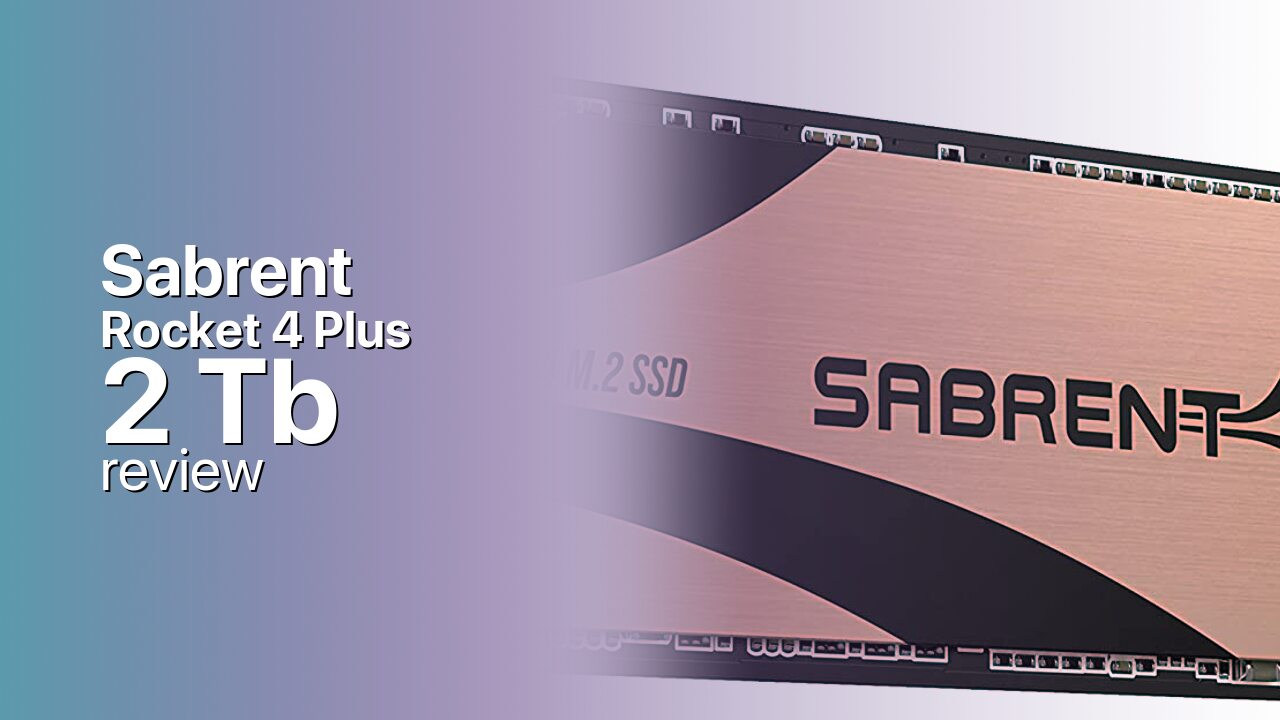
Controller & Memory
The 2 TB Rocket 4 Plus sits at the performance sweet spot of the series. Eight NAND die per channel give the Phison PS5018-E18 controller maximum parallelism, pushing sequential writes to 7,000 MB/s — essentially saturating the PCIe 4.0 x4 bus. The Micron 96-layer TLC NAND and SK Hynix DDR4 DRAM are the same components used across the lineup, but the 2 TB model benefits from the deepest write queues and largest pseudo-SLC cache allocation.
The drive uses a double-sided M.2 2280 PCB, which may limit compatibility with some ultra-thin laptops that only accept single-sided modules. For desktops, PS5, and most laptops, the 2 TB capacity fits without issue. Also available in 500 GB, 1 TB, and 4 TB variants, with the 4 TB using the same controller but even more NAND die.
Competitors at 2 TB include the Samsung 980 Pro 2 TB, WD Black SN850X 2 TB, and Seagate FireCuda 530 2 TB. These drives trade benchmark wins in different tests, and real-world gaming performance is essentially identical across all of them. The Sabrent typically undercuts Samsung and WD on price while offering comparable endurance and warranty terms.
Sabrent offers the Rocket 4 Plus with or without an optional heatsink. The Phison E18 runs cooler than the older E16 thanks to its 12 nm process, but sustained write workloads still generate meaningful heat. A heatsink is recommended for systems without integrated M.2 cooling.
Storage Comparisons:
Rocket 4 Plus Performance & Benchmarks
With 7,100 MB/s sequential reads, 7,000 MB/s sequential writes, 650K random read IOPS, and 1,000K random write IOPS, the Rocket 4 Plus 2 TB delivers near-maximum PCIe 4.0 performance. The 1 million write IOPS figure is the highest in the lineup and reflects the deep queue depth the E18 controller can exploit with 2 TB of NAND to manage. Guru3D's testing of the 2 TB model found consistent performance across synthetic and real-world benchmarks, with the Sabrent trading narrow wins and losses with the Samsung 980 Pro depending on the specific test.
Sabrent Rocket 4 Plus 2 TB vs M.2 4.0 x 4 peers
Switch between sequential throughput and random IOPS to see how this drive stacks up against other M.2 4.0 x 4 SSDs in our database. The highlighted bar is the drive on this page — click any other bar to open that drive.
- Patriot Viper PV593 1 TB: 14,500 MB/s read, 14,000 MB/s write
- Patriot Viper PV593 2 TB: 14,500 MB/s read, 14,000 MB/s write
- Patriot Viper PV593 4 TB: 14,500 MB/s read, 14,000 MB/s write
- Patriot Viper PV573 2 TB: 14,000 MB/s read, 12,000 MB/s write
- Sabrent Rocket 4 Plus 2 TB (this drive): 7,100 MB/s read, 7,000 MB/s write
Sustained write performance is a strength. After the pseudo-SLC cache fills — which takes approximately 100–150 GB of continuous writes at full speed — native TLC writes sustain at roughly 1,200–1,800 MB/s. This is a much smaller performance cliff than QLC drives face, and for most users the cache rarely exhausts during normal use. Content creators working with 4K video and large RAW photo batches will find the sustained write performance adequate for professional workflows.
Sabrent Rocket 4 Plus vs Competitors
See how the Rocket 4 Plus stacks up against other M.2 4.0 x 4 drives in our database:
Compare with rival drives:
Endurance, TBW & Warranty
The Sabrent Rocket 4 Plus 2 TB carries a 1,400 TBW endurance rating with a five-year warranty requiring product registration within 90 days. At 1,400 TBW, this works out to approximately 766 GB of writes per day over five years. For a 2 TB drive serving as both OS and game library, the actual daily writes are typically 30–80 GB, providing over a decade of rated endurance headroom. Even a professional content creator writing 300 GB/day would take nearly 13 years to exhaust the warranty limit. The drive supports S.M.A.R.T. health monitoring, and Sabrent includes Acronis True Image for drive migration.
Sabrent Rocket 4 Plus 2 TB Specifications
| Category | Value |
|---|---|
| Capacity [?] | 2 TB |
| Interface [?] | M.2 4.0 x 4 |
| Controller [?] | Phison PS5018-E18 |
| Memory type [?] | Micron 3D TLC |
| DRAM [?] | SK Hynix DDR4 Cache |
| Read speed (MB/s) [?] | 7100 |
| Write speed (MB/s) [?] | 7000 |
| Read IOPS [?] | 650000 |
| Write IOPS [?] | 1000000 |
| Endurance (TBW) [?] | 1400 |
| MTBF (million hours) [?] | 1800000 |
| Warranty (years) [?] | 5 |
Verdict: Is the Rocket 4 Plus Worth It in 2026?
The Sabrent Rocket 4 Plus 2 TB is a top-tier PCIe 4.0 drive that belongs in any conversation about the best consumer NVMe SSDs. Its 7,000 MB/s writes and 1 million random write IOPS are enthusiast-grade numbers, and the 1,400 TBW endurance rating provides long-term confidence. The trade-off against Samsung and WD alternatives is mostly brand preference and warranty registration hassle — performance is functionally identical. For a single-drive gaming and productivity build where you want capacity, speed, and reliability in one package, the Rocket 4 Plus 2 TB is an easy recommendation. Just remember to register it within 90 days.
+ Pros
- 7,100 MB/s reads, 7,000 MB/s writes saturate PCIe 4.0
- 1 million random write IOPS — highest in series
- 1,400 TBW endurance with 5-year warranty
- Micron 96L TLC NAND with strong sustained writes
- SK Hynix DDR4 DRAM cache
- Solid competitor to Samsung 980 Pro at lower price
- Cons
- Double-sided PCB may not fit some thin laptops
- Warranty drops to 1 year without registration
- No included heatsink (optional variant available)
- No hardware AES encryption
- Phison E18 can run warm under sustained load
Buy this or similar SSD Storage:



Video Review
INSANE SPEED: Sabrent Rocket 4 Plus 2 TB M.2 PCIe 4x4 nvme Review & Benchmark