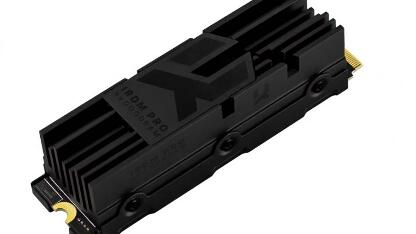
Sabrent Rocket NVMe 4.0 2TB — PCIe 4.0 TLC NVMe SSD (2026)
Quick answer
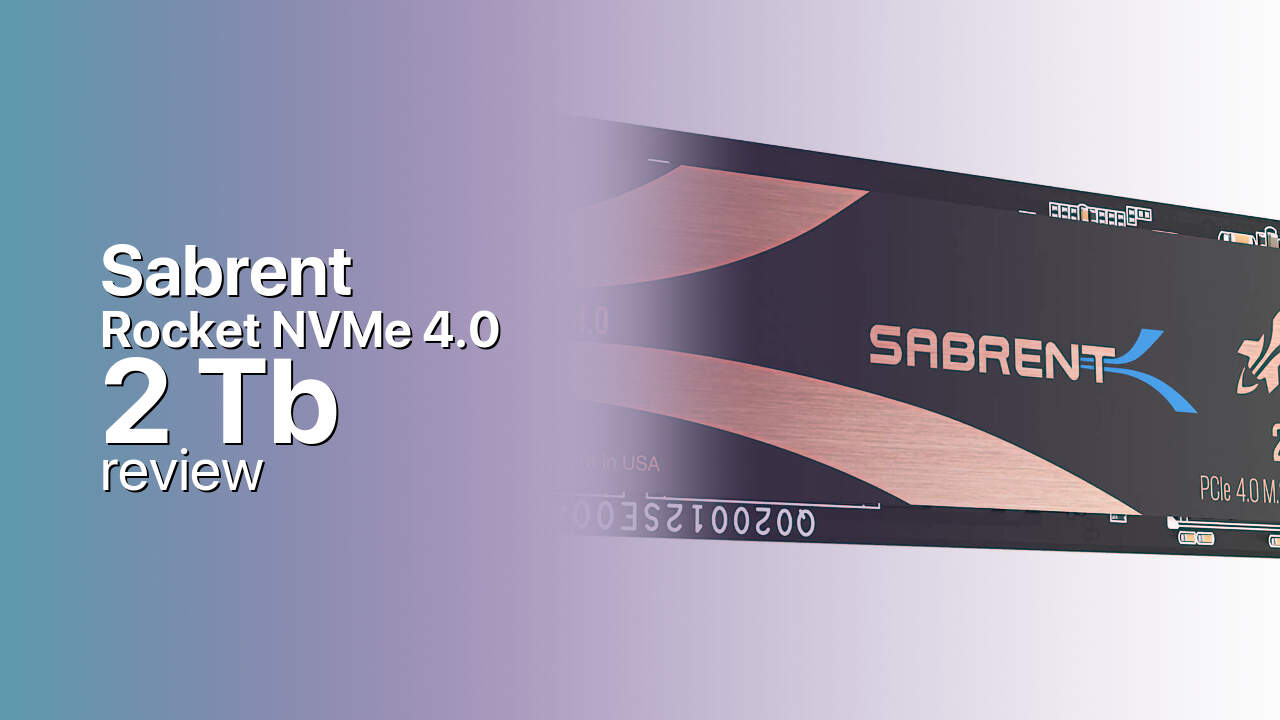
The Sabrent Rocket NVMe 4.0 2 TB is an endurance champion in the consumer NVMe space.
Read: 5000 MB/s Write: 4400 MB/s Endurance: 3600 TBW Warranty: 5 years Interface: M.2 4.0 x 4
The Sabrent Rocket NVMe 4.0 2 TB combines first-generation PCIe 4.0 performance with an extraordinary 3,600 TBW endurance rating — one of the highest endurance numbers on any consumer 2 TB NVMe SSD.
Controller & Memory
The 2 TB Rocket NVMe 4.0 uses the same Phison PS5016-E16 8-channel controller and Toshiba (Kioxia) BiCS4 96-layer TLC NAND as the 1 TB model, but with double the NAND die count and 2 GB of SK Hynix DDR4 DRAM. The additional NAND provides more write parallelism, though Sabrent rates the sequential speeds identically across all capacities at 5,000/4,400 MB/s — the E16 controller's ceiling is the limiting factor rather than NAND die count.
The drive uses a double-sided M.2 2280 PCB at 2 TB, which may limit compatibility with single-sided-only M.2 slots in some thin laptops. For desktops and the PS5, the bare drive fits without issue. Also available in 500 GB and 1 TB, both with the same rated speeds.
Against its newer sibling, the Sabrent Rocket 4 Plus 2 TB, the original NVMe 4.0 trades peak speed for endurance: 5,000/4,400 MB/s and 3,600 TBW versus 7,100/7,000 MB/s and 1,400 TBW. Against QLC alternatives like the Sabrent Rocket Q4 2 TB, the TLC NAND provides dramatically better sustained writes and 9x the endurance at roughly double the price.
Sabrent offers the Rocket NVMe 4.0 in both bare-drive and heatsink variants. Given the E16 controller's 28 nm process and the heat it generates under sustained writes, a heatsink is recommended for systems without motherboard-provided M.2 cooling. The drive also ships with a license for Acronis True Image for drive cloning and migration.
Storage Comparisons:
Rocket NVMe 4.0 Performance & Benchmarks
The 2 TB Rocket NVMe 4.0 is rated at 5,000 MB/s sequential reads, 4,400 MB/s sequential writes, and 750K random read/write IOPS. These were class-leading numbers when the drive launched, and they remain competitive in the mid-range of PCIe 4.0 drives today. Reviews from eTeknix and Guru3D found the drive hitting or exceeding its rated speeds in CrystalDiskMark and delivering consistent real-world transfer performance.
Sabrent Rocket NVMe 4.0 2 TB vs M.2 4.0 x 4 peers
Switch between sequential throughput and random IOPS to see how this drive stacks up against other M.2 4.0 x 4 SSDs in our database. The highlighted bar is the drive on this page — click any other bar to open that drive.
- Patriot Viper PV593 1 TB: 14,500 MB/s read, 14,000 MB/s write
- Patriot Viper PV593 2 TB: 14,500 MB/s read, 14,000 MB/s write
- Patriot Viper PV593 4 TB: 14,500 MB/s read, 14,000 MB/s write
- Patriot Viper PV573 2 TB: 14,000 MB/s read, 12,000 MB/s write
- Sabrent Rocket NVMe 4.0 2 TB (this drive): 5,000 MB/s read, 4,400 MB/s write
The TLC NAND is the performance story here. Unlike QLC drives, where the pseudo-SLC cache masks a steep write cliff, the Rocket NVMe 4.0's TLC flash sustains writes at approximately 1,200–1,800 MB/s even after the SLC cache fills. For gaming, content creation, and general desktop use, this means the drive performs consistently regardless of workload size — there is no dramatic slowdown to worry about during large file transfers. The TLC NAND means there is no dramatic write cliff to worry about — even during large file transfers, the drive maintains usable write speeds. For gaming, content creation, and general desktop use, the Rocket NVMe 4.0 2 TB provides consistent, predictable performance without the SLC cache anxiety that QLC drives impose.
Sabrent Rocket NVMe 4.0 vs Competitors
See how the Rocket NVMe 4.0 stacks up against other M.2 4.0 x 4 drives in our database:
Compare with rival drives:
Endurance, TBW & Warranty
The Sabrent Rocket NVMe 4.0 2 TB carries a 3,600 TBW endurance rating with a five-year warranty requiring registration within 90 days (one year without). At 3,600 TBW, you can write approximately 1,972 GB per day for five years before reaching the rated limit. This is an extraordinary endurance figure for a consumer drive — it exceeds many enterprise-rated SSDs and is roughly 2.5 times what the newer Rocket 4 Plus 2 TB offers. The 1.7 million hour MTBF rating provides additional reliability assurance. For any consumer or professional workload, the endurance will not be the limiting factor in this drive's useful life.
Sabrent Rocket NVMe 4.0 2 TB Specifications
| Category | Value |
|---|---|
| Capacity [?] | 2 TB |
| Interface [?] | M.2 4.0 x 4 |
| Controller [?] | Phison PS5016-E16 |
| Memory type [?] | Toshiba 3D TLC |
| DRAM [?] | SK Hynix DDR4 |
| Read speed (MB/s) [?] | 5000 |
| Write speed (MB/s) [?] | 4400 |
| Read IOPS [?] | 750000 |
| Write IOPS [?] | 750000 |
| Endurance (TBW) [?] | 3600 |
| MTBF (million hours) [?] | 1.7 |
| Warranty (years) [?] | 5 |
Verdict: Is the Rocket NVMe 4.0 Worth It in 2026?
The Sabrent Rocket NVMe 4.0 2 TB is an endurance champion in the consumer NVMe space. Its 3,600 TBW rating is extraordinary, the TLC NAND provides consistent write performance without the QLC cliff, and the 5,000/4,400 MB/s speeds are fast enough for gaming and general desktop use. The trade-off against newer drives like the Rocket 4 Plus is peak speed — 4,400 MB/s writes versus 7,000 MB/s — but you gain 2.5x the endurance. For builders who value long-term reliability over benchmark numbers, or professionals who need a drive that can handle heavy write workloads for years, the Rocket NVMe 4.0 2 TB is a compelling choice that undercuts newer drives on price while outperforming them on endurance.
+ Pros
- 3,600 TBW endurance — exceptional for consumer SSD
- Toshiba 96L TLC NAND with consistent sustained writes
- 5,000 MB/s reads, 4,400 MB/s writes
- 2 GB DDR4 DRAM cache
- 750K random read/write IOPS
- Proven Phison E16 platform
- Cons
- Slower than E18-based drives (Rocket 4 Plus)
- Double-sided PCB limits thin laptop compatibility
- 28 nm E16 controller runs warm under sustained load
- Warranty drops to 1 year without registration
- No included heatsink (optional)
- NVMe 1.3, not NVMe 1.4
Buy this or similar SSD Storage:



Video Review
INSANE SPEED: Sabrent Rocket 4 Plus 2 TB M.2 PCIe 4x4 nvme Review & Benchmark