ADATA Legend 860 2 TB: DRAMless Gen4 NVMe with Flagship Write Speeds (2026)
Quick answer
The ADATA Legend 860 2 TB is the capacity to buy in this line if write speed matters.
Read: 6000 MB/s Write: 5000 MB/s Endurance: 1200 TBW Warranty: 5 years Interface: M.2 4.0 x 4
The ADATA Legend 860 2 TB is the flagship capacity in ADATA's entry-level Gen4 line, delivering 5,000 MB/s writes from a DRAMless IG5220 platform with enough endurance and PS5 compatibility to outrun its price tag.
Controller & Memory
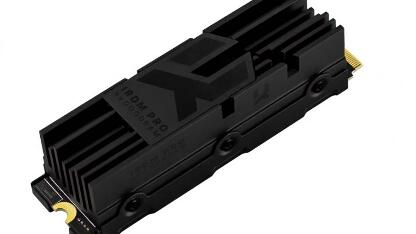
The ADATA Legend 860 2 TB runs on InnoGrit's IG5220, a four-channel DRAMless PCIe 4.0 controller paired with 3D TLC NAND and NVMe 2.0 firmware. Without onboard DRAM the drive borrows a slice of system RAM through the Host Memory Buffer protocol for its flash translation layer mapping tables, a design that trims cost and power draw while keeping everyday random-read responsiveness competitive with cached alternatives. The PCB is a single-sided M.2 2280 board thin enough for ultrabooks and the PlayStation 5 expansion bay, and ADATA includes a metal heatspreader with pre-applied thermal adhesive in the box. The Legend 860 sits at the entry tier of ADATA's Gen4 stack below the Legend 900 and Legend 960 Max, and this 2 TB variant is the performance flagship of the line with 5,000 MB/s sequential writes, the highest in the family.
The Legend 860 ships in three capacities: 500 GB, 1 TB, and 2 TB, with sequential writes scaling from 3,000 MB/s at the entry capacity through 4,000 MB/s at 1 TB to 5,000 MB/s here at 2 TB, while all three share the same 6,000 MB/s peak read speed. ADATA originally launched the drive with QLC NAND and subsequently revised it to 3D TLC, which doubled endurance across the stack. The 2 TB variant carries 1,200 TBW of rated endurance, giving it enough write headroom for a large game library, moderate video ingest, or years of OS and application duty without approaching the endurance ceiling. The single-sided PCB and included heatspreader make it a drop-in upgrade for most desktops, thin-and-light laptops, and the PS5 expansion slot, where it clears Sony's 5,500 MB/s read-speed requirement without a third-party cooler.
At the 2 TB capacity the closest competitors are the WD Blue SN580, Crucial P3 Plus, and Kingston NV3, all DRAMless Gen4 drives aimed at the same value-conscious buyer. Against those the Legend 860 distinguishes itself with a five-year warranty, the IG5220's mature firmware pedigree across multiple drive families, and the TLC NAND on current production that sidesteps the sustained-write pitfalls of QLC alternatives at this price point. The WD Blue SN580 2 TB offers comparable read speeds and a similar HMB architecture, while the Crucial P3 Plus 2 TB competes on warranty and endurance but uses QLC NAND with lower post-cache write throughput.
Storage Comparisons:
Legend 860 Performance & Benchmarks
At 6,000 MB/s sequential reads and 5,000 MB/s sequential writes, the ADATA Legend 860 2 TB sits at the upper edge of the DRAMless Gen4 segment. The 6,000 MB/s read ceiling is shared across all Legend 860 capacities, but the 5,000 MB/s write rating is exclusive to the 2 TB variant and reflects the combination of more NAND dies available for parallel writes and a larger SLC write cache. Independent testing of the 1 TB sibling by Back2Gaming found that the IG5220 controller exceeds its rated sequential numbers in CrystalDiskMark, clearing 6,300 MB/s reads on the smaller capacity, and the 2 TB should track similarly on reads with a higher write ceiling thanks to the extra NAND parallelism.
ADATA Legend 860 2 TB vs M.2 4.0 x 4 peers
Switch between sequential throughput and random IOPS to see how this drive stacks up against other M.2 4.0 x 4 SSDs in our database. The highlighted bar is the drive on this page — click any other bar to open that drive.
- Patriot Viper PV593 1 TB: 14,500 MB/s read, 14,000 MB/s write
- Patriot Viper PV593 2 TB: 14,500 MB/s read, 14,000 MB/s write
- Patriot Viper PV593 4 TB: 14,500 MB/s read, 14,000 MB/s write
- Patriot Viper PV573 2 TB: 14,000 MB/s read, 12,000 MB/s write
- ADATA Legend 860 2 TB (this drive): 6,000 MB/s read, 5,000 MB/s write
The SLC write cache on the 1 TB holds roughly 268 GB before exhaustion, and on the 2 TB the cache is at least as large and likely larger, though no independent cache-exhaustion test has been published for this specific capacity. Once the cache fills, writes settle to the native TLC rate, which on a four-channel DRAMless controller drops into the low triple-digit MB/s range under sustained load. For the workloads this capacity is bought for, OS migration, game installs, and large application downloads fit comfortably inside the SLC window and the drive recovers quickly at idle. In a PlayStation 5 the console's internal benchmark averages around 5,000 MB/s, consistent with the PS5's own storage controller ceiling, and game load times are indistinguishable from pricier Gen4 alternatives. The drive runs cool by Gen4 standards and the included heatspreader handles typical desktop and console thermals without issue, though a motherboard slot with active heatsink coverage remains the safer choice for sustained write sessions.
ADATA Legend 860 vs Competitors
See how the Legend 860 stacks up against other M.2 4.0 x 4 drives in our database:
Compare with rival drives:
Endurance, TBW & Warranty
ADATA covers the Legend 860 2 TB with a five-year limited warranty that ends early if the 1,200 TBW endurance rating is exceeded. That TBW figure scales from the 640 TBW rating confirmed for the 1 TB variant by Back2Gaming's May 2026 review and reflects the TLC revision that doubled endurance from the original QLC launch ratings. At a typical consumer workload of 20 GB of writes per day the 2 TB would need roughly 164 years to reach its endurance limit, so in practice the five-year warranty term expires long before the NAND approaches its write ceiling. Even at a heavier 50 GB per day the drive clears 65 years, far beyond any realistic service life for a consumer SSD. ADATA rates the Legend 860 at up to 1.5 million hours mean time between failures, a population-level reliability statistic rather than a lifespan guarantee for an individual unit. The included heatspreader uses aggressive thermal adhesive that is effectively permanent once mounted, so builders planning to use a motherboard M.2 heatsink should skip the included spreader.
ADATA Legend 860 2 TB Specifications
| Category | Value |
|---|---|
| Capacity [?] | 2 TB |
| Interface [?] | M.2 4.0 x 4 |
| Controller [?] | InnoGrit IG5220 |
| Memory type [?] | 3D TLC |
| DRAM [?] | No |
| Read speed (MB/s) [?] | 6000 |
| Write speed (MB/s) [?] | 5000 |
| Read IOPS [?] | 6000000 |
| Write IOPS [?] | 5000000 |
| Endurance (TBW) [?] | 1200 |
| MTBF (million hours) [?] | 1500000 |
| Warranty (years) [?] | 5 |
Verdict: Is the Legend 860 Worth It in 2026?
The ADATA Legend 860 2 TB is the capacity to buy in this line if write speed matters. At 5,000 MB/s it delivers a full 1,000 MB/s more sequential write throughput than the 1 TB variant and 2,000 MB/s more than the 500 GB, closing much of the gap to DRAM-cached Gen4 alternatives while staying in the entry-level price band. Buyers building a gaming desktop or upgrading a PS5 with a single large drive get a single-sided, cool-running Gen4 module with a five-year warranty, 1,200 TBW of endurance, and read speeds that clear Sony's published requirements. Skip this drive if sustained write throughput is the primary workload: post-cache writes on a four-channel DRAMless controller are not competitive with DRAM-cached alternatives for heavy video ingest or scratch-disk duty. The closest alternative at 2 TB is the WD Blue SN580, which offers comparable read speeds and a similarly mature HMB platform, or the Crucial P3 Plus for buyers willing to trade post-cache write speed for a lower entry price. The verdict on the ADATA Legend 860 2 TB is a well-rounded entry-level Gen4 drive whose 2 TB variant earns its flagship billing with write speeds that outrun the budget positioning.
+ Pros
- 6,000 MB/s sequential reads over PCIe 4.0
- 5,000 MB/s sequential writes, the fastest in the Legend 860 line
- 1,200 TBW endurance with five-year warranty
- Single-sided M.2 2280 fits ultrabooks and PS5
- TLC NAND on current production revision
- Included metal heatspreader in the box
- InnoGrit IG5220 controller with NVMe 2.0 and mature firmware
- Cons
- DRAMless HMB design limits sustained write throughput
- Post-cache write speeds drop into low triple-digit MB/s
- Heatspreader adhesive is difficult to remove once applied
- No AES 256-bit hardware encryption support
- ADATA does not publish official IOPS ratings for this drive
Buy this or similar SSD Storage:



Video Review
ADATA LEGEND 860 - 2TB NVMe M.2 SSD - Unboxing