ADATA Legend 850 1 TB: The Value Sweet-Spot in a DRAM-less PCIe 4.0 Line (2026)
Quick answer
Buy the ADATA Legend 850 1 TB for a DRAM-less PCIe 4.0 boot drive that hits the full 4,500 MB/s write ceiling of the SM2269XTF platform without paying the premium for the 2 TB model.
Read: 5000 MB/s Write: 4500 MB/s Endurance: 600 TBW Warranty: 5 years Interface: M.2 4.0 x 4
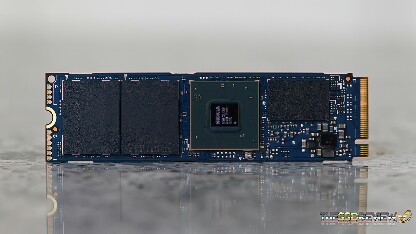
The ADATA Legend 850 1 TB combines a Silicon Motion SM2269XTF controller with HMB and 3D TLC on a single-sided M.2 2280 PCB, delivering the full 4,500 MB/s write ceiling the platform is capable of at the line's best price-per-gigabyte ratio.
Controller & Memory
The ADATA Legend 850 1 TB is built around Silicon Motion's SM2269XTF, a four-channel DRAM-less controller that uses Host Memory Buffer technology to borrow system RAM for its mapping tables instead of carrying a discrete DDR chip on the PCB. The 1 TB capacity is the value anchor of the line: it hits the same 5,000 MB/s sequential reads as the 512 GB sibling, but its 4,500 MB/s write rating doubles the 512 GB variant's 2,700 MB/s ceiling because the 1 TB PCB packs higher-density NAND packages that feed all four channels at full throughput. The jump from 512 GB to 1 TB is the single biggest performance gain in the Legend 850 family, and it costs far less than the step to the 2 TB model, making this the capacity most buyers should target.
The SM2269XTF is a mature platform now, and ADATA pairs it with 3D TLC NAND on a single-sided M.2 2280 PCB that slots into thin laptops, ultrabooks, and Mini-ITX boards without clearance issues. The controller runs cool enough that thermal throttling is rarely a concern even without a heatsink, and the single-sided layout helps with heat dissipation through the board itself. ADATA rates endurance at 600 TBW, a 20 percent bump over the 512 GB variant's 500 TBW that reflects the higher total NAND capacity rather than a per-cell durability difference; the smaller drive actually carries a higher TBW-per-terabyte ratio, but in absolute terms the 1 TB absorbs more writes over its lifetime, which matters for anyone who fills the drive to the brim with games and applications.
The Legend 850 1 TB is backward-compatible with PCIe 3.0 at reduced bandwidth, and it fits Sony's physical spec for the PS5 expansion bay, though its 5,000 MB/s read rating is 500 MB/s below Sony's 5,500 MB/s recommendation. ADATA's own internal testing inside a PS5 reports roughly 4,000 MB/s, which is still comfortably above the console's internal storage baseline. The practical competition in this price band includes the WD Blue SN580 1 TB, which swaps the SM2269XTF for a Western Digital in-house controller with comparable HMB behaviour, and the Kingston NV3 1 TB, which undercuts on price but ships with a variable-controller lottery that makes its performance less predictable. The Crucial P3 Plus 1 TB competes on price with QLC NAND and lower endurance, so the Legend 850's TLC foundation gives it a real-world durability edge.
Storage Comparisons:
Legend 850 Performance & Benchmarks
Rated sequential performance on the ADATA Legend 850 1 TB is 5,000 MB/s reads and 4,500 MB/s writes over a PCIe 4.0 x4 link, backed by up to 380,000 random read IOPS and 530,000 random write IOPS. Those figures place it in the upper half of the DRAM-less PCIe 4.0 segment: reads max out what four PCIe 4.0 lanes can deliver through the SM2269XTF, and the 4,500 MB/s write ceiling is the full-speed result the platform achieves when all four NAND channels are populated with sufficient density, as they are on the 1 TB and 2 TB variants. The 512 GB model is the only one that leaves write throughput on the table, so stepping to the 1 TB captures the biggest real-world performance gain in the line.
ADATA Legend 850 1 TB vs M.2 4.0 x 4 peers
Switch between sequential throughput and random IOPS to see how this drive stacks up against other M.2 4.0 x 4 SSDs in our database. The highlighted bar is the drive on this page — click any other bar to open that drive.
- Patriot Viper PV593 1 TB: 14,500 MB/s read, 14,000 MB/s write
- Patriot Viper PV593 2 TB: 14,500 MB/s read, 14,000 MB/s write
- Patriot Viper PV593 4 TB: 14,500 MB/s read, 14,000 MB/s write
- Patriot Viper PV573 2 TB: 14,000 MB/s read, 12,000 MB/s write
- ADATA Legend 850 1 TB (this drive): 5,000 MB/s read, 4,500 MB/s write
The SLC write cache on the 1 TB is larger than on the 512 GB, so burst writes at full speed last longer before the drive folds back to native TLC write rates. For a boot drive or a mixed-use desktop workload, the cache is sized generously enough that everyday operations — Windows updates, game installs, application file saves — stay inside the fast cache window almost all the time. DirectStorage-enabled games that stream textures straight from the SSD benefit from the PCIe 4.0 link bandwidth, and game load times are essentially indistinguishable from a DRAM-cached Gen4 drive because the bottleneck shifts to CPU and asset decompression well before the SM2269XTF's random-read latency becomes the limiting factor. For video editing or sustained ingest of large media files, the 1 TB Legend 850 handles the workload competently for a DRAM-less drive, but sustained writes that outlast the SLC cache will see throughput drop to TLC-native speeds; a DRAM-cached eight-channel drive would handle that scenario better, at a higher price.
ADATA Legend 850 vs Competitors
See how the Legend 850 stacks up against other M.2 4.0 x 4 drives in our database:
Compare with rival drives:
Endurance, TBW & Warranty
ADATA backs the Legend 850 1 TB with a five-year limited warranty, capped at 600 TBW, whichever comes first. The 600 TBW endurance rating is the middle tier of a lineup that starts at 500 TBW on the 512 GB and tops out at 1,200 TBW on the 2 TB. At a moderate consumer workload of 30 GB of writes per day, the 1 TB's NAND would take roughly 55 years to exhaust; even a heavier 80 GB-per-day routine clears 20 years, so the five-year warranty term will expire long before the flash wears out in any normal consumer use case. ADATA also rates the drive at up to 1.5 million hours MTBF, a population-level statistic that describes expected failure rates across a large fleet rather than predicting the lifespan of any single unit. The Legend 850 also supports AES 256-bit hardware encryption, a feature that is often stripped from entry-level PCIe 4.0 drives and is worth having on a drive that lives in a laptop that travels.
ADATA Legend 850 1 TB Specifications
| Category | Value |
|---|---|
| Capacity [?] | 1 TB |
| Interface [?] | M.2 4.0 x 4 |
| Controller [?] | Silicon Motion SM2269XTF 4 Channel |
| Memory type [?] | 3D TLC |
| DRAM [?] | HMB |
| Read speed (MB/s) [?] | 5000 |
| Write speed (MB/s) [?] | 4500 |
| Read IOPS [?] | 380000 |
| Write IOPS [?] | 530000 |
| Endurance (TBW) [?] | 600 |
| MTBF (million hours) [?] | 1500000 |
| Warranty (years) [?] | 5 |
Verdict: Is the Legend 850 Worth It in 2026?
Buy the ADATA Legend 850 1 TB for a DRAM-less PCIe 4.0 boot drive that hits the full 4,500 MB/s write ceiling of the SM2269XTF platform without paying the premium for the 2 TB model. It is the value sweet-spot in the line: the step from 512 GB to 1 TB doubles the write speed and adds 100 TBW of endurance at a price increase that is smaller than the jump to 2 TB, where the only gain is capacity and endurance. Skip it for a write-heavy workstation that regularly ingests large video files, where sustained TLC-native writes after SLC cache exhaustion will feel sluggish, and pass for a PS5 if clearing Sony's 5,500 MB/s read recommendation without an asterisk matters. The closest alternative is the WD Blue SN580 1 TB, which delivers similar real-world HMB responsiveness and matches the 600 TBW endurance but uses a different controller ecosystem. The Legend 850 1 TB is not a flashy drive, but 4,500 MB/s writes, 600 TBW of TLC endurance, a five-year warranty, and a single-sided PCB that fits any laptop make it the most sensible capacity in the Legend 850 line and one of the better-value DRAM-less PCIe 4.0 drives on the market.
+ Pros
- 5,000 MB/s reads and 4,500 MB/s writes on PCIe 4.0
- 600 TBW endurance, 20 percent more than the 512 GB sibling
- Single-sided M.2 2280 PCB fits thin laptops and ultrabooks
- AES 256-bit hardware encryption
- Five-year warranty, TBW-limited
- Cool-running SM2269XTF controller rarely needs a heatsink
- Best price-per-gigabyte in the Legend 850 line
- Cons
- No onboard DRAM cache, HMB only
- Read speed slightly below Sony's PS5 recommendation of 5,500 MB/s
- SLC cache folds to TLC-native speed under sustained writes
- No included heatsink
- IOPS ceiling limited by four-channel controller layout
Buy this or similar SSD Storage:



Video Review
Install Most Affordable SSD Storage for PS5 - ADATA Legend 850 Lite 1TB