Team Group Cardea A440 Pro 4TB PCIe 4.0 NVMe SSD (2026)
Quick answer
The Cardea A440 Pro 4 TB is the right buy for content creators, video editors and PC gamers who want a single large PCIe 4.0 drive with TLC NAND and a full DRAM cache rather than splitting workloads across smaller volumes or settling for slower QLC at the same size.
Read: 7400 MB/s Write: 6900 MB/s Endurance: 3000 TBW Warranty: 5 years Interface: M.2 4.0 x 4
The Team Group Cardea A440 Pro 4 TB is the flagship of the line — a Phison E18 drive aimed at creators and game-library hoarders who want huge capacity at full PCIe 4.0 speed without QLC.
Controller & Memory
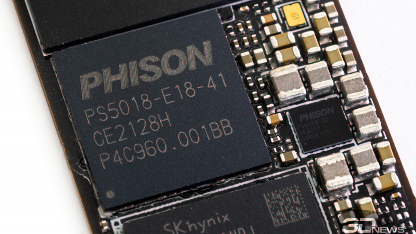
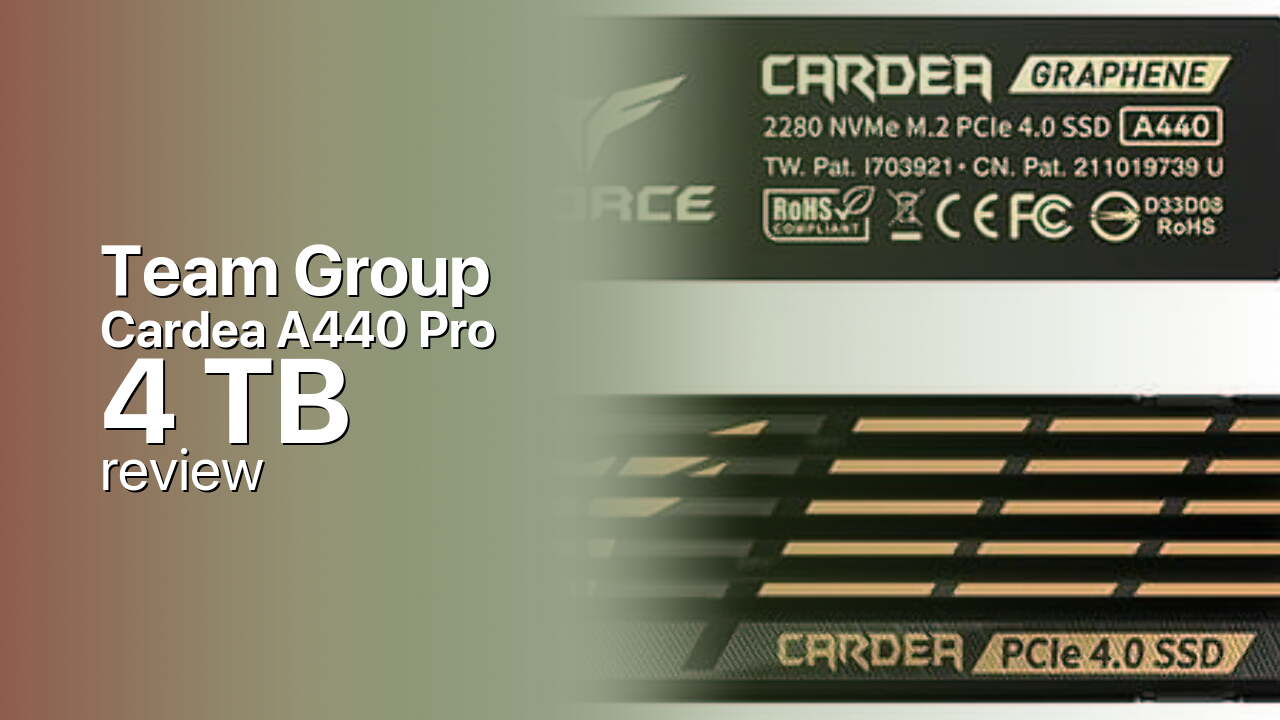
At 4 TB the Cardea A440 Pro is the largest capacity Team Group offers in this series. It uses the same Phison PS5018-E18 controller, Micron B47R 176-layer 3D TLC NAND and SK Hynix DDR4-2666 DRAM as its 1 TB and 2 TB siblings, but with twice as many NAND dies populating the eight channels. That density buys it 3,000 TBW of endurance, the highest in the family by a wide margin, and the largest dynamic SLC cache, which is what keeps sustained writes feeling fast for longer than on the smaller capacities.
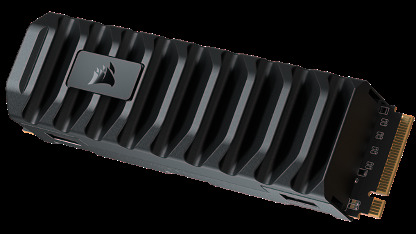
The 4 TB ships as a single-sided M.2 2280 board and, like the rest of the A440 Pro line, is available with either a 3.7 mm graphene heat-spreader or a much chunkier aluminium fin heatsink that Team Group claims reduces thermal output by roughly 48 percent versus a bare board. The aluminium version is the more sensible pick at this capacity — sustained 4 TB writes generate real heat, and the slim graphene version is intended for tight installs like the PS5 slot lid. Speaking of which, the graphene 4 TB SKU is the PS5-ready variant for users who want to expand console storage to the maximum supported size.
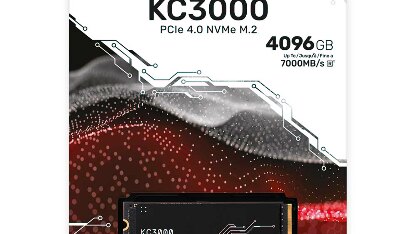
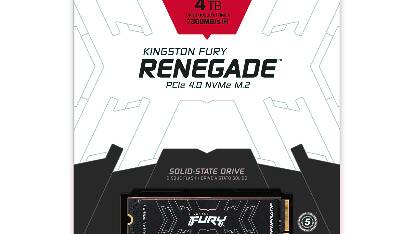
Direct competitors at 4 TB include the WD Black SN850X 4 TB, Samsung 990 Pro 4 TB, Seagate FireCuda 530 4 TB and Kingston KC3000 4 TB. The KC3000 in particular is the A440 Pro's identical twin on the inside, since both use the same E18 controller and Micron B47R NAND. Among these, the FireCuda 530 leads on sustained writes thanks to firmware tuning, while the SN850X and 990 Pro have the edge on idle power. The A440 Pro 4 TB usually wins on price per gigabyte at this size, which is where most 4 TB buyers actually make their decision.
Storage Comparisons:
Cardea A440 Pro Performance & Benchmarks
Team Group rates the Cardea A440 Pro 4 TB at up to 7,400 MB/s sequential reads and up to 6,900 MB/s sequential writes over PCIe 4.0 x4, with up to 1,000,000 IOPS for both random reads and writes. Those figures put it on par with the fastest mainstream PCIe 4.0 drives at 4 TB and well beyond Sony's 5,500 MB/s PS5 recommendation. In day-to-day desktop use the drive feels indistinguishable from a 990 Pro or SN850X — game loads, application launches and Windows boots are storage-bound only for the first fraction of a second.
Team Group Cardea A440 Pro 4 TB vs M.2 4.0 x 4 peers
Switch between sequential throughput and random IOPS to see how this drive stacks up against other M.2 4.0 x 4 SSDs in our database. The highlighted bar is the drive on this page — click any other bar to open that drive.
- Patriot Viper PV593 1 TB: 14,500 MB/s read, 14,000 MB/s write
- Patriot Viper PV593 2 TB: 14,500 MB/s read, 14,000 MB/s write
- Patriot Viper PV593 4 TB: 14,500 MB/s read, 14,000 MB/s write
- Patriot Viper PV573 2 TB: 14,000 MB/s read, 12,000 MB/s write
- Team Group Cardea A440 Pro 4 TB (this drive): 7,400 MB/s read, 6,900 MB/s write
The real differentiator at 4 TB is sustained write behaviour. With four full terabytes of NAND, the dynamic SLC write cache is large enough to absorb tens of gigabytes of continuous data before the controller falls back to native TLC speeds. Independent reviews of E18-based 4 TB drives consistently show sustained writes settling around 2.5 GB/s after the cache fills — still faster than most PCIe 3.0 drives at peak. For video editors moving hours of 4K or 6K footage onto the drive in a single pass, this is where the 4 TB pulls ahead of the 1 TB and 2 TB variants. Thermal throttling under heavy continuous writes is a genuine concern with the slim graphene cooler, so the aluminium-fin SKU or a substantial motherboard heatsink is the right pairing for sustained workloads.
Team Group Cardea A440 Pro vs Competitors
See how the Cardea A440 Pro stacks up against other M.2 4.0 x 4 drives in our database:
Compare with rival drives:
Endurance, TBW & Warranty
Team Group rates the Cardea A440 Pro 4 TB at 3,000 TBW and backs it with a 5-year limited warranty, ending at whichever limit is reached first. 3,000 TBW is genuinely large — at a sustained creator workload of 200 GB of writes every single day it would still take roughly 41 years to exhaust, and the practical lifetime of the drive ends at the warranty long before that. For typical desktop users writing tens of gigabytes per day, the TBW ceiling is purely theoretical. This makes the 4 TB version of the A440 Pro suitable for workloads that the 1 TB (700 TBW) and 2 TB (1,400 TBW) can technically handle but with less headroom, such as continuous video ingest, ZFS L2ARC, surveillance recording, and database scratch volumes. MTBF is rated at three million hours, the standard population statistic for consumer NVMe drives at this tier.
Team Group Cardea A440 Pro 4 TB Specifications
| Category | Value |
|---|---|
| Capacity [?] | 4 TB |
| Interface [?] | M.2 4.0 x 4 |
| Controller [?] | Phison PS5018-E18 |
| Memory type [?] | Micron 3D TLC |
| DRAM [?] | SK Hynix DDR4 |
| Read speed (MB/s) [?] | 7400 |
| Write speed (MB/s) [?] | 6900 |
| Read IOPS [?] | 1000000 |
| Write IOPS [?] | 1000000 |
| Endurance (TBW) [?] | 3000 |
| MTBF (million hours) [?] | 3 |
| Warranty (years) [?] | 5 |
Verdict: Is the Cardea A440 Pro Worth It in 2026?
The Cardea A440 Pro 4 TB is the right buy for content creators, video editors and PC gamers who want a single large PCIe 4.0 drive with TLC NAND and a full DRAM cache rather than splitting workloads across smaller volumes or settling for slower QLC at the same size. PS5 owners aiming for maximum console storage should specifically buy the A440 Pro Special graphene-cooler version of this SKU, which fits under the slot lid. Buyers chasing the best sustained write performance after cache exhaustion should compare against the Seagate FireCuda 530 4 TB, which is the platform's sustained-write leader. For most other 4 TB shoppers, the A440 Pro delivers flagship specs at a typically lower price than the Samsung 990 Pro and WD Black SN850X equivalents.
+ Pros
- 7,400 MB/s reads and 6,900 MB/s writes on PCIe 4.0 x4
- 3,000 TBW endurance, highest in the A440 Pro family
- Phison E18 controller with SK Hynix DDR4 DRAM cache
- Micron 176-layer B47R 3D TLC NAND
- Larger SLC cache holds peak writes longer than smaller capacities
- 5-year warranty with single-sided M.2 2280 form factor
- Cons
- Aluminium heatsink version too tall for the PS5 slot
- Slim graphene cooler can throttle under sustained 4 TB writes
- Pricier per gigabyte than QLC bulk-storage alternatives
- No hardware encryption support
Buy this or similar SSD Storage:



Video Review
TeamGroup T-Force Cardea A440 SSD Review & Benchmark - Bringing it's A Game