Team Group Cardea Zero Z340 256GB — PCIe 3.0 NVMe SSD Review (2026)
Quick answer
The 256 GB Cardea Zero Z340 makes the most sense as a boot drive for a budget desktop or as a secondary-drive upgrade in a laptop where the graphene-copper cooler sidesteps clearance issues that aluminium heatsinks create.
Read: 3400 MB/s Write: 3000 MB/s Endurance: 380 TBW Warranty: 5 years Interface: M.2 3.0 x 4
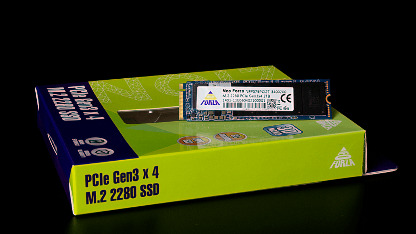
The Team Group Cardea Zero Z340 256 GB is a Phison E12-powered PCIe 3.0 NVMe drive whose ultra-thin graphene-copper heat spreader keeps it relevant for compact builds years after launch.
Controller & Memory
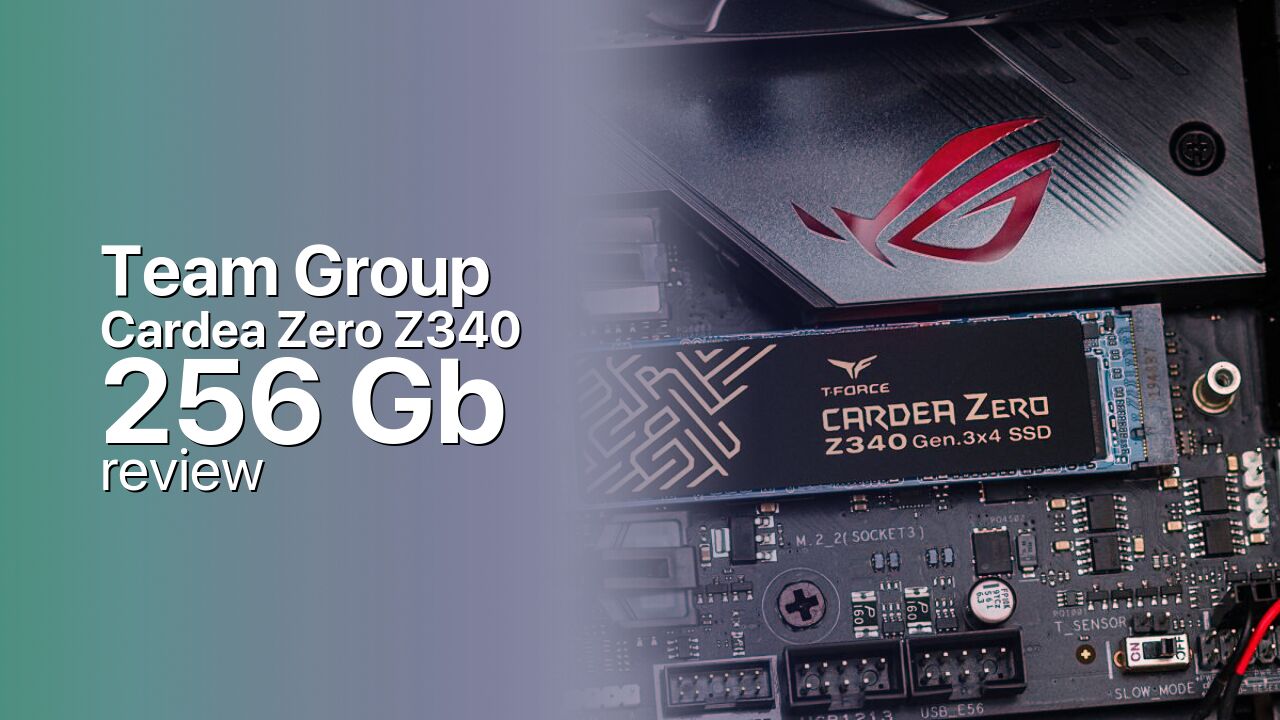
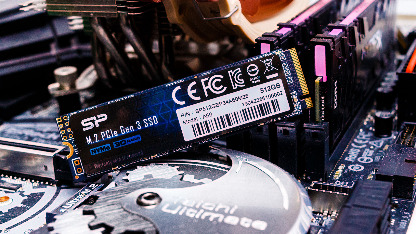
At the heart of the Cardea Zero Z340 sits the Phison PS5012-E12, an eight-channel PCIe 3.0 x4 controller that defined the high-end Gen3 NVMe segment in its era. Team Group pairs it with Kioxia 96-layer 3D TLC NAND and a 1 GB DDR4 DRAM cache, a combination that eliminates the HMB compromises seen on DRAM-less budget drives. The Z340's party piece, however, is its cooling solution: a graphene-laminated copper foil heat spreader thinner than a credit card, which Team Group claims drops controller temperatures by up to 9 °C compared to a bare drive. At under 1 mm thick, it fits where finned aluminium heatsinks cannot — ultrabooks, ITX boards with back-side M.2 slots, and the PlayStation 5's tight drive bay.
This 256 GB variant is the entry point of the Z340 stack, sitting below the 512 GB, 1 TB, 2 TB, and 4 TB capacities that round out the lineup. Smaller capacities on the Phison E12 platform typically ship with fewer NAND channels active, which can reduce write throughput, though Team Group's rated 3,000 MB/s sequential write for all capacities suggests all eight channels are populated here. The drive uses a single-sided M.2 2280 PCB with a distinctive blue solder mask, making it compatible with ultrathin laptops that cannot accommodate double-sided drives.
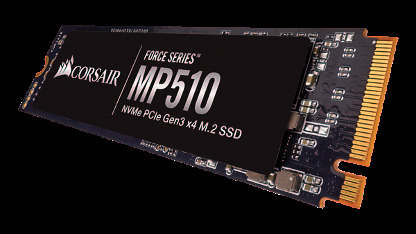
In the PCIe 3.0 space, the Z340 competes against other Phison E12 reference designs sold under different brands — the Sabrent Rocket, Silicon Power P34A80, and Corsair MP510 all share the same controller blueprint. Among them, the Z340's differentiator is strictly the graphene-copper cooler; the underlying performance envelope is near-identical. Buyers who already have motherboard M.2 heatsinks covered will find no meaningful speed difference between these options and should simply pick the best warranty and pricing at purchase time.
Storage Comparisons:
Cardea Zero Z340 Performance & Benchmarks
Team Group rates the 256 GB Cardea Zero Z340 at 3,400 MB/s sequential reads and 3,000 MB/s sequential writes, figures that sit at the PCIe 3.0 x4 ceiling for reads and come within striking distance for writes. Random performance is rated at 450,000 IOPS read and 400,000 IOPS write, placing it in the upper tier of Gen3 drives with DRAM.
Team Group Cardea Zero Z340 256 GB vs M.2 3.0 x 4 peers
Switch between sequential throughput and random IOPS to see how this drive stacks up against other M.2 3.0 x 4 SSDs in our database. The highlighted bar is the drive on this page — click any other bar to open that drive.
- ADATA SX 8800 Pro 512 GB: 3,500 MB/s read, 2,700 MB/s write
- ADATA SX 8800 Pro 1 TB: 3,500 MB/s read, 2,700 MB/s write
- ADATA XPG Spectrix S40G RGB 256 GB: 3,500 MB/s read, 3,000 MB/s write
- ADATA XPG Spectrix S40G RGB 512 GB: 3,500 MB/s read, 3,000 MB/s write
- Team Group Cardea Zero Z340 256 GB (this drive): 3,400 MB/s read, 3,000 MB/s write
Independent reviewers consistently measure peak sequential reads within 2–3% of the rated 3,400 MB/s, and the Phison E12's pseudo-SLC cache absorbs burst writes well enough that most real-world workloads — game installs, OS image deployments, 4K video file transfers — never exhaust the buffer. Sustained sequential writes after the SLC cache fills settle around 500–600 MB/s, which is typical for TLC drives of this generation and irrelevant for the boot-drive role a 256 GB SSD normally fills. For gaming, load times between the Z340 and a SATA SSD are night-and-day, while the gap to a PCIe 4.0 drive is measurable in benchmarks but rarely perceptible without a stopwatch. The graphene-copper heat spreader earns its keep in airflow-starved environments: reviewers report the Z340 throttles later than bare Phison E12 drives under sustained write loads, though a motherboard heatsink still outperforms it in well-ventilated desktops.
Team Group Cardea Zero Z340 vs Competitors
See how the Cardea Zero Z340 stacks up against other M.2 3.0 x 4 drives in our database:
Compare with rival drives:
Endurance, TBW & Warranty
Team Group backs the Cardea Zero Z340 with a five-year warranty, limited by the 380 TBW endurance rating on the 256 GB model. At a typical consumer workload of 20 GB written per day, that TBW budget stretches past 50 years — endurance is effectively a non-issue for a boot drive of this capacity, where writes are dominated by OS updates and application installs rather than sustained data ingest. Higher-capacity Z340 variants bump TBW proportionally: the 512 GB model carries 800 TBW, the 1 TB model 1,600 TBW, and the 2 TB model reaches 3,200 TBW. The drive carries the standard 2-million-hour MTBF figure common across the Phison E12 reference family, though MTBF is a population-level reliability statistic and should not be interpreted as an individual drive's expected lifespan. Warranty service goes through Team Group's RMA channel rather than retailer point-of-sale in most regions.
Team Group Cardea Zero Z340 256 GB Specifications
| Category | Value |
|---|---|
| Capacity [?] | 256 GB |
| Interface [?] | M.2 3.0 x 4 |
| Controller [?] | Phison PS5012-E12 |
| Memory type [?] | 3D TLC |
| DRAM [?] | 1GB DDR4 |
| Read speed (MB/s) [?] | 3400 |
| Write speed (MB/s) [?] | 3000 |
| Read IOPS [?] | 450000 |
| Write IOPS [?] | 400000 |
| Endurance (TBW) [?] | 380 |
| MTBF (million hours) [?] | 2 |
| Warranty (years) [?] | 5 |
Verdict: Is the Cardea Zero Z340 Worth It in 2026?
The 256 GB Cardea Zero Z340 makes the most sense as a boot drive for a budget desktop or as a secondary-drive upgrade in a laptop where the graphene-copper cooler sidesteps clearance issues that aluminium heatsinks create. Buyers who need a dedicated game library drive or a scratch disk for video editing should look at the 1 TB variant instead — 256 GB is cramped for those use cases and the higher-capacity models carry better sustained-write throughput. Among Phison E12 contemporaries, the Z340 is indistinguishable on raw performance from the Sabrent Rocket or Silicon Power P34A80, so the buying decision reduces to warranty terms and whether the ultra-thin cooler matters for your build. It is a well-executed Gen3 reference design that does exactly what it says on the box and holds up as a competent, DRAM-equipped NVMe option in a market increasingly dominated by DRAM-less cost-cutters.
+ Pros
- 3,400 MB/s sequential reads, saturating PCIe 3.0 x4
- 1 GB DRAM cache — no HMB compromises under sustained load
- Graphene-copper heat spreader fits in ultra-thin laptops and PS5
- Single-sided M.2 2280 PCB compatible with thin notebooks
- 380 TBW endurance backed by a 5-year warranty
- Cons
- Sustained TLC writes drop to ~500 MB/s after SLC cache exhausts
- Graphene cooler underperforms finned aluminium in desktop airflow
- 256 GB capacity limits practical use to OS and core applications
- Phison E12 reference design — near-identical alternatives exist
Buy this or similar SSD Storage:
Video Review
Best Bang for Buck PCIe 3.0 NVMe SSD? ⏩ T-Force Cardea z340 SSD Review