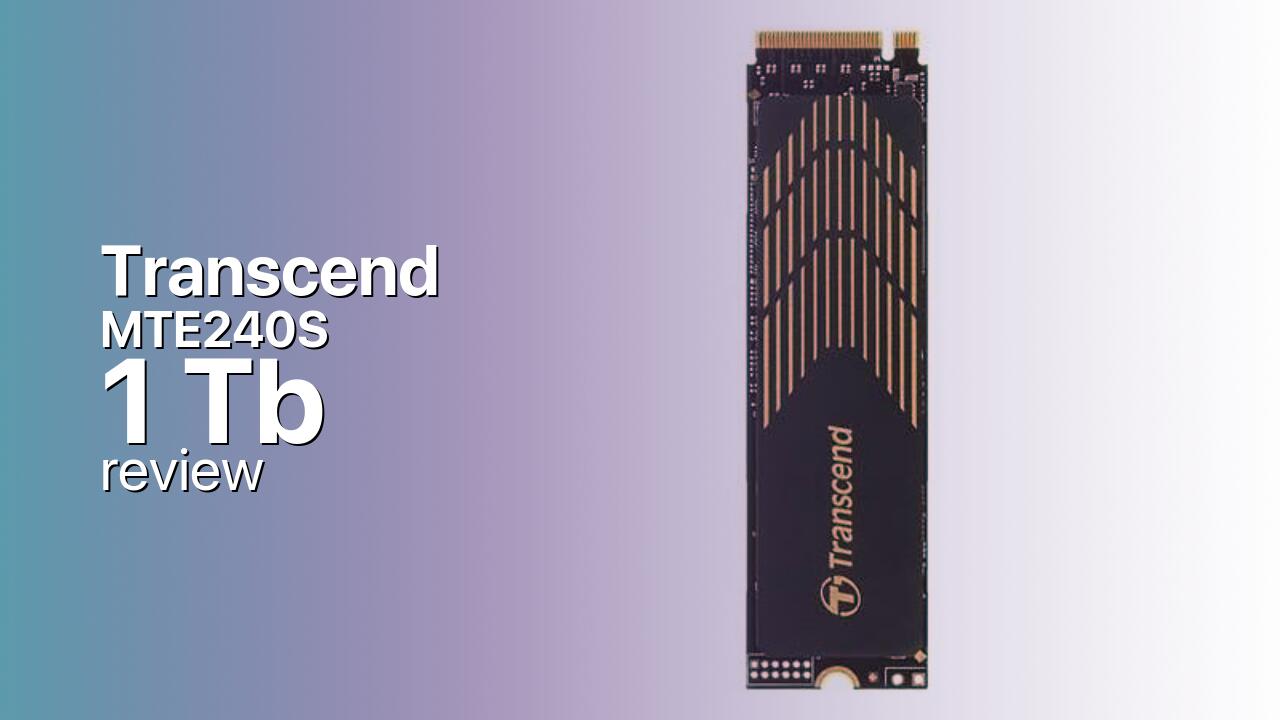
Transcend MTE240S 1TB — High-Endurance PCIe 4.0 NVMe SSD (2026)
Quick answer
The Transcend MTE240S 1 TB is a niche drive that will be exactly right for a specific buyer and unremarkable for everyone else.
Read: 3800 MB/s Write: 3200 MB/s Endurance: 1700 TBW Warranty: 5 years Interface: M.2 4.0 x 4
The Transcend MTE240S 1TB stands out not for peak speed but for endurance — its 1,700 TBW rating is among the highest of any consumer PCIe 4.0 drive, making it a rare value pick for write-heavy workloads.
Controller & Memory
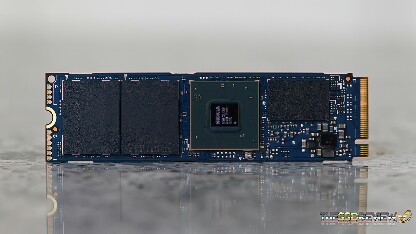
The Transcend MTE240S is an entry-level PCIe 4.0 M.2 2280 NVMe SSD built around a four-channel controller — identified in independent reviews as the Silicon Motion SM2267 — paired with 3D TLC NAND. The SM2267 is a DRAM-less design that relies on the Host Memory Buffer (HMB) for mapping-table management, though some retail listings incorrectly describe this as a DRAM cache. Transcend does not publicly disclose the NAND vendor. The drive is available in 500 GB and 1 TB capacities, with the 1 TB model reviewed here. The PCB is single-sided, ensuring fitment in thin laptops and the PlayStation 5 expansion slot.
The 1 TB variant is rated at up to 3,800 MB/s sequential reads and 3,200 MB/s sequential writes — modest numbers for a PCIe 4.0 drive, sitting closer to high-end PCIe 3.0 territory than to the 7,000 MB/s ceiling of PCIe 4.0 flagships. The four-channel controller and DRAM-less architecture cap peak throughput below what eight-channel, DRAM-equipped drives achieve, but for boot-drive and general-consumer workloads the gap is rarely perceptible. Formatted capacity is approximately 931 GB in Windows.
Where the MTE240S separates itself from nearly every competitor is endurance. Transcend rates the 1 TB model at 1,700 TBW — roughly 1,700 drive writes — which is two to three times the TBW of typical consumer TLC drives like the Samsung 980 (600 TBW) or WD Blue SN570 (600 TBW). This puts the MTE240S in the company of enterprise-leaning and prosumer drives, and makes it a legitimate option for write-intensive use cases like video editing scratch disks, surveillance recording, or database logging that would exhaust a standard consumer SSD well before its warranty period. The 5-year warranty backs the endurance rating, with coverage ending at whichever limit — 5 years or 1,700 TBW — is reached first.
Storage Comparisons:
MTE240S Performance & Benchmarks
Transcend rates the 1 TB MTE240S at up to 3,800 MB/s sequential reads and 3,200 MB/s sequential writes, with random performance rated at up to 370,000 IOPS read and 560,000 IOPS write. These figures place the MTE240S in an unusual position: it uses the PCIe 4.0 x4 interface but delivers throughput closer to a high-end PCIe 3.0 drive like the Samsung 970 EVO Plus (3,500 MB/s). The four-channel SM2267 controller is the bottleneck — it was designed as a cost-reduced PCIe 4.0 option for drives that prioritize endurance and value over peak bandwidth.
Transcend MTE240S 1 TB vs M.2 4.0 x 4 peers
Switch between sequential throughput and random IOPS to see how this drive stacks up against other M.2 4.0 x 4 SSDs in our database. The highlighted bar is the drive on this page — click any other bar to open that drive.
- Patriot Viper PV593 1 TB: 14,500 MB/s read, 14,000 MB/s write
- Patriot Viper PV593 2 TB: 14,500 MB/s read, 14,000 MB/s write
- Patriot Viper PV593 4 TB: 14,500 MB/s read, 14,000 MB/s write
- Patriot Viper PV573 2 TB: 14,000 MB/s read, 12,000 MB/s write
- Transcend MTE240S 1 TB (this drive): 3,800 MB/s read, 3,200 MB/s write
The DRAM-less HMB architecture adds minimal latency for consumer workloads. Game load times, application launches, and OS boot responsiveness are dominated by random read latency, where the MTE240S performs adequately if not exceptionally. The 3D TLC NAND provides predictable sustained write behavior, and the large overprovisioning implied by the 1,700 TBW endurance rating suggests Transcend has allocated generous spare area for the controller to manage wear leveling — a design choice that trades some usable capacity for long-term write consistency.
For its intended audience — users who value endurance over peak throughput — the MTE240S delivers exactly what the spec sheet promises. The 1,700 TBW rating is not a marketing exaggeration; it is a conservative, warranty-backed figure that reflects Transcend's industrial and embedded-storage heritage. Independent testing confirms the drive meets its rated speeds under sustained load without thermal throttling in adequately ventilated enclosures.
Transcend MTE240S vs Competitors
See how the MTE240S stacks up against other M.2 4.0 x 4 drives in our database:
Compare with rival drives:
Endurance, TBW & Warranty
Transcend backs the MTE240S 1 TB with a 5-year limited warranty capped at 1,700 TBW — whichever limit is reached first ends the coverage period. The 1,700 TBW figure is the standout specification: it is roughly two to three times the endurance rating of most consumer PCIe 4.0 TLC drives at this capacity, including the Samsung 980 (600 TBW) and WD Blue SN570 (600 TBW). At a typical consumer write load of 30 to 50 GB per day, the drive would last 93 to 155 years — effectively unlimited for consumer use. For write-intensive workloads like 4K video capture or database logging at 200 GB per day, the TBW ceiling would still take over 23 years to reach, meaning the 5-year warranty window is the binding constraint for most use cases. Transcend's RMA process is well established, with service centers in North America, Europe, and Asia. The drive does not require registration, but retaining proof of purchase is recommended for warranty claims.
Transcend MTE240S 1 TB Specifications
| Category | Value |
|---|---|
| Capacity [?] | 1 TB |
| Interface [?] | M.2 4.0 x 4 |
| Controller [?] | Silicon Motion SM2267 |
| Memory type [?] | 3D TLC |
| DRAM [?] | Yes |
| Read speed (MB/s) [?] | 3800 |
| Write speed (MB/s) [?] | 3200 |
| Read IOPS [?] | 370000 |
| Write IOPS [?] | 560000 |
| Endurance (TBW) [?] | 1700 |
| MTBF (million hours) [?] | 2000000 |
| Warranty (years) [?] | 5 |
Verdict: Is the MTE240S Worth It in 2026?
The Transcend MTE240S 1 TB is a niche drive that will be exactly right for a specific buyer and unremarkable for everyone else. If your workload involves heavy sustained writes — video editing scratch, surveillance recording, database operations, or any application that burns through consumer SSD endurance ratings — the 1,700 TBW rating and 5-year warranty make the MTE240S one of the best value propositions in the consumer PCIe 4.0 market. The peak throughput is modest at 3,800 MB/s reads, but write endurance is the bottleneck in these use cases, not sequential speed. Skip it if you are building a gaming PC or general-purpose desktop where 600 TBW is already overkill — the Samsung 980 or WD Blue SN570 will deliver faster reads and a more polished software ecosystem at a similar price. The MTE240S is a reliability-first product from a company with an industrial storage pedigree, and that focus shows in the spec sheet.
+ Pros
- Exceptional 1,700 TBW endurance for a consumer 1 TB drive
- 5-year warranty with global RMA support
- 3D TLC NAND with conservative overprovisioning
- 3,800 MB/s reads, adequate for PCIe 4.0 consumer workloads
- Single-sided M.2 2280 PCB, fits thin laptops and PS5
- Cons
- Peak throughput modest for PCIe 4.0, closer to PCIe 3.0 flagship speeds
- DRAM-less HMB architecture, no dedicated DRAM cache
- NAND vendor and controller not officially published by Transcend
- Software and firmware ecosystem less polished than Samsung or WD
Buy this or similar SSD Storage:



Video Review
Transcend NVMe PCIe Gen4 x4 SSD 240S - Where Speed Meets Durability