ADATA XPG S50 Lite 1TB Review — Budget PCIe 4.0 NVMe SSD (2026)
Quick answer
The ADATA XPG Gammix S50 Lite 1 TB is a sensible pick for a budget build where PCIe 4.0 on the spec sheet matters more than actually hitting Gen 4 speeds.
Read: 3900 MB/s Write: 3200 MB/s Endurance: 740 TBW Warranty: 5 years Interface: M.2 4.0 x 4
The ADATA XPG Gammix S50 Lite 1 TB is a budget PCIe 4.0 drive that borrows your system RAM instead of carrying its own, and the result is Gen 3 speeds on a Gen 4 interface — which is exactly what its price point promises.
Controller & Memory
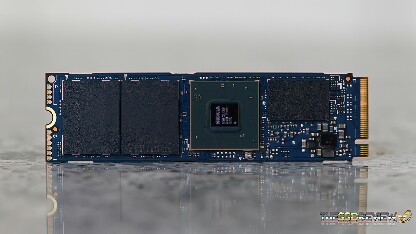
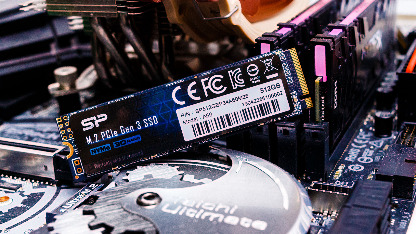
The XPG Gammix S50 Lite is built around Silicon Motion's SM2267, a 4-channel controller designed for DRAM-less operation. Instead of a dedicated DRAM chip, the drive uses Host Memory Buffer (HMB) — a PCIe feature that borrows a small slice of system RAM, typically 64 MB, to hold the flash translation layer mapping table. The NAND is Micron 3D TLC, and the whole package sits on a standard M.2 2280 PCB. The drive is single-sided and runs cool, which makes it a practical drop-in for laptops and ultrabooks where dual-sided drives physically will not fit.
ADATA also sells the S50 Lite in a 2 TB capacity, which doubles the endurance to 1,480 TBW but keeps the same 3,900/3,200 MB/s speed ratings — the SM2267's 4-channel design simply cannot push more throughput regardless of capacity. The 1 TB variant covered here is the volume seller and the capacity most buyers will encounter at retail. It sits firmly in the budget PCIe 4.0 segment, competing more directly with high-end PCIe 3.0 drives like the Samsung 970 EVO Plus and WD Blue SN570 than with full-speed Gen 4 flagships.
The S50 Lite's real competition is the Samsung 980 (non-Pro), another DRAM-less drive, and the WD Blue SN580 — both of which offer similar real-world performance and sit in the same budget-to-mainstream price band. The S50 Lite's claim over those is the PCIe 4.0 label on the box, which matters more for marketing than for actual throughput. In practice, it performs like a fast PCIe 3.0 drive — which, for a budget gaming or office build, is still more than fast enough.
Storage Comparisons:
XPG Gammix S50 Lite Performance & Benchmarks
The 1 TB S50 Lite is rated for up to 3,900 MB/s sequential reads and 3,200 MB/s sequential writes — figures that barely exceed the PCIe 3.0 x4 ceiling of roughly 3,500 MB/s. Random performance is rated at up to 490,000 read IOPS and 540,000 write IOPS, which is competitive within the DRAM-less segment. In real-world use, game load times and OS boot speeds are indistinguishable from any competent NVMe drive — the difference between 3,900 MB/s and 7,400 MB/s is invisible outside of sustained large-file transfers.
ADATA XPG Gammix S50 Lite 1 TB vs M.2 4.0 x 4 peers
Switch between sequential throughput and random IOPS to see how this drive stacks up against other M.2 4.0 x 4 SSDs in our database. The highlighted bar is the drive on this page — click any other bar to open that drive.
- Patriot Viper PV593 1 TB: 14,500 MB/s read, 14,000 MB/s write
- Patriot Viper PV593 2 TB: 14,500 MB/s read, 14,000 MB/s write
- Patriot Viper PV593 4 TB: 14,500 MB/s read, 14,000 MB/s write
- Patriot Viper PV573 2 TB: 14,000 MB/s read, 12,000 MB/s write
- ADATA XPG Gammix S50 Lite 1 TB (this drive): 3,900 MB/s read, 3,200 MB/s write
The SM2267 uses an SLC write cache to absorb burst writes at full speed. Independent reviewers consistently find the cache on the 1 TB model exhausts after roughly 50—70 GB of sustained writes, after which the direct-to-TLC write speed settles to around 800—1,000 MB/s. This is slower than DRAM-equipped PCIe 4.0 drives but on par with other DRAM-less HMB designs. For a boot or game drive the cache size is adequate — a typical game install or OS update completes within the cached region. The drive runs cool enough that a heatsink is not required under normal desktop use, though sustained writes in a poorly ventilated laptop bay can push the controller past 70 °C. There is no PS5 compatibility concern worth discussing — the S50 Lite is a budget desktop and laptop drive, not a console expansion candidate.
ADATA XPG Gammix S50 Lite vs Competitors
See how the XPG Gammix S50 Lite stacks up against other M.2 4.0 x 4 drives in our database:
Compare with rival drives:
Endurance, TBW & Warranty
The 1 TB XPG Gammix S50 Lite carries a 740 TBW endurance rating and a 5-year limited warranty, whichever limit is reached first. At a typical desktop workload of 20—50 GB of writes per day, this translates to roughly 40 to 100 years of usable life — the warranty will almost certainly expire before the NAND cells approach their rated write endurance. The MTBF is rated at 2 million hours, a population-level reliability statistic rather than a per-drive lifespan guarantee. For context, the Samsung 980 1 TB (another DRAM-less drive) is rated at 600 TBW, so the S50 Lite's 740 TBW is above average for the budget segment. The 2 TB variant doubles endurance to 1,480 TBW. ADATA handles warranty claims through its standard RMA process.
ADATA XPG Gammix S50 Lite 1 TB Specifications
| Category | Value |
|---|---|
| Capacity [?] | 1 TB |
| Interface [?] | M.2 4.0 x 4 |
| Controller [?] | Silicon Motion SM2267 |
| Memory type [?] | Micron 3D TLC |
| DRAM [?] | SLC Caching and Host Memory Buffer |
| Read speed (MB/s) [?] | 3900 |
| Write speed (MB/s) [?] | 3200 |
| Read IOPS [?] | 490000 |
| Write IOPS [?] | 540000 |
| Endurance (TBW) [?] | 740 |
| MTBF (million hours) [?] | 2 |
| Warranty (years) [?] | 5 |
Verdict: Is the XPG Gammix S50 Lite Worth It in 2026?
The ADATA XPG Gammix S50 Lite 1 TB is a sensible pick for a budget build where PCIe 4.0 on the spec sheet matters more than actually hitting Gen 4 speeds. It is a DRAM-less HMB drive that delivers PCIe 3.0-class performance with a Gen 4 badge, a solid 740 TBW endurance rating, and a 5-year warranty — all in a cool-running single-sided form factor that fits in thin laptops. Skip the S50 Lite if your workload involves sustained large-file transfers, heavy video editing, or database operations — the small SLC cache and post-cache write speeds will become a visible bottleneck. For those use cases, step up to a DRAM-equipped drive like the WD Black SN770 or the ADATA XPG Gammix S70. For a boot-and-games drive in a budget desktop or an OS upgrade for an older laptop, the S50 Lite does exactly what it says on the box and not much more — and at this tier, that is a recommendation.
+ Pros
- 3,900 MB/s reads on a PCIe 4.0 interface
- 740 TBW endurance — above average for a budget DRAM-less drive
- Single-sided PCB fits thin laptops and ultrabooks
- 5-year warranty matches premium drives
- Cool-running under normal desktop workloads
- HMB keeps latency competitive without adding BOM cost
- Cons
- DRAM-less HMB design limits sustained mixed-workload throughput
- Post-cache write speed drops to roughly 800—1,000 MB/s
- 3,200 MB/s writes are closer to PCIe 3.0 than Gen 4 territory
- Small SLC cache (50—70 GB) on the 1 TB variant
- No hardware encryption support
Buy this or similar SSD Storage:
Video Review
Are Budget PCIe 4 SSDs Worth It?? - ADATA XPG GAMMIX S50 Lite