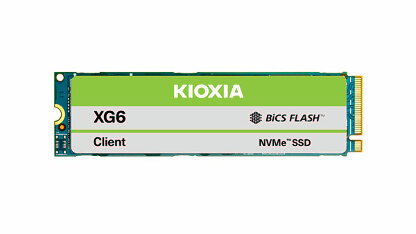
Zadak Spark 512GB - RGB PCIe 3.0 NVMe SSD (2026)
Quick answer
The Zadak Spark 512 GB is a niche pick - factory-RGB lighting on a Phison E12 reference design, targeted at PCIe 3.0 builds that want a boot or secondary drive with M.2-slot lighting.
Read: 3400 MB/s Write: 3000 MB/s Endurance: 360 TBW Warranty: 5 years Interface: M.2 3.0 x 4
The Zadak Spark 512GB is one of the earlier RGB-lit PCIe 3.0 NVMe drives - Phison PS5012-E12 controller, Micron 3D TLC NAND, 1 GB SK Hynix DRAM, and an aluminium heatsink with addressable RGB strip on a M.2 2280 PCB.
Controller & Memory
The Zadak Spark 512 GB is built on Phison's PS5012-E12 eight-channel PCIe 3.0 controller paired with Micron 3D TLC NAND and a 1 GB SK Hynix DDR4-2400 DRAM cache. The E12 was the dominant PCIe 3.0 NVMe controller during 2018-2020 and is the same silicon that drove the early Sabrent Rocket, Corsair MP510, and Silicon Power P34A80; what Zadak adds is the bonded aluminium heatsink with an addressable RGB lighting strip, fully compatible with ASUS Aura Sync, MSI Mystic Light, Gigabyte RGB Fusion, and ASRock Polychrome Sync for board-wide colour coordination.
Zadak ships the Spark in 256 GB, 512 GB, 1 TB, and 2 TB capacities. The 512 GB SKU on this page is the value tier - it carries the same controller, DRAM, and RGB hardware as the larger siblings but with reduced TBW endurance (360 TBW versus 720 TBW on the 1 TB and 1,440 TBW on the 2 TB). Zadak is a Taiwanese enthusiast-component brand under Apacer Technology, and its retail footprint runs heavily in Asia-Pacific and Europe with limited but growing North American availability.
The Spark 512 GB targets RGB-build enthusiasts who want lighting in their M.2 slot rather than the conventional motherboard-heatsink-covered look. Direct rivals are the Asura Genesis Xtreme 512 GB (same E12 platform with RGB, 7-year warranty), the Adata XPG SX8200 Pro 512 GB (faster, no RGB), the WD Black SN750 500 GB (no RGB, similar tier), and the Crucial P5 500 GB (DRAM-equipped, similar speed, no RGB). Within that field the Spark is the niche RGB pick rather than the value or performance pick.
Storage Comparisons:
Spark Performance & Benchmarks
Manufacturer ratings for the Spark 512 GB land at 3,400 MB/s sequential reads and 3,000 MB/s sequential writes, with random performance up to 560,000 read and 560,000 write IOPS. Those numbers approach the PCIe 3.0 x4 interface ceiling (~3,500 MB/s) on reads and represent typical flagship-tier PCIe 3.0 performance. The Phison E12 controller plus dedicated DRAM combination delivers consistent random-read latency at low queue depths - the platform was well-characterised at launch by TechPowerUp, Tom's Hardware, and others.
Zadak Spark 512 GB vs M.2 3.0 x 4 peers
Switch between sequential throughput and random IOPS to see how this drive stacks up against other M.2 3.0 x 4 SSDs in our database. The highlighted bar is the drive on this page — click any other bar to open that drive.
- ADATA SX 8800 Pro 512 GB: 3,500 MB/s read, 2,700 MB/s write
- ADATA SX 8800 Pro 1 TB: 3,500 MB/s read, 2,700 MB/s write
- ADATA XPG Spectrix S40G RGB 256 GB: 3,500 MB/s read, 3,000 MB/s write
- ADATA XPG Spectrix S40G RGB 512 GB: 3,500 MB/s read, 3,000 MB/s write
- Zadak Spark 512 GB (this drive): 3,400 MB/s read, 3,000 MB/s write
Sustained writes are competent for a PCIe 3.0 drive of this era. The drive holds peak SLC-cached writes for roughly 80-120 GB of continuous transfer on a near-empty 512 GB before the cache exhausts, after which writes fall toward a TLC direct-write rate around 1,000-1,300 MB/s. For boot, application, and gaming workloads on a PCIe 3.0 system that profile is invisible. The aluminium heatsink keeps the controller well below thermal-throttling thresholds even under sustained load, which is meaningful in tight desktop M.2 slots without a motherboard cooler. DirectStorage operates at PCIe 3.0 speeds rather than the higher PCIe 4.0 ceiling that current games target, so this is not a DirectStorage-optimised drive for 2026 gaming.
Zadak Spark vs Competitors
See how the Spark stacks up against other M.2 3.0 x 4 drives in our database:
Compare with rival drives:
Endurance, TBW & Warranty
Zadak backs the Spark 512 GB with a five-year limited warranty and a 360 TBW endurance budget. The TBW scales linearly across the line - 180 TBW on the 256 GB, 360 TBW on the 512 GB, 720 TBW on the 1 TB, and 1,440 TBW on the 2 TB. At a typical 10-20 GB/day desktop workload the 512 GB budget lasts roughly 50-100 years, far beyond the warranty period and the realistic service life of the drive. The published MTBF is 1.8 million hours, a population statistic rather than a per-drive promise. Zadak's RMA channel runs through Apacer's regional distributors and the Zadak support portal at zadakteam.com - the brand is small and less responsive than tier-one Western channels but consistent within Asia-Pacific and major European markets. The five-year warranty is competitive with industry standard at this tier.
Zadak Spark 512 GB Specifications
| Category | Value |
|---|---|
| Capacity [?] | 512 GB |
| Interface [?] | M.2 3.0 x 4 |
| Controller [?] | Phison PS5012-E12 |
| Memory type [?] | Micron 3D TLC |
| DRAM [?] | SK Hynix 1GB DDR4-2400 |
| Read speed (MB/s) [?] | 3400 |
| Write speed (MB/s) [?] | 3000 |
| Read IOPS [?] | 560000 |
| Write IOPS [?] | 560000 |
| Endurance (TBW) [?] | 360 |
| MTBF (million hours) [?] | 1.8 |
| Warranty (years) [?] | 5 |
Verdict: Is the Spark Worth It in 2026?
The Zadak Spark 512 GB is a niche pick - factory-RGB lighting on a Phison E12 reference design, targeted at PCIe 3.0 builds that want a boot or secondary drive with M.2-slot lighting. Anyone who can use a current PCIe 4.0 drive should look at the Patriot Viper VPR400 512 GB (also RGB, but PCIe 4.0) or any current bare-PCB drive such as the WD Black SN770 500 GB for materially better raw performance. Skip the Spark 512 GB if your case has no window facing the M.2 slot - the RGB is the main reason to choose it, and it serves no purpose in headless or unwatched installs. As an RGB-themed PCIe 3.0 NVMe at 512 GB for a 2018-2020 build, the Spark serves a small but real audience.
+ Pros
- 3,400 MB/s sequential reads on PCIe 3.0
- Integrated aluminium heatsink with addressable RGB
- Phison PS5012-E12 controller with 1 GB DRAM
- Full motherboard RGB ecosystem sync support
- 5-year warranty with 360 TBW endurance
- 1.8 million-hour MTBF rating
- Cons
- PCIe 3.0 only, two generations behind current drives
- Integrated heatsink prevents fit in thin laptops
- Limited retail availability outside Asia-Pacific
- No DirectStorage benefit at PCIe 3.0 ceiling
- Smaller-brand RMA harder to access than Samsung or WD
Buy this or similar SSD Storage:



Video Review
Zadak product showcase virtual event