ADATA XPG Gammix S70 Blade 2TB Review — PCIe 4.0 NVMe SSD (2026)
Quick answer
Buy the ADATA XPG S70 Blade 2 TB if you want flagship PCIe 4.0 performance at a historically competitive price point, especially as a PS5 expansion drive or high-capacity game library storage.
Read: 7400 MB/s Write: 6400 MB/s Endurance: 1480 TBW Warranty: 5 years Interface: M.2 4.0 x 4
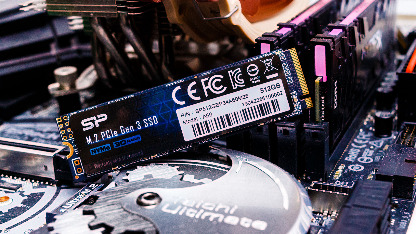
The ADATA XPG Gammix S70 Blade 2 TB launched as one of the most affordable PCIe 4.0 NVMe drives to match Samsung 980 Pro performance, making it a compelling PS5 upgrade and high-capacity game library drive in 2026.
Controller & Memory
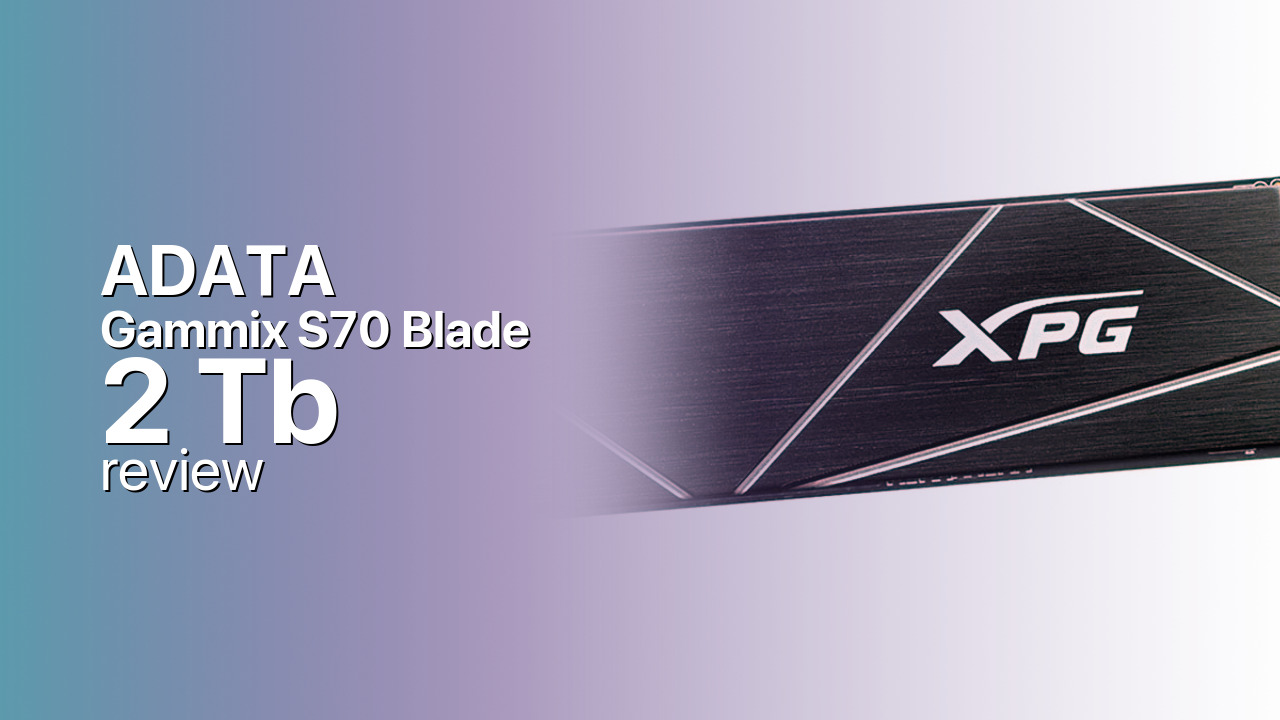
Under the hood, the XPG Gammix S70 Blade 2 TB is powered by Innogrit IG5236 "Rainier" — an eight-channel controller that competed with Phison E18 in the early PCIe 4.0 era. The NAND comes from Micron 176-layer 3D TLC B47R chips, rebranded by ADATA but identical to what premium competitors used. Unlike the plain S70, the Blade variant swaps Hynix DDR4-3200 for 2 GB of Samsung DDR4-2666 DRAM cache, which handles mapping and lookup tables without compromising real-world performance.
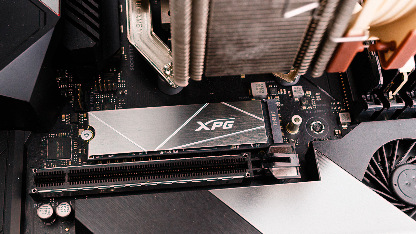
The S70 Blade distinguishes itself through a redesigned heatsink optimized for PS5 compatibility — slim enough to fit Sony 110 × 25 × 11.25 mm constraints while maintaining thermal headroom. It is also available in 1 TB, but the 2 TB model offers better endurance-per-dollar and sustained write characteristics. If your motherboard lacks an M.2 heatsink, the included thermal solution is adequate, though sustained transfers under heavy workloads may still benefit from active cooling.
Competitively, the S70 Blade 2 TB undercuts the Samsung 980 Pro and WD Black SN850X on launch price while delivering nearly identical sequential throughput. It trades blows with the Corsair MP600 Pro and Seagate FireCuda 530 in synthetic tests, often landing within margin-of-error differences. The drive excels at large-file transfers — game installs, video rendering scratch disks, and ISO copies — where its 7,400 MB/s sequential ceiling has room to stretch. Smaller random workloads benefit from the full DRAM cache but will not distinguish it from other flagship PCIe 4.0 drives in everyday OS boot or application launch metrics.
Storage Comparisons:
XPG Gammix S70 Blade Performance & Benchmarks
The ADATA XPG S70 Blade 2 TB is rated for up to 7,400 MB/s sequential reads and 6,400 MB/s sequential writes over a PCIe Gen 4 x4 NVMe 1.4 interface. Random 4K performance comes in at 650,000 IOPS reads and 740,000 IOPS writes under manufacturer-specified conditions — strong numbers that place this drive in the same tier as early-generation flagship PCIe 4.0 models from Samsung and Western Digital.
ADATA XPG Gammix S70 Blade 2 TB vs M.2 4.0 x 4 peers
Switch between sequential throughput and random IOPS to see how this drive stacks up against other M.2 4.0 x 4 SSDs in our database. The highlighted bar is the drive on this page — click any other bar to open that drive.
- Patriot Viper PV593 1 TB: 14,500 MB/s read, 14,000 MB/s write
- Patriot Viper PV593 2 TB: 14,500 MB/s read, 14,000 MB/s write
- Patriot Viper PV593 4 TB: 14,500 MB/s read, 14,000 MB/s write
- Patriot Viper PV573 2 TB: 14,000 MB/s read, 12,000 MB/s write
- ADATA XPG Gammix S70 Blade 2 TB (this drive): 7,400 MB/s read, 6,400 MB/s write
Real-world testing from independent reviewers confirms the S70 Blade hits these advertised figures in CrystalDiskMark and ATTO, with sustained writes holding steady after the SLC cache exhausts. The SLC buffer on the 2 TB variant is sizable enough for most consumer workloads; once depleted, the drive drops to NAND-native speeds but remains competitive. Compared to SATA III SSDs, expect roughly 12× faster sequential transfers and 3–5× improvement in mixed workloads — gains that translate to snappier game load times and quicker file transfers in Windows.
Gaming benchmarks consistently show diminishing returns beyond PCIe 3.0 for load times, but the S70 Blade future-proofs for DirectStorage-enabled titles and large open-world assets. As a PS5 upgrade, it meets Sony recommended read speed requirements and fits within the console expansion bay dimensions when the factory heatsink is installed.
ADATA XPG Gammix S70 Blade vs Competitors
See how the XPG Gammix S70 Blade stacks up against other M.2 4.0 x 4 drives in our database:
Compare with rival drives:
Endurance, TBW & Warranty
ADATA backs the XPG Gammix S70 Blade 2 TB with a five-year warranty, standard for enthusiast PCIe 4.0 drives. Endurance is rated at 1,480 TBW — double the 740 TBW offered on the 1 TB model. To put that in perspective, writing 100 GB daily would exhaust the warranty in approximately 40 years; most users will never approach this limit under typical workloads.
The TBW-based warranty structure means you are covered either by the five-year term or the endurance rating, whichever comes first. ADATA handles RMAs through regional distributors rather than direct manufacturer returns in some markets, so check local warranty procedures before purchase. MTBF figures are not prominently published for this model, but the Micron 176-layer NAND has proven reliability across multiple product lines from major SSD vendors.
ADATA XPG Gammix S70 Blade 2 TB Specifications
| Category | Value |
|---|---|
| Capacity [?] | 2 TB |
| Interface [?] | M.2 4.0 x 4 |
| Controller [?] | Innogrit IG5236 |
| Memory type [?] | Micron 176-layer 3D TLC |
| DRAM [?] | 2 GB Samsung DDR4-2666 DRAM cache |
| Read speed (MB/s) [?] | 7400 |
| Write speed (MB/s) [?] | 6400 |
| Read IOPS [?] | 650000 |
| Write IOPS [?] | 740000 |
| Endurance (TBW) [?] | 1480 |
| MTBF (million hours) [?] | 2000000 |
| Warranty (years) [?] | 5 |
Verdict: Is the XPG Gammix S70 Blade Worth It in 2026?
Buy the ADATA XPG S70 Blade 2 TB if you want flagship PCIe 4.0 performance at a historically competitive price point, especially as a PS5 expansion drive or high-capacity game library storage. Skip it if you require absolute power efficiency under sustained write workloads or prefer first-party warranty support from Samsung and Western Digital. The Corsair MP600 Pro and WD Black SN850X remain strong alternatives if they are priced similarly, but the S70 Blade holds its own in value-per-GB. In 2026, this drive has aged well — still a capable choice for gamers and creators who do not need bleeding-edge PCIe 5.0 throughput.
+ Pros
- 7,400 MB/s sequential reads match flagship competitors
- 1,480 TBW endurance is excellent for 2 TB capacity
- 5-year warranty coverage
- Included heatsink fits PS5 expansion bay
- Micron 176-layer 3D TLC NAND with proven reliability
- Innogrit IG5236 controller performs competitively
- 2 GB DRAM cache ensures consistent random performance
- Cons
- Power draw under sustained loads can run warm
- DRAM downgrade to DDR4-2666 versus plain S70
- Firmware updates required for best performance
- Competitors offer lower pricing in current market
- No hardware encryption support
Buy this or similar SSD Storage:
Video Review
XPG GAMMIX S70 BLADE SSD Review - New Phison Killer?