PNY XLR8 CS3040 2TB Review — High-Capacity PCIe 4.0 NVMe (2026)
Quick answer
The PNY XLR8 CS3040 2TB is the most capable CS3040 variant, pairing the Phison E16's full 5,600 MB/s read speed with the lineup's largest SLC cache, 2GB of DRAM, and 3,600 TBW endurance.
Read: 5600 MB/s Write: 4300 MB/s Endurance: 3600 TBW Warranty: 5 years Interface: M.2 4.0 x 4
The PNY XLR8 CS3040 2TB is the flagship capacity of PNY's Phison E16-powered PCIe 4.0 lineup, combining full platform speeds with 3,600 TBW endurance and 2GB of DRAM for demanding workloads.
Controller & Memory
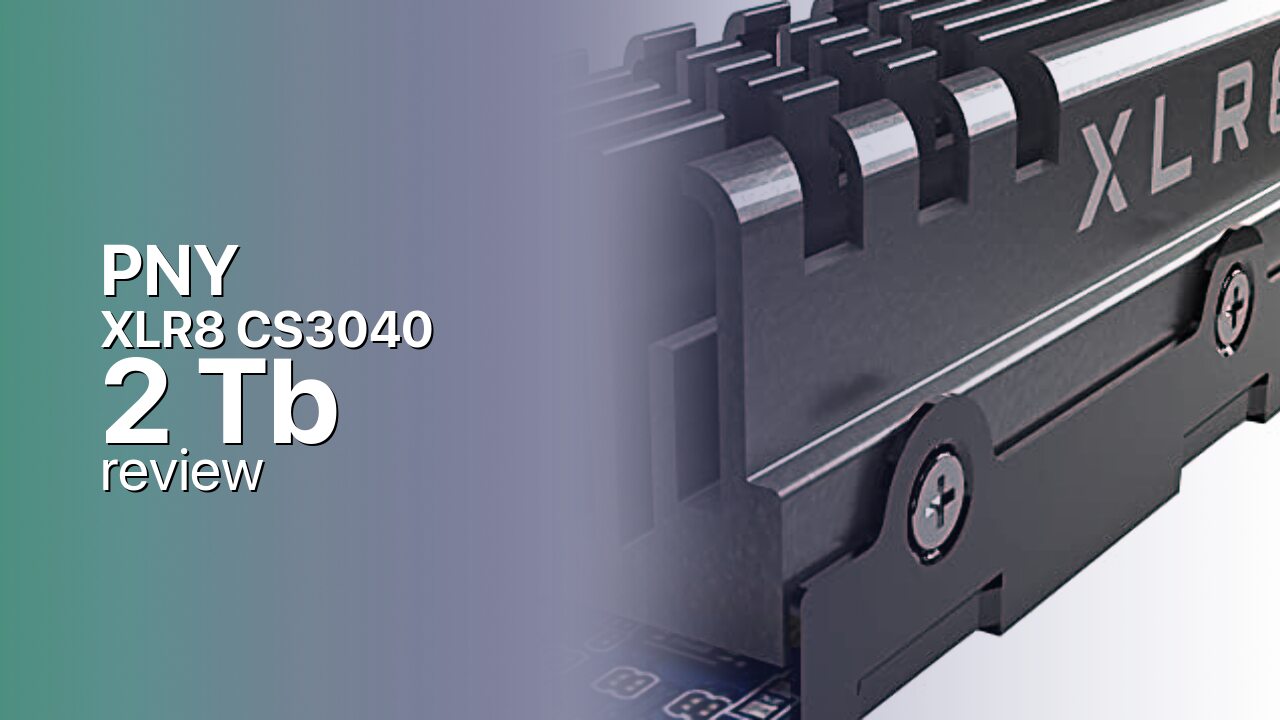
The PNY XLR8 CS3040 2TB is built on the Phison PS5016-E16-32 controller — the first consumer PCIe 4.0 x4 NVMe platform, running a quad-core design at 733 MHz. Toshiba BiCS4 96-layer 3D TLC NAND provides the storage medium, backed by 2GB of SK Hynix DDR4 DRAM for the flash translation layer. The drive uses an M.2 2280 form factor on a double-sided PCB and supports NVMe 1.3.
Sequential performance is rated at up to 5,600 MB/s reads and 4,300 MB/s writes. The 2TB capacity maintains the same peak speeds as the 1TB model, though TechPowerUp's database lists the 2TB at 3,900 MB/s writes — a discrepancy we note but cannot definitively resolve without hands-on testing. The endurance rating is 3,600 TBW, double that of the 1TB's 1,800 TBW, making this the most durable CS3040 variant.
The CS3040 family spans 500GB, 1TB, and 2TB, with an optional PS5-branded heatsink version available across capacities. The 2TB variant benefits from the largest dynamic SLC cache in the lineup, sustaining higher throughput during large transfers than the smaller capacities. The double-sided PCB may prevent installation in laptops that require single-sided M.2 modules.
Security features include TCG Opal 2.0, Pyrite, Sanitize, and Crypto Erase, alongside LDPC error correction and end-to-end data path protection.
Direct competitors in the 2TB PCIe 4.0 space include the Corsair MP600 2TB (identical Phison E16 reference design), the ADATA XPG Gammix S50 Lite 2TB, and the Seagate FireCuda 520 2TB.
Storage Comparisons:
XLR8 CS3040 Performance & Benchmarks
The PNY XLR8 CS3040 2TB is rated at up to 5,600 MB/s sequential reads and 4,300 MB/s sequential writes. KitGuru's review confirmed the 2TB maintains the same peak specifications as the 1TB model, though TechPowerUp's database lists the 2TB at 3,900 MB/s writes — likely reflecting real-world testing under different conditions. In either case, the 2TB comfortably outpaces PCIe 3.0 drives and holds its own against mid-range Gen4 competitors.
PNY XLR8 CS3040 2 TB vs M.2 4.0 x 4 peers
Switch between sequential throughput and random IOPS to see how this drive stacks up against other M.2 4.0 x 4 SSDs in our database. The highlighted bar is the drive on this page — click any other bar to open that drive.
- Patriot Viper PV593 1 TB: 14,500 MB/s read, 14,000 MB/s write
- Patriot Viper PV593 2 TB: 14,500 MB/s read, 14,000 MB/s write
- Patriot Viper PV593 4 TB: 14,500 MB/s read, 14,000 MB/s write
- Patriot Viper PV573 2 TB: 14,000 MB/s read, 12,000 MB/s write
- PNY XLR8 CS3040 2 TB (this drive): 5,600 MB/s read, 4,300 MB/s write
The 2TB's key performance advantage over the 500GB and 1TB variants is its larger SLC cache. With more NAND packages available, the drive can sustain dynamic SLC caching for longer during large sequential transfers. This matters most for content creators moving multi-hundred-gigabyte video projects or users performing full-drive backups. For gaming and OS responsiveness, the cache difference is imperceptible — all three capacities feel equally snappy.
Random 4K IOPS are not officially published by PNY, but Phison E16 drives typically deliver around 400,000–450,000 random read IOPS and 400,000–500,000 random write IOPS in synthetic benchmarks. Real-world application performance is competitive with other E16-based drives like the Corsair MP600.
Thermal behavior is typical for the Phison E16 platform: the controller runs warm under sustained load, and thermal throttling can occur without adequate cooling. The optional heatsink version or an aftermarket M.2 cooler is recommended for sustained workloads.
PNY XLR8 CS3040 vs Competitors
See how the XLR8 CS3040 stacks up against other M.2 4.0 x 4 drives in our database:
Compare with rival drives:
Endurance, TBW & Warranty
PNY covers the XLR8 CS3040 2TB with a five-year limited warranty and a 3,600 TBW endurance rating — the highest in the CS3040 lineup. At 3,600 TBW, the 2TB drive can absorb roughly 2,000 GB of writes per day over its five-year warranty period. At a typical consumer workload of 40 GB per day, the TBW ceiling would not be reached for over 240 years, meaning the five-year time-based warranty is the actual governing factor. The drive is rated for 2.0 million hours MTBF, an industry-standard population-level reliability metric. Warranty claims are handled through PNY's standard RMA process, typically via the retailer of first purchase.
PNY XLR8 CS3040 2 TB Specifications
| Category | Value |
|---|---|
| Capacity [?] | 2 TB |
| Interface [?] | M.2 4.0 x 4 |
| Controller [?] | Phison PS5016-E16-32 |
| Memory type [?] | Toshiba 3D TLC |
| DRAM [?] | 2GB SK Hynix DDR4 |
| Read speed (MB/s) [?] | 5600 |
| Write speed (MB/s) [?] | 4300 |
| Read IOPS [?] | 500000 |
| Write IOPS [?] | 750000 |
| Endurance (TBW) [?] | 3600 |
| MTBF (million hours) [?] | 2 |
| Warranty (years) [?] | 5 |
Verdict: Is the XLR8 CS3040 Worth It in 2026?
The PNY XLR8 CS3040 2TB is the most capable CS3040 variant, pairing the Phison E16's full 5,600 MB/s read speed with the lineup's largest SLC cache, 2GB of DRAM, and 3,600 TBW endurance. The 2TB capacity is ideal for content creators, game libraries, and users who want Gen4 performance without stepping up to E18-flagship pricing. The double-sided PCB and E16 thermals are the trade-offs. For PS5 builds, the optional heatsink version delivers a clean, compatible upgrade. Against the Corsair MP600 2TB and FireCuda 520 2TB, the CS3040 2TB holds its ground on performance and endurance.
+ Pros
- 5,600 MB/s sequential reads — full Phison E16 speed
- 4,300 MB/s writes — flagship CS3040 capacity
- 2GB DRAM cache — largest in the lineup
- 3,600 TBW endurance — highest in the CS3040 family
- 5-year warranty
- Largest SLC cache — better sustained write performance
- Optional PS5-compatible heatsink version
- Cons
- Double-sided PCB — may not fit thin laptop slots
- Phison E16 runs warm under sustained load
- No AES-256 hardware encryption
- Conflicting write speed reports (4,300 vs 3,900 MB/s)
Buy this or similar SSD Storage:



Video Review
PNY XLR8 m.2 SSD Review vs Samsung 970 Evo Plus+