MSI Spatium M480 Play 2TB — PCIe 4.0 NVMe SSD Review (2026)
Quick answer
The MSI Spatium M480 Play 2 TB is a competent, warranty-backed Phison E18 drive that benefits from MSI's established RMA infrastructure and ecosystem integration.
Read: 7000 MB/s Write: 6800 MB/s Endurance: 1400 TBW Warranty: 5 years Interface: M.2 4.0 x 4
The MSI Spatium M480 Play 2 TB is MSI's Phison E18-powered PCIe 4.0 flagship, positioned as a gaming-first drive with a pre-installed heatsink and firmware tuned for sustained read-heavy workloads.

Controller & Memory
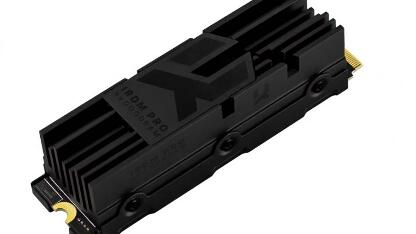
MSI entered the SSD market with the Spatium brand, leveraging its motherboard and GPU manufacturing relationships to offer branded storage as a one-stop-shop for system builders. The M480 Play is built on the Phison PS5018-E18, the same eight-channel PCIe 4.0 x4 controller that powers Sabrent and Corsair flagships, paired here with Micron 96-layer 3D TLC NAND and DRAM cache. The Play designation indicates a gaming-focused SKU that ships with a low-profile aluminium heatsink pre-installed, targeting both desktop gaming PCs and the PlayStation 5 expansion bay.
The 2 TB variant delivers 7,000 MB/s sequential reads and 6,800 MB/s sequential writes — figures that are marginally below the 7,400/7,000 MB/s ceiling of some E18 competitors, suggesting MSI has applied a conservative firmware profile, possibly for thermal management with the included heatsink. Random IOPS are rated at 650,000 read and 700,000 write, placing the M480 Play in the mid-to-upper tier of E18 implementations. Endurance is 1,400 TBW at 2 TB, a 700-TBW-per-terabyte ratio that is standard for the E18 platform with Micron TLC. The drive uses a double-sided M.2 2280 PCB for the 2 TB capacity.
In the gaming-focused PCIe 4.0 segment, the M480 Play competes against the WD Black SN850P, Corsair MP600 Pro LPX, and Samsung 990 Pro with Heatsink — all drives with factory-installed thermal solutions targeting PS5 and gaming desktop use. MSI's advantage is ecosystem integration: the Spatium drive is validated against MSI motherboards and appears in MSI Center software alongside other MSI components, providing a unified monitoring and firmware-update experience for all-MSI builds. For non-MSI systems, the M480 Play is functionally identical to any other E18 drive with a factory heatsink.
Storage Comparisons:
Spatium M480 Play Performance & Benchmarks
MSI rates the 2 TB M480 Play at 7,000 MB/s sequential reads and 6,800 MB/s sequential writes with 650,000/700,000 random IOPS. These figures place it in the PCIe 4.0 upper tier, though the slightly lower peak throughput versus 7,400 MB/s E18 flagships is measurable in benchmarks. The Phison E18's pseudo-SLC cache on the 2 TB model absorbs roughly 200 GB of burst writes at full speed before transitioning to native TLC speeds around 1,200 MB/s.
MSI Spatium M480 Play 2 TB vs M.2 4.0 x 4 peers
Switch between sequential throughput and random IOPS to see how this drive stacks up against other M.2 4.0 x 4 SSDs in our database. The highlighted bar is the drive on this page — click any other bar to open that drive.
- Patriot Viper PV593 1 TB: 14,500 MB/s read, 14,000 MB/s write
- Patriot Viper PV593 2 TB: 14,500 MB/s read, 14,000 MB/s write
- Patriot Viper PV593 4 TB: 14,500 MB/s read, 14,000 MB/s write
- Patriot Viper PV573 2 TB: 14,000 MB/s read, 12,000 MB/s write
- MSI Spatium M480 Play 2 TB (this drive): 7,000 MB/s read, 6,800 MB/s write
The pre-installed aluminium heatsink is the key differentiator for gaming use. In a desktop with good airflow, it keeps the E18 controller below its throttle point during sustained gaming sessions — though gaming loads are predominantly reads and rarely stress thermals. In the PS5's minimally ventilated expansion bay, the heatsink provides adequate cooling for game installs and level loads, though sustained multi-hundred-gigabyte transfers may push the drive toward thermal throttling. MSI's firmware appears tuned for slightly lower peak power versus reference E18 firmware, which trades a few percentage points of peak throughput for better sustained thermal behaviour — a reasonable trade-off for a gaming drive that rarely needs maximum throughput for more than a few seconds at a time.
MSI Spatium M480 Play vs Competitors
See how the Spatium M480 Play stacks up against other M.2 4.0 x 4 drives in our database:
Compare with rival drives:
Endurance, TBW & Warranty
MSI covers the Spatium M480 Play 2 TB with a five-year warranty, bounded by a 1,400 TBW endurance rating. At 30 GB/day, this endurance budget spans roughly 128 years. The 700-TBW-per-terabyte ratio is standard for Phison E18 drives using Micron TLC. MSI's warranty process is handled through their established RMA infrastructure — the same system that services MSI motherboards and graphics cards — which is generally more mature and accessible than boutique SSD vendors. The five-year term is competitive within the premium PCIe 4.0 segment and matches the warranty length offered by Samsung and WD on their flagship drives.
MSI Spatium M480 Play 2 TB Specifications
| Category | Value |
|---|---|
| Capacity [?] | 2 TB |
| Interface [?] | M.2 4.0 x 4 |
| Controller [?] | Phison PS5018-E18 |
| Memory type [?] | Micron TLC |
| DRAM [?] | DRAM SLC |
| Read speed (MB/s) [?] | 7000 |
| Write speed (MB/s) [?] | 6800 |
| Read IOPS [?] | 650000 |
| Write IOPS [?] | 700000 |
| Endurance (TBW) [?] | 1400 |
| MTBF (million hours) [?] | 2000000 |
| Warranty (years) [?] | 5 |
Verdict: Is the Spatium M480 Play Worth It in 2026?
The MSI Spatium M480 Play 2 TB is a competent, warranty-backed Phison E18 drive that benefits from MSI's established RMA infrastructure and ecosystem integration. Its slightly conservative firmware tuning and pre-installed heatsink make it a sensible pick for gaming desktops and the PS5, where peak synthetic benchmark scores matter less than thermal consistency and hassle-free installation. Buyers in all-MSI builds get the additional benefit of unified software monitoring. For anyone not invested in the MSI ecosystem and not constrained by heatsink compatibility, a standard Sabrent Rocket 4 Plus or Kingston KC3000 delivers marginally higher peak throughput at a comparable or lower price.
+ Pros
- 7,000 MB/s reads — PCIe 4.0 gaming-tier throughput
- Pre-installed low-profile aluminium heatsink — PS5 and desktop ready
- Phison E18 with Micron TLC — proven, reliable platform
- 5-year warranty backed by MSI's established RMA infrastructure
- MSI Center software integration for all-MSI builds
- Cons
- Peak throughput slightly below 7,400 MB/s E18 flagships
- Double-sided PCB — incompatible with thin laptops
- Performance identical to cheaper E18 alternatives — premium is brand and heatsink
- MSI Center software is Windows-only for firmware updates and monitoring
Buy this or similar SSD Storage:



Video Review
MSI Spatium M480 PLAY NVME PCIe Gen4x4 2TB m.2 Drive Unboxing & Test