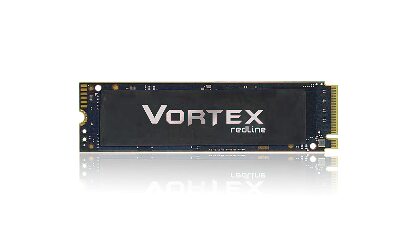
Team Group Cardea Ceramic A440 1TB SSD — In-Depth Review & Specs
The Team Group Cardea Ceramic A440 1TB is a second-generation PCIe 4.0 NVMe SSD built on the Phison PS5018-E18 platform — a significant step up from the first-gen E16 drives that topped out at 5,000 MB/s. Paired with Micron's 176-layer TLC NAND and 1 GB of SK Hynix DDR4 DRAM, the A440 delivers up to 7,000 MB/s sequential reads and 6,900 MB/s writes, placing it near the top of the Gen4 performance tier. With a 5-year warranty, 700 TBW endurance, and a choice of included heat spreaders, it is a compelling option for gamers, creators, and anyone building a high-performance PC.
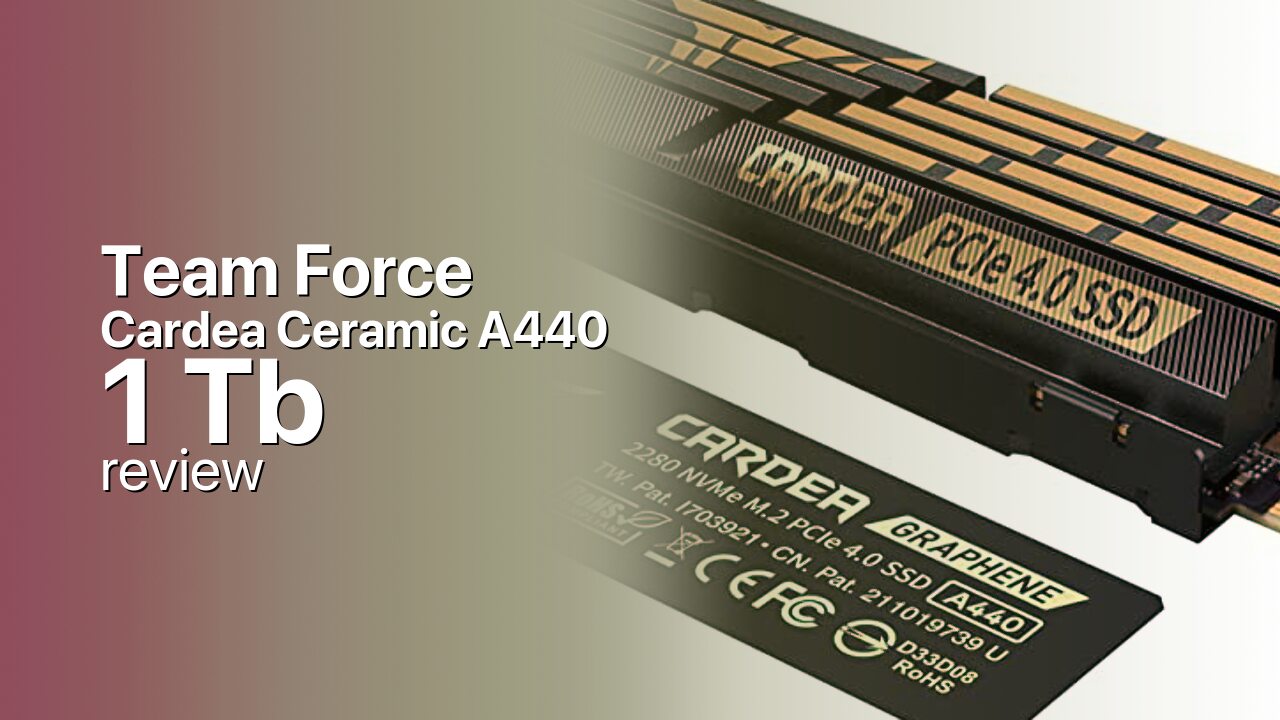
The Phison PS5018-E18 is a second-generation PCIe 4.0 controller fabricated on TSMC's 12nm process — a major efficiency upgrade over the 28nm E16 it replaced. It retains the same 8-channel architecture but doubles the maximum throughput to roughly 7,400 MB/s read and 7,000 MB/s write, putting it in direct competition with Samsung's Elpis (980 PRO) and WD's G2 (SN850) controllers. The Team Group Cardea A440 pairs the E18 with Micron's B47R 176-layer replacement-gate TLC NAND — one of the fastest and most power-efficient flash generations on the market — and a 1 GB SK Hynix DDR4 DRAM chip for the FTL mapping table.
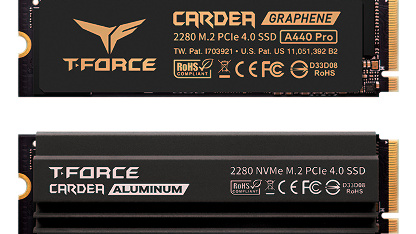
Team Group offers the A440 in two thermal configurations: a 'standard' version with an aluminum heat spreader and a 'Graphene' version with a copper-graphene hybrid sticker. The ceramic-themed branding (white PCB with blue accents) is distinctive and will appeal to builders coordinating a white-themed system. The drive is a standard single-sided M.2 2280 card, so it fits in any PCIe 4.0 laptop or desktop slot. The included heatsink options are low-profile enough for PS5 console use, which Team Group explicitly advertises.
At 1 TB, the A440 hits the sweet spot for a high-performance boot drive: enough room for Windows or Linux, a full creative suite, and a healthy game library. The 700 TBW endurance rating works out to roughly 384 GB of writes per day over 5 years — more than adequate for any consumer workload. Team Group's global distribution means the A440 is readily available at major retailers worldwide, unlike some region-locked alternatives.
✅ Storage Comparisons:
🚀 Performance and benchmarks
Sequential throughput is where the E18 platform shines: 7,000 MB/s read and 6,900 MB/s write in CrystalDiskMark — within a few percent of the controller's theoretical maximum. In real-world large-file copies on a PCIe 4.0 platform, expect roughly 6,500–6,700 MB/s read and 6,300–6,500 MB/s write. The Micron 176L TLC NAND contributes to excellent sustained write performance: the SLC write cache on the 1TB model spans roughly 200–250 GB, after which native TLC writes settle around 1,500–1,700 MB/s — among the best post-cache speeds of any consumer Gen4 drive.
Team Group Cardea Ceramic A440 1 TB vs M.2 4.0 x 4 peers
Switch between sequential throughput and random IOPS to see how this drive stacks up against other M.2 4.0 x 4 SSDs in our database. The highlighted bar is the drive on this page — click any other bar to open that drive.
- PNY XLR8 CS3140 1 TB: 7,500 MB/s read, 5,650 MB/s write
- PNY XLR8 CS3140 2 TB: 7,500 MB/s read, 6,850 MB/s write
- Asgard AN4 512 GB: 7,500 MB/s read, 5,500 MB/s write
- Asgard AN4 1 TB: 7,500 MB/s read, 5,500 MB/s write
- Team Group Cardea Ceramic A440 1 TB (this drive): 7,000 MB/s read, 6,900 MB/s write
Random performance is rated at approximately 1,000,000 IOPS read and 1,000,000 IOPS write, placing the A440 in the top tier of Gen4 drives. In PCMark 10 storage benchmarks, it trades the lead with the Samsung 980 PRO and WD Black SN850 depending on the workload trace, but the differences are academic — all three drives feel instantaneous in everyday use. Gaming load times are effectively identical to any other high-end Gen4 or even Gen5 SSD; game engines simply cannot saturate 7 GB/s of sequential bandwidth.
Thermal performance is excellent thanks to the 12nm E18 controller. With the included aluminum heat spreader, the drive settles around 60–65°C under sustained writes — well below the ~85°C throttle point. Without a heatsink, temperatures climb into the mid-70s but still avoid throttling in most desktop cases. Peak power consumption is about 8 W under full sequential load and under 1 W at idle.
🖥️ Endurance and warranty
Team Group provides a 5-year limited warranty on the Cardea A440 series, subject to the 700 TBW endurance limit. The warranty is administered through Team Group's regional service centers in North America, Europe, and Asia Pacific. Register the drive on the Team Group website after purchase to streamline any future warranty claims.
📊 Specs
| Category | Value |
|---|---|
| Capacity [?] | 1 TB |
| Interface [?] | M.2 4.0 x 4 |
| Controller [?] | Phison PS5018-E18 |
| Memory type [?] | Micron 176L TLC |
| DRAM [?] | SK Hynix 1GB DDR4 |
| Read speed (MB/s) [?] | 7000 |
| Write speed (MB/s) [?] | 6900 |
| Read IOPS [?] | 650000 |
| Write IOPS [?] | 700000 |
| Endurance (TBW) [?] | 700 |
| MTBF (million hours) [?] | 3 |
| Warranty (years) [?] | 5 |
Conclusion
The Team Group Cardea Ceramic A440 1TB delivers everything you would expect from a top-tier Phison E18 drive: near-maximum sequential throughput, excellent post-cache write speeds thanks to Micron's 176L TLC, and a well-designed thermal solution that keeps the drive cool without a bulky third-party heatsink. It competes directly with the Samsung 980 PRO, WD Black SN850, and Seagate FireCuda 530, and it holds its own in every meaningful benchmark. The white PCB and ceramic branding are a nice differentiator for builders who care about aesthetics. Pricing is typically competitive with — or slightly below — the Samsung and WD alternatives, making the A440 one of the better value propositions in the high-end Gen4 segment.
+ Pros
- Near-peak E18 sequential performance: 7,000/6,900 MB/s
- Micron 176L TLC delivers excellent post-cache write speeds
- 12nm E18 controller runs cool and power-efficient
- Choice of heat spreader configurations (aluminum or graphene)
- 5-year warranty with global support network
- Cons
- 700 TBW endurance is lower than some E18 competitors
- No hardware encryption support
- White PCB aesthetic limits visual matching in dark builds
- Random I/O slightly behind Samsung 980 PRO in some workloads
- Available heatsink options may not clear all M.2 slot layouts
🛒 Buy this or similar SSD Storage:



✨ Video Review
TEAMGROUP T-FORCE CARDEA Ceramic C440 M.2 SSD Review