Mushkin Redline Vortex 1 TB: A Gen4 SSD With Real DRAM (2026)
Quick answer
The Mushkin Redline Vortex 1 TB earns a buy for DRAM-backed Innogrit IG5236 Gen4 performance at a capacity that holds a real game library, so long as it is priced below the Phison E18 names it matches on reads.
Read: 7430 MB/s Write: 5300 MB/s Endurance: 500 TBW Warranty: 5 years Interface: M.2 4.0 x 4
The Mushkin Redline Vortex 1 TB pairs Innogrit's eight-channel IG5236 controller with Micron 3D TLC and a 1 GB DDR4 DRAM buffer, delivering 7,430 MB/s reads at a mid-range Gen4 price.
Controller & Memory
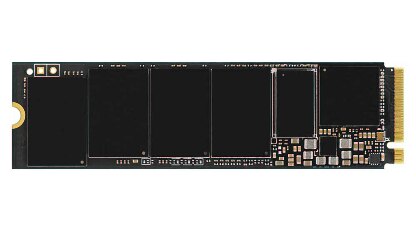
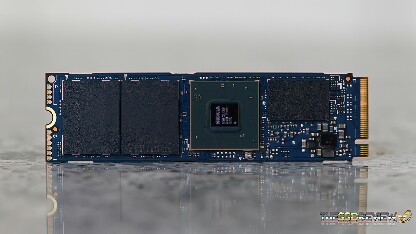
The Mushkin Redline Vortex 1 TB sits in the middle of a three-drive line that spans 512 GB, 1 TB and 2 TB, all built on the same recipe: Innogrit's eight-channel Rainier IG5236 PCIe 4.0 controller, Micron 3D TLC NAND, and an SK Hynix DDR4L DRAM buffer that scales 512 MB on the 512 GB, 1 GB on this 1 TB, and 2 GB on the 2 TB. That DRAM buffer matters more than the spec sheet implies, because the IG5236 maps its flash translation layer into it, keeping random reads and writes consistent as the drive fills rather than letting them trail off. NikkTech's teardown of the family reports 176-layer Micron TLC and confirms the discrete DRAM module sitting under the graphene thermal sticker.
On paper the 1 TB is the balanced pick of the range. Reads hold at the full 7,430 MB/s the line advertises, since the IG5236 does not gate read throughput behind the larger die, while writes land at 5,300 MB/s, roughly double the 512 GB's 2,635 MB/s and a step below the 2 TB's 6,800 MB/s. Endurance scales the same way, from 250 TBW on the 512 GB through 500 TBW on this 1 TB to 1,000 TBW on the 2 TB, holding a steady 250 TBW per terabyte. Random performance is rated at 730,000 read and 1,000,000 write IOPS, in line with every other IG5236 Gen4 drive.
The drive is a standard M.2 2280 module running PCIe 4.0 x4 under NVMe 1.4, so it drops into any recent AMD or Intel desktop with a free Gen4 slot and clears Sony's PS5 recommendation of 5,500 MB/s reads with headroom to spare. No heatsink ships in the box, only the graphene sticker, so add a third-party heatsink for sustained writes or a console install. Against rivals, the ADATA XPG Gammix S70 Blade 1 TB leads on writes at 6,800 MB/s on the Phison E18, the PNY XLR8 CS3140 1 TB matches the Vortex on reads, and the Samsung 990 Pro 1 TB is the all-round benchmark to beat. The Vortex earns its place when DRAM-backed IG5236 performance undercuts those names on street price.
Storage Comparisons:
Redline Vortex Performance & Benchmarks
On the 1 TB Redline Vortex, sequential reads hit 7,430 MB/s and writes reach 5,300 MB/s over a PCIe 4.0 x4 link, with random performance rated at up to 730,000 read IOPS and 1,000,000 write IOPS. Those are upper-tier Gen4 numbers, with the read figure edging past the 7,000 MB/s baseline most Phison E18 drives advertise, though the 5,300 MB/s write sits below the E18 flagship ceiling of 6,800 to 7,000 MB/s.
Mushkin Redline Vortex 1 TB vs M.2 4.0 x 4 peers
Switch between sequential throughput and random IOPS to see how this drive stacks up against other M.2 4.0 x 4 SSDs in our database. The highlighted bar is the drive on this page — click any other bar to open that drive.
- Patriot Viper PV593 1 TB: 14,500 MB/s read, 14,000 MB/s write
- Patriot Viper PV593 2 TB: 14,500 MB/s read, 14,000 MB/s write
- Patriot Viper PV593 4 TB: 14,500 MB/s read, 14,000 MB/s write
- Patriot Viper PV573 2 TB: 14,000 MB/s read, 12,000 MB/s write
- Mushkin Redline Vortex 1 TB (this drive): 7,430 MB/s read, 5,300 MB/s write
In daily use the gap between this and any other competent PCIe 4.0 drive is small exactly where it usually is, in game load times, since the CPU and asset decompression set the pace rather than the storage. The payoff shows up in sequential and mixed workloads: moving a large project folder, scrubbing 4K footage on a timeline, or feeding DirectStorage-enabled titles that stream textures straight from the drive. There the 1 TB's read headroom is genuinely useful.
Like every IG5236 and E18 Gen4 drive, the Vortex leans on a pseudo-SLC cache that absorbs writes at the rated 5,300 MB/s until it fills, after which writes drop to the native Micron TLC rate. The 1 TB's cache is large enough that typical consumer write bursts never see the drop, but a long contiguous transfer of several hundred gigabytes will. The graphene sticker handles short bursts, yet a proper heatsink is the safer call for sustained writes, since the IG5236 will throttle if it runs hot.
Mushkin Redline Vortex vs Competitors
See how the Redline Vortex stacks up against other M.2 4.0 x 4 drives in our database:
Compare with rival drives:
Endurance, TBW & Warranty
Mushkin covers the Redline Vortex 1 TB with a five-year limited warranty that ends early if the 500 TBW endurance rating is exceeded, whichever comes first. That 500 TBW sits in the middle of a lineup that scales from 250 TBW on the 512 GB to 1,000 TBW on the 2 TB, a steady 250 TBW per terabyte. At a typical consumer write workload of around 20 GB per day the drive would need roughly 68 years to wear out the NAND, and even a heavier 50 GB-per-day creative pipeline would take about 27 years, so in practice the five-year term expires long before the flash does. Mushkin rates the Vortex family in the millions-of-hours MTBF range, but treat that figure as a population-reliability statistic across a large fleet rather than a lifespan guarantee for any individual drive. Warranty service runs through the retailer or directly via Mushkin's support portal.
Mushkin Redline Vortex 1 TB Specifications
| Category | Value |
|---|---|
| Capacity [?] | 1 TB |
| Interface [?] | M.2 4.0 x 4 |
| Controller [?] | Innogrit Rainier IG5236 |
| Memory type [?] | Micron 3D TLC |
| DRAM [?] | SK Hynix DDR4L |
| Read speed (MB/s) [?] | 7430 |
| Write speed (MB/s) [?] | 5300 |
| Read IOPS [?] | 730000 |
| Write IOPS [?] | 1000000 |
| Endurance (TBW) [?] | 500 |
| MTBF (million hours) [?] | 2000000 |
| Warranty (years) [?] | 5 |
Verdict: Is the Redline Vortex Worth It in 2026?
The Mushkin Redline Vortex 1 TB earns a buy for DRAM-backed Innogrit IG5236 Gen4 performance at a capacity that holds a real game library, so long as it is priced below the Phison E18 names it matches on reads. Skip it if write throughput is the priority: the 5,300 MB/s sequential writes trail the ADATA XPG Gammix S70 Blade 1 TB and Samsung 990 Pro 1 TB, both of which sit closer to the 6,800 to 7,000 MB/s Gen4 ceiling. The closest direct alternative is the ADATA XPG Gammix S70 Blade 1 TB, which trades the Innogrit platform for Phison's E18 and delivers faster writes for usually a little more money. We rate the 1 TB Vortex a solid, well-equipped mid-range Gen4 drive whose main weakness is that the write curve gives up ground to its DRAM-equipped peers.
+ Pros
- 7,430 MB/s sequential reads over PCIe 4.0
- 1 GB DDR4L DRAM cache by SK Hynix
- Innogrit IG5236 eight-channel Gen4 controller
- 500 TBW endurance with five-year warranty
- Micron 3D TLC NAND
- Graphene thermal sticker keeps profile thin
- 730,000 random read IOPS rated
- Cons
- 5,300 MB/s writes trail Phison E18 rivals
- No heatsink bundled in the box
- Mushkin brand thinner than Samsung or WD
- Pseudo-SLC cache drops writes once filled
Buy this or similar SSD Storage:



Video Review
Mushkin REDLINE Vortex PCIe 4.0 NVMe SSD - Fastest Yet?