Team Group MP33 256GB — Budget PCIe 3.0 NVMe SSD Review (2026)
Quick answer
The MP33 256 GB is a value play that works within tight constraints.
Read: 1600 MB/s Write: 1000 MB/s Endurance: 65 TBW Warranty: 5 years Interface: M.2 3.0 x 4
The Team Group MP33 256 GB is a DRAM-less PCIe 3.0 NVMe drive built on the Phison E13T platform, trading peak throughput for an entry-level price that undercuts most SATA SSDs.
Controller & Memory
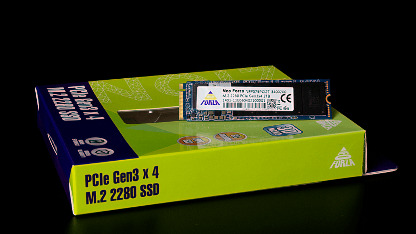
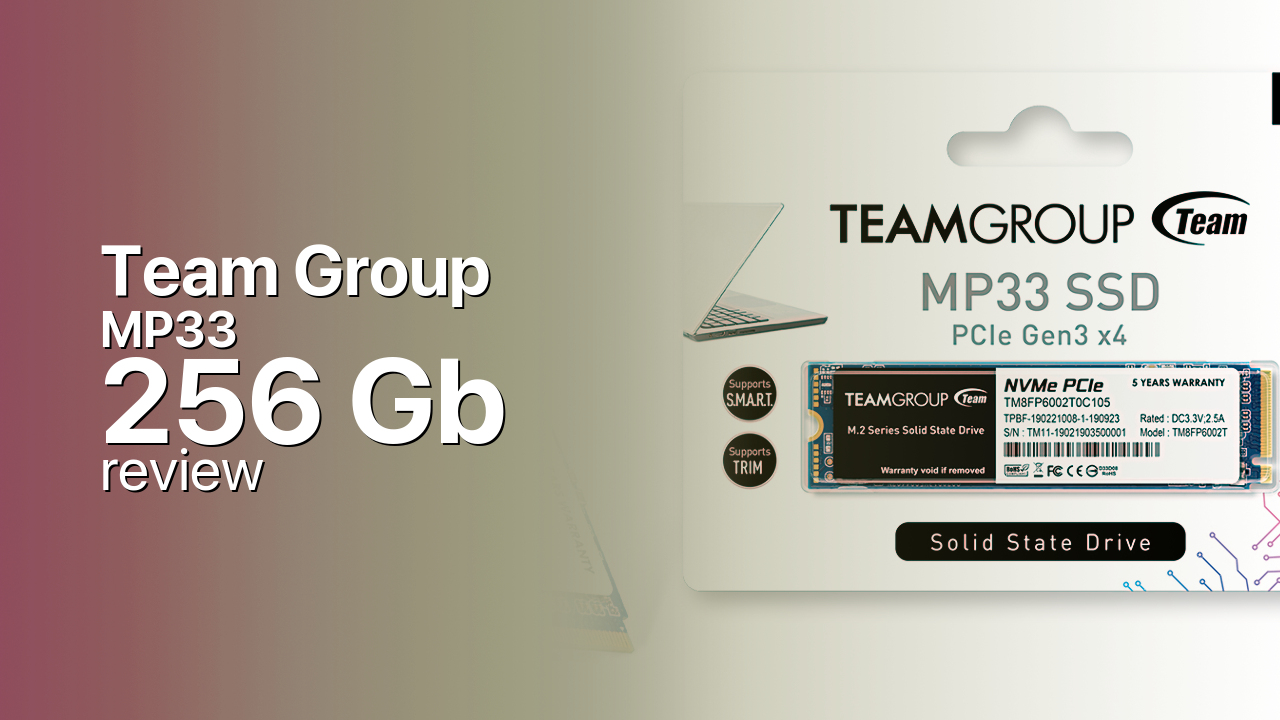
The MP33 uses the Phison PS5013-E13T, a four-channel DRAM-less PCIe 3.0 x4 controller that relies on Host Memory Buffer (HMB) to borrow up to 64 MB of system RAM for the flash translation layer. Team Group pairs it with 3D TLC NAND — the specific supplier varies by production batch, with Toshiba and Micron both appearing in teardowns — and the drive uses a single-sided M.2 2280 blue PCB with no factory heatsink. The absence of a DRAM chip keeps the bill of materials low, and the resulting street price has historically positioned the MP33 against SATA SSDs on a cost-per-gigabyte basis while delivering NVMe read speeds.
The 256 GB variant is the entry point of the MP33 family, sitting below the 512 GB, 1 TB, and 2 TB capacities. Capacity scaling on the E13T platform is significant: the 256 GB model is rated for 1,600 MB/s reads and 1,000 MB/s writes, while the larger capacities reach higher throughput thanks to more populated NAND channels. Endurance drops sharply at the entry level — the 256 GB carries just 65 TBW versus 120 TBW on the 512 GB and 325 TBW on the 1 TB. The low endurance reflects both the smaller pool of NAND cells and the E13T's budget-targeted firmware tuning.
Storage Comparisons:
MP33 Performance & Benchmarks
Team Group rates the 256 GB MP33 at 1,600 MB/s sequential reads and 1,000 MB/s sequential writes — figures that are roughly triple a SATA SSD on reads but only about double on writes, reflecting the E13T's four-channel limitation and reduced NAND parallelism at 256 GB. Random performance lands around 220,000 IOPS read and 200,000 IOPS write, adequate for OS responsiveness but not competitive with DRAM-equipped drives under mixed workloads.
Team Group MP33 256 GB vs M.2 3.0 x 4 peers
Switch between sequential throughput and random IOPS to see how this drive stacks up against other M.2 3.0 x 4 SSDs in our database. The highlighted bar is the drive on this page — click any other bar to open that drive.
- ADATA SX 8800 Pro 512 GB: 3,500 MB/s read, 2,700 MB/s write
- ADATA SX 8800 Pro 1 TB: 3,500 MB/s read, 2,700 MB/s write
- ADATA XPG Spectrix S40G RGB 256 GB: 3,500 MB/s read, 3,000 MB/s write
- ADATA XPG Spectrix S40G RGB 512 GB: 3,500 MB/s read, 3,000 MB/s write
- Team Group MP33 256 GB (this drive): 1,600 MB/s read, 1,000 MB/s write
The E13T's HMB implementation works transparently for most users. The SLC cache on the 256 GB model is proportionally small, absorbing roughly 5–10 GB of burst writes before transitioning to native TLC speeds around 200–300 MB/s. For a boot drive, this is rarely a constraint. Users who regularly transfer large files should step up to at least the 512 GB MP33, where the larger cache and higher channel utilisation deliver more consistent throughput. Gaming load times on the MP33 are noticeably faster than a hard drive and essentially tied with SATA SSDs.
Team Group MP33 vs Competitors
See how the MP33 stacks up against other M.2 3.0 x 4 drives in our database:
Compare with rival drives:
Endurance, TBW & Warranty
Team Group covers the MP33 256 GB with a five-year warranty, limited by a 65 TBW endurance rating. At 20 GB/day, this endurance budget lasts roughly 9 years — shorter than most TLC SSDs but still beyond the realistic service life of a 256 GB drive that will be retired due to capacity obsolescence long before the NAND wears out. The 512 GB model doubles endurance to 120 TBW, the 1 TB reaches 325 TBW, and the 2 TB carries 650 TBW. The five-year warranty length is generous for a drive in this price tier and matches or exceeds most SATA SSD competitors.
Team Group MP33 256 GB Specifications
| Category | Value |
|---|---|
| Capacity [?] | 256 GB |
| Interface [?] | M.2 3.0 x 4 |
| Controller [?] | Phison PS5013-E13-31 |
| Memory type [?] | Toshiba 3D TLC |
| DRAM [?] | HMB |
| Read speed (MB/s) [?] | 1600 |
| Write speed (MB/s) [?] | 1000 |
| Read IOPS [?] | 220000 |
| Write IOPS [?] | 200000 |
| Endurance (TBW) [?] | 65 |
| MTBF (million hours) [?] | 1.5 |
| Warranty (years) [?] | 5 |
Verdict: Is the MP33 Worth It in 2026?
The MP33 256 GB is a value play that works within tight constraints. Its 1,600 MB/s reads are a genuine upgrade over SATA for boot and application load times, and the five-year warranty is reassuring at this price. The trade-offs — 1,000 MB/s writes that drop further after the cache fills, only 65 TBW endurance, and DRAM-less HMB operation — are all acceptable for the intended use case of a basic OS drive in an office PC, a secondary scratch disk, or a low-cost system builder's default storage option. Anyone who regularly writes more than 20 GB/day or needs consistent high throughput should skip the 256 GB MP33 entirely in favour of the 512 GB model or a DRAM-equipped alternative.
+ Pros
- 1,600 MB/s reads — triple SATA SSD throughput at a SATA-competitive price
- TLC NAND — avoids QLC endurance and sustained-write penalties
- 5-year warranty — longer than typical for budget-tier SSDs
- Single-sided M.2 2280 fits thin laptops and ultra-compact builds
- Cons
- 1,000 MB/s writes — only double SATA, and drops further past SLC cache
- 65 TBW endurance — lowest in class, unsuitable for write-heavy workloads
- DRAM-less HMB design depends on system RAM for FTL mapping
- 256 GB capacity is cramped for modern OS + application footprints
Buy this or similar SSD Storage:



Video Review
TeamGroup MP33 M.2 NVMe SSD Review