Acer Predator GM9000 1TB SSD review (2026)
Quick answer
The Acer Predator GM9000 1TB is a solid choice for desktop enthusiasts building on a PCIe 5.0 platform who want DRAM-equipped reliability and strong endurance ratings.
Read: 14000 MB/s Write: 12000 MB/s Endurance: 800 TBW Warranty: 5 years Interface: M.2 5.0
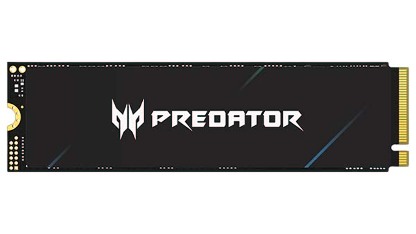
The Acer Predator GM9000 1TB is a PCIe 5.0 NVMe SSD that pairs Silicon Motion's SM2508 controller with Micron 232-L TLC NAND and dedicated LPDDR4 DRAM for high sustained throughput.
Controller & Memory
Acer's Predator GM9000 sits at the top of the brand's SSD lineup, targeting enthusiasts who want full-bandwidth PCIe 5.0 performance. At its core is the Silicon Motion SM2508, an eight-channel DRAM-equipped controller built on a 6 nm manufacturing process. This is the same controller found in several competing Gen5 drives from brands like Corsair, Lexar, and Crucial, and it has proven itself as one of the most efficient Gen5 controllers currently available. The GM9000 pairs the SM2508 with Micron's B58R 232-layer TLC NAND, a well-regarded flash generation that balances speed and endurance.
Unlike the DRAM-less FA300 in Acer's portfolio, the GM9000 carries dedicated LPDDR4 DRAM for the flash translation layer. This means the drive does not depend on Host Memory Buffer and can maintain consistent performance even in systems where host memory access is limited or shared among multiple devices. The GM9000 uses a standard M.2 2280 form factor and requires PCIe 5.0 x4 bandwidth to reach its rated speeds. On PCIe 4.0 systems it will work at reduced throughput capped by the bus.
The 1TB capacity is the entry point for the GM9000 lineup, which also spans 2TB and 4TB variants. At 1TB, the drive has fewer NAND dies to interleave, so peak sequential write speeds are lower than the larger capacities. Key competitors at this capacity include the Samsung 9100 Pro, Crucial T705, and Kingston FURY Renegade 5.0. The GM9000 differentiates itself with a strong endurance rating and relatively efficient power profile compared to first-generation Phison E26-based drives.
Storage Comparisons:
Predator GM9000 Performance & Benchmarks
Acer rates the GM9000 1TB at up to 14,000 MB/s sequential read and up to 12,000 MB/s sequential write. The 2TB and 4TB models reach 13,000 MB/s write thanks to additional NAND die interleaving. Random performance is rated at up to 2,000,000 read IOPS and 1,600,000 write IOPS, though the 1TB model may fall slightly short of those figures in practice due to having fewer flash channels populated.
Acer Predator GM9000 1 TB vs M.2 5.0 peers
Switch between sequential throughput and random IOPS to see how this drive stacks up against other M.2 5.0 SSDs in our database. The highlighted bar is the drive on this page — click any other bar to open that drive.
- Corsair MP700 Pro XT 1 TB: 14,900 MB/s read, 14,200 MB/s write
- Corsair MP700 Pro XT 2 TB: 14,900 MB/s read, 14,500 MB/s write
- Corsair MP700 Pro XT 4 TB: 14,900 MB/s read, 14,400 MB/s write
- Crucial T710 1 TB: 14,900 MB/s read, 13,800 MB/s write
- Acer Predator GM9000 1 TB (this drive): 14,000 MB/s read, 12,000 MB/s write
The SM2508 controller with LPDDR4 DRAM caching allows the GM9000 to maintain consistent performance through sustained workloads, unlike DRAM-less designs that can lose throughput when the SLC cache is exhausted. Reviews from Tom's Hardware and TechPowerUp confirmed that the 2TB model trades blows with the Samsung 9100 Pro and Crucial T705 in most benchmarks, and the 1TB model follows the same architectural pattern with proportionally scaled NAND.
Thermal management is important for any Gen5 drive. The GM9000 draws between 5 and 7 W under load, which is moderate for a DRAM-equipped Gen5 SSD. The 6 nm SM2508 controller runs notably cooler than the Phison E26 found in first-generation Gen5 drives, reducing the risk of thermal throttling. Most desktop motherboards include an M.2 heatsink that is sufficient, but the drive may throttle under extended sustained writes without adequate cooling.
Acer Predator GM9000 vs Competitors
See how the Predator GM9000 stacks up against other M.2 5.0 drives in our database:
Compare with rival drives:
Endurance, TBW & Warranty
Acer covers the Predator GM9000 with a five-year limited warranty. The 1TB model carries an endurance rating of approximately 800 TBW. Acer specifies a total endurance of 3.2 PBW for the 2TB flagship capacity, with the figure scaling proportionally by capacity. At 800 TBW over five years, that equals about 438 GB of writes per day before the warranty threshold is reached. For reference, most consumer workloads involve well under 50 GB of writes per day, providing substantial headroom. The drive supports SMART health monitoring so you can track total bytes written and remaining spare capacity through utilities like CrystalDiskInfo or your motherboard's BIOS.
Acer Predator GM9000 1 TB Specifications
| Category | Value |
|---|---|
| Capacity [?] | 1 TB |
| Interface [?] | M.2 5.0 |
| Controller [?] | Silicon Motion SM2508 8 Channel |
| Memory type [?] | Micron 232-L TLC |
| DRAM [?] | Yes |
| Read speed (MB/s) [?] | 14000 |
| Write speed (MB/s) [?] | 12000 |
| Read IOPS [?] | 2000000 |
| Write IOPS [?] | 1600000 |
| Endurance (TBW) [?] | 800 |
| MTBF (million hours) [?] | 2000000 |
| Warranty (years) [?] | 5 |
Verdict: Is the Predator GM9000 Worth It in 2026?
The Acer Predator GM9000 1TB is a solid choice for desktop enthusiasts building on a PCIe 5.0 platform who want DRAM-equipped reliability and strong endurance ratings. The SM2508 plus Micron 232-L TLC combination has proven itself across multiple brands and independent reviews. Buyers who need more capacity should consider the 2TB or 4TB GM9000 variants, which also gain write speed from additional NAND parallelism. If you are building a laptop or thermally constrained system, the Acer FA300 offers similar read speeds at lower power. For a desktop with adequate cooling, the GM9000 is a strong Gen5 contender that undercuts many competitors on price per gigabyte while delivering competitive real-world performance.
+ Pros
- 14,000 MB/s sequential read on PCIe 5.0
- SM2508 controller with LPDDR4 DRAM cache
- Micron 232-L TLC NAND for reliable performance
- Five-year warranty with strong endurance rating
- Efficient 6 nm controller runs cooler than Phison E26
- Single-sided design at 1TB for broad compatibility
- Cons
- 1TB write speed lower than 2TB and 4TB models
- Requires PCIe 5.0 motherboard for full speeds
- Draws 5 to 7 W under load, needs heatsink
- First-party software toolbox not available
Buy this or similar SSD Storage:



Video Review
This Predator GM7000 SSD is as fast as the Samsung 990 Pro but cost quite a bit less! #cheapbuy #ssd