Addlink S93 1TB: An Ultra-Slim DRAM-less PCIe 4.0 NVMe for Laptops (2026)
Quick answer
The Addlink S93 1 TB earns its place as a laptop-first budget PCIe 4.0 drive — the 2.25 mm single-sided PCB is the story here, and it is the thinnest Gen4 M.2 drive in its price bracket.
Read: 7200 MB/s Write: 6100 MB/s Endurance: 600 TBW Warranty: 5 years Interface: M.2 4.0 x 4
The Addlink S93 1 TB squeezes 7,200 MB/s PCIe 4.0 reads into a 2.25 mm single-sided M.2 2280 card — one of the thinnest Gen4 drives on the market and a purpose-built upgrade for ultrabooks where every millimetre of clearance counts.
Controller & Memory
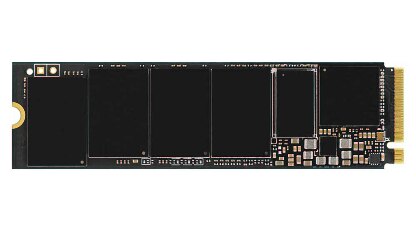
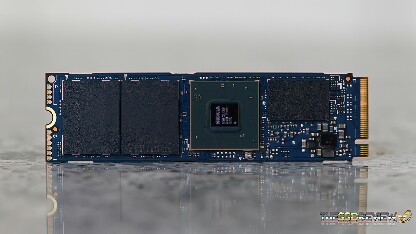
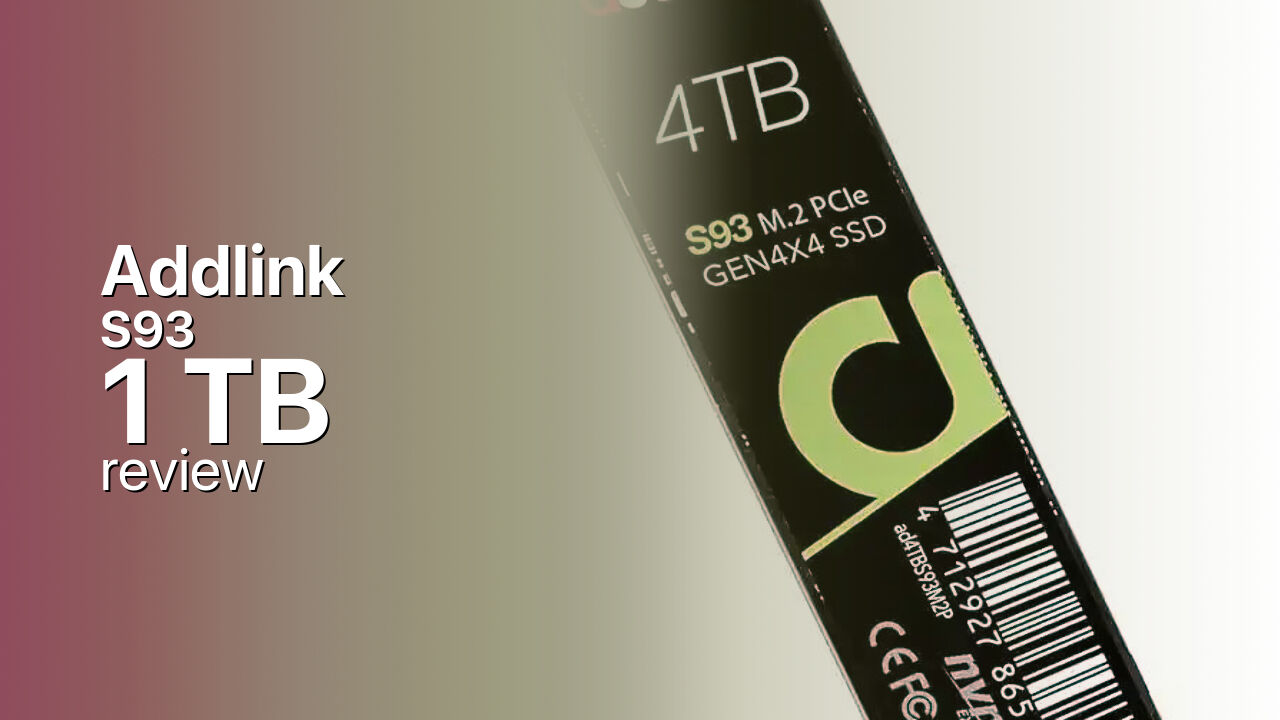
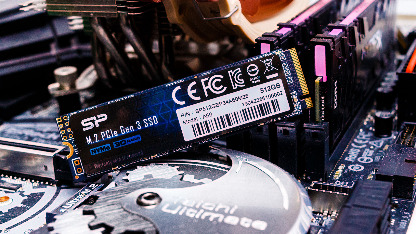
The Addlink S93 1 TB runs a Maxio MAP1602 four-channel DRAM-less controller paired with YMTC 232-layer 3D TLC NAND at 2,400 MT/s, leaning on Host Memory Buffer to borrow system RAM for the flash translation layer. The defining physical trait is the PCB: a single-sided M.2 2280 card measuring just 2.25 mm thick, slimmer than most Gen4 competitors that land at 2.3 mm or more. That tenth of a millimetre sounds academic, but in an ultrabook chassis where the M.2 slot sits under the keyboard or against the bottom panel, it is the difference between fitting and fouling. Addlink ships the drive bare — no heatsink, no graphene sticker, no thermal pad — and positions it explicitly for laptops and compact desktops where the host device already provides cooling or where a heatsink would not clear the chassis.
The S93 spans 1 TB, 2 TB, and 4 TB. Sequential throughput scales with capacity because the larger drives populate more of the controller's four channels with higher-density dies, giving the MAP1602 more flash planes to interleave across. The 1 TB reviewed here is the slowest of the three at 7,200 MB/s reads and 6,100 MB/s writes; the 2 TB and 4 TB siblings step up to 7,400 MB/s and 6,500 MB/s. Random IOPS are identical across the line at 1,000,000 read and 820,000 write because they are controller-limited. Endurance scales at a clean 600 TBW per terabyte: 600 TBW on the 1 TB, 1,200 TBW on the 2 TB, and 2,400 TBW on the 4 TB. All three capacities share the same MAP1602 controller, the same YMTC 232L TLC, the same HMB architecture, and the same five-year warranty. The 1 TB is simply the entry point — fast enough for the Gen4 experience, small enough for a boot-and-apps role, and thin enough for the laptop slot that the 2 TB and 4 TB variants might not clear if those use double-sided PCBs at higher densities.
Compatibility is standard PCIe 4.0 x4 with NVMe 1.4 and backward compatibility to PCIe 3.0, where throughput halves. The single-sided PCB and 2.25 mm height make the drive a drop-in fit for the PlayStation 5 expansion bay — Sony's ceiling is 11.25 mm with a heatsink, and the bare S93 leaves headroom for a third-party cooler. That said, the S93 is not the natural PS5 pick in Addlink's own lineup; the AddGame A93 shares the same MAP1602 platform but includes an aluminium heatsink in the box, making it the more complete console upgrade. The closest competitors in the DRAM-less HMB budget tier are the WD Black SN770 1 TB, the Team Group MP44 1 TB, and the Crucial P3 Plus 1 TB. The SN770 is the closest technical match with similar peak reads and the same 600 TBW endurance but adds AES 256-bit hardware encryption that the S93 omits. The MP44 posts higher headline speeds but ships on a thicker PCB. The P3 Plus uses QLC NAND with a fraction of the S93's endurance and should be crossed off the list for anything beyond light duty.
Storage Comparisons:
S93 Performance & Benchmarks
Addlink rates the 1 TB S93 at 7,200 MB/s sequential reads and 6,100 MB/s sequential writes over a PCIe 4.0 x4 link, placing it in the upper half of the DRAM-less HMB segment. Random performance is rated at up to 1,000,000 read IOPS and 820,000 write IOPS — controller-limited figures that are identical across all three S93 capacities. The Maxio MAP1602 is a known quantity in this tier, built on TSMC 12 nm silicon with four NAND channels running at 2,400 MT/s, and has seen wide adoption across YMTC-based drives from multiple brands including Addlink's own AddGame A93.
Addlink S93 1 TB vs M.2 4.0 x 4 peers
Switch between sequential throughput and random IOPS to see how this drive stacks up against other M.2 4.0 x 4 SSDs in our database. The highlighted bar is the drive on this page — click any other bar to open that drive.
- Patriot Viper PV593 1 TB: 14,500 MB/s read, 14,000 MB/s write
- Patriot Viper PV593 2 TB: 14,500 MB/s read, 14,000 MB/s write
- Patriot Viper PV593 4 TB: 14,500 MB/s read, 14,000 MB/s write
- Patriot Viper PV573 2 TB: 14,000 MB/s read, 12,000 MB/s write
- Addlink S93 1 TB (this drive): 7,200 MB/s read, 6,100 MB/s write
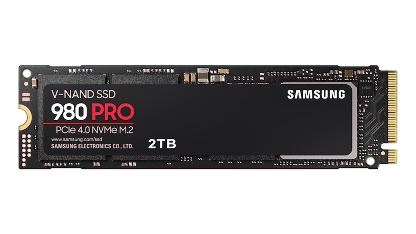
The Guru3D review of the 4 TB S93 family flagship found sequential CrystalDiskMark results that matched rated speeds and sustained writes that held at roughly 5,000 MB/s through about 25 percent of capacity before the SLC cache exhausted and writes settled to native TLC speed. The 1 TB model has a proportionally smaller SLC cache, so sustained write throughput drops sooner than on the 2 TB and 4 TB variants — relevant for large video exports or bulk file transfers, but largely invisible in boot, game-load, and application-launch workloads that dominate consumer use. Addlink claims over 35 percent lower power consumption than typical Gen4 x4 SSDs, a figure that tracks with the MAP1602's reputation for efficiency on the TSMC 12 nm node. For a laptop drive, power draw under load matters as much as peak throughput — a drive that sips watts during sequential reads extends battery life during large file copies. Independent testing of MAP1602-based drives consistently shows competitive PCMark 10 Storage and 3DMark Storage Gaming scores within the top third of PCIe 4.0 SSDs, though the DRAM-less HMB architecture does show higher 4K random write latency than drives with discrete DRAM like the Samsung 990 Pro or WD Black SN850X — drives that sell at a meaningfully higher price.
Addlink S93 vs Competitors
See how the S93 stacks up against other M.2 4.0 x 4 drives in our database:
Compare with rival drives:
Endurance, TBW & Warranty
Addlink covers the S93 1 TB with a five-year limited warranty, capped by whichever arrives first between the term and the 600 TBW endurance rating. That TBW scales linearly across the S93 family at 600 TBW per terabyte — 1,200 TBW at 2 TB and 2,400 TBW at 4 TB — which tracks YMTC 232-layer TLC's rated cycle life and is competitive within the budget PCIe 4.0 segment. The WD Black SN770 1 TB also carries 600 TBW, while the Team Group MP44 1 TB edges ahead at 650 TBW; the Crucial P3 Plus 1 TB, built on QLC, manages only 220 TBW. At a typical consumer workload of 20 GB of writes per day, a 600 TBW rating works out to roughly 82 years of endurance — the five-year warranty term expires long before the NAND approaches its write limit. Even at an aggressive 50 GB per day the drive clears 32 years, so TBW exhaustion is a non-issue for the 1 TB boot-and-apps role this drive is most likely to fill. Addlink rates the S93 at 2.0 million hours MTBF, but treat that figure as a population-reliability statistic describing expected failure rates across a large fleet rather than a lifespan promise for any individual unit. Warranty claims are handled through the retailer or distributor; Addlink does not operate a direct end-user RMA portal in most regions.
Addlink S93 1 TB Specifications
| Category | Value |
|---|---|
| Capacity [?] | 1 TB |
| Interface [?] | M.2 4.0 x 4 |
| Controller [?] | Maxio Tech MAP1602-C |
| Memory type [?] | YMTC 232-L TLC |
| DRAM [?] | HMB |
| Read speed (MB/s) [?] | 7200 |
| Write speed (MB/s) [?] | 6100 |
| Read IOPS [?] | 1000000 |
| Write IOPS [?] | 820000 |
| Endurance (TBW) [?] | 600 |
| MTBF (million hours) [?] | 2000000 |
| Warranty (years) [?] | 5 |
Verdict: Is the S93 Worth It in 2026?
The Addlink S93 1 TB earns its place as a laptop-first budget PCIe 4.0 drive — the 2.25 mm single-sided PCB is the story here, and it is the thinnest Gen4 M.2 drive in its price bracket. The 7,200 MB/s read ceiling, 600 TBW endurance, and five-year warranty are all class-competitive, and the power-efficiency claims hold up on a controller with a proven TSMC 12 nm track record. Buyers who can step up to the 2 TB version get higher peak throughput, double the endurance, and a larger SLC cache, but the 1 TB is the right capacity for a boot-and-apps laptop upgrade. Look past the S93 if the system lacks integrated M.2 cooling — Addlink's own AddGame A93 ships with an aluminium heatsink in the box on the same MAP1602 platform, making it the more complete desktop or PS5 pick. The closest alternative outside Addlink's lineup is the WD Black SN770 1 TB, which matches the S93 on peak reads and TBW but adds AES 256-bit hardware encryption at the cost of a slightly thicker PCB and no bundled cooling either. For a thin laptop where clearance is the bottleneck, the S93 is one of the few drives that genuinely solves a physical constraint rather than just chasing a spec-sheet number.
+ Pros
- 7,200 MB/s sequential reads on PCIe 4.0
- Ultra-slim 2.25 mm single-sided PCB fits tight laptop slots
- 600 TBW endurance with 5-year warranty
- YMTC 232-layer TLC at a budget price point
- Over 35% lower power consumption than typical Gen4 drives
- PS5 compatible with room for a third-party heatsink
- Cons
- DRAM-less HMB design limits sustained random I/O latency
- No heatsink included — bare drive only
- 1 TB is slower than 2 TB and 4 TB siblings
- No AES 256-bit hardware encryption
- SLC cache smaller than on the 2 TB version
Buy this or similar SSD Storage:
Video Review
REVIEW (2026): Addlink S93 4TB SSD Expansion. ESSENTIAL details.