Addlink S95 4 TB SSD Review — A Phison E18 Flagship with Max Capacity (2026)
Quick answer
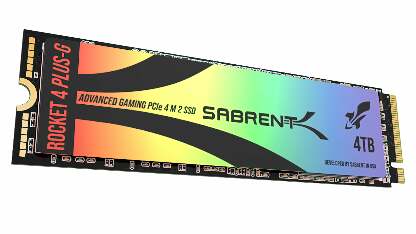
The Addlink S95 4 TB makes sense for buyers who need 4 TB of fast PCIe 4.0 storage in a single M.2 slot and find the S95 priced below equivalent Phison E18 drives like the Corsair MP600 Pro LPX or Sabrent Rocket 4 Plus.
Read: 7100 MB/s Write: 6800 MB/s Endurance: 2800 TBW Warranty: 5 years Interface: M.2 4.0 x 4
The Addlink S95 4 TB is one of the highest-capacity Phison E18 drives on the market, pairing a proven eight-channel controller with Micron 96-layer TLC and a 2,800 TBW endurance rating that outlasts most PCIe 4.0 competitors.
Controller & Memory
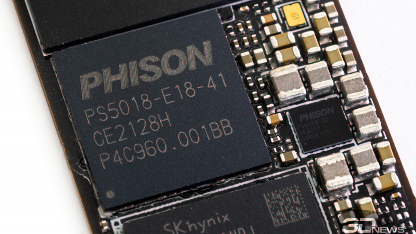
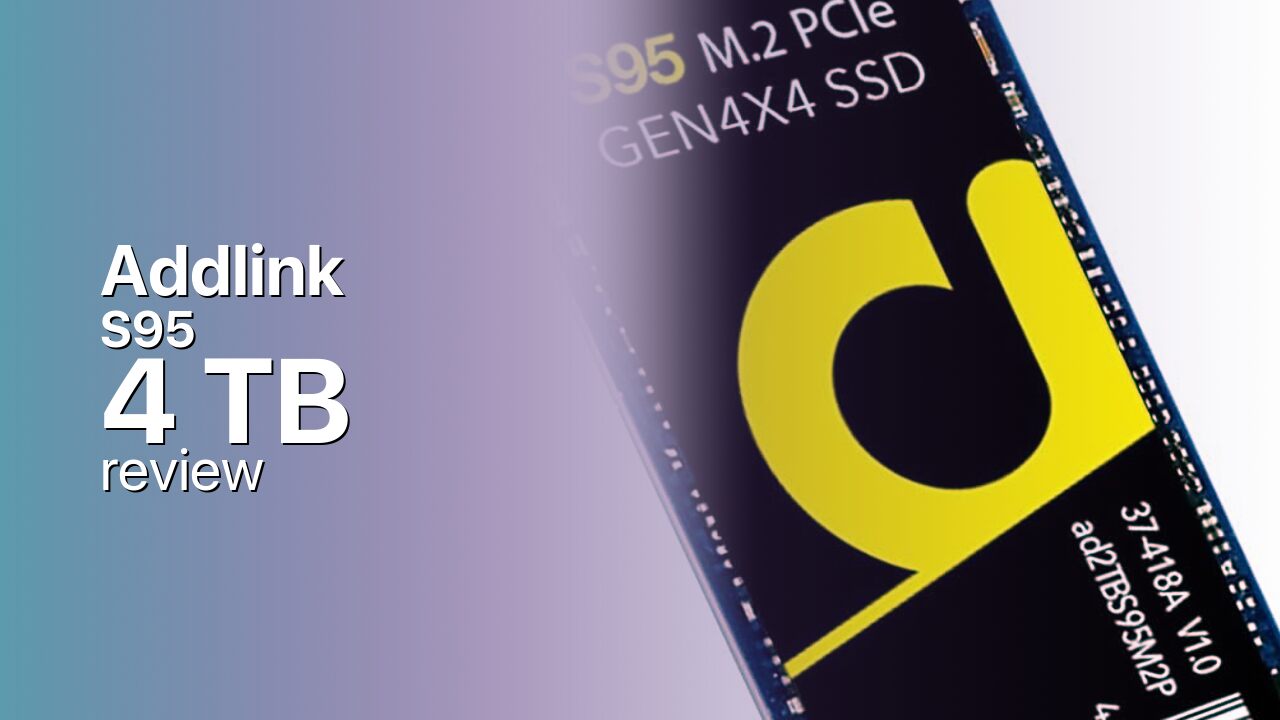
The Addlink S95 4 TB sits at the top of the S95 capacity stack, built around the Phison PS5018-E18 eight-channel controller that defined the PCIe 4.0 flagship tier from 2021 onward. Underneath is Micron's 96-layer 3D TLC NAND — the B27B generation — paired with a DDR4-2666 DRAM buffer whose size scales with capacity, so the 4 TB carries enough cache to map every sector without relying on host memory. The recipe is the Phison E18 reference platform, shared with drives like the Corsair MP600 Pro, Sabrent Rocket 4 Plus, and Team Group Cardea A440 Pro, which means the S95 inherits a mature, well-characterised controller whose thermal behaviour and performance envelope are thoroughly documented across dozens of independent reviews of its platform siblings.
Addlink ships the S95 in 1 TB, 2 TB, 4 TB, and an unusually large 8 TB variant, making it one of the few consumer M.2 2280 drives to offer 8 TB on a Gen4 bus. Each step up scales endurance linearly at roughly 700 TBW per terabyte, and sequential speeds peak at the 2 TB and 4 TB capacities before dipping slightly on the 8 TB, which trades a few hundred megabytes per second of write throughput for density. The 4 TB is the practical sweet spot for a single-slot game library, a video project drive, or a local workstation cache that avoids juggling multiple smaller SSDs. At 4 TB the PCB is double-sided with NAND packages on both faces, so it fits standard desktop M.2 slots and most gaming laptops with enough Z-height but will not slide into the thinnest ultrabooks or a Steam Deck.
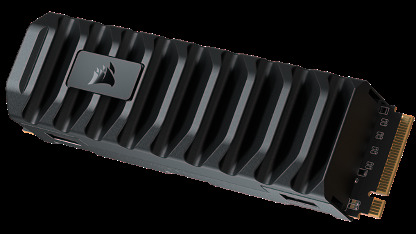
Competition for the Addlink S95 4 TB is the usual Gen4 flagship field. Samsung's 990 Pro 4 TB is faster on paper and in practice, with lower latency and marginally higher throughput, at a price premium. Western Digital's WD Black SN850X 4 TB matches the S95's endurance class with a different in-house controller and a longer retail track record. Among other Phison E18 drives, the Corsair MP600 Pro LPX 4 TB is the nearest sibling and often the one to compare on price, since the hardware underneath is nearly identical and the differentiator comes down to brand support and bundled accessories.
Storage Comparisons:
S95 Performance & Benchmarks
The Addlink S95 4 TB is manufacturer-rated for up to 7,100 MB/s sequential reads and 6,800 MB/s sequential writes over PCIe 4.0 x4, placing it in the upper tier of Gen4 drives alongside the WD Black SN850X and within striking distance of the Samsung 990 Pro. Random performance is rated at up to 1,000,000 read IOPS and 1,000,000 write IOPS, the practical ceiling for the Phison E18 platform and more than enough to make desktop workloads, game level loads, and application launches feel instantaneous.
Addlink S95 4 TB vs M.2 4.0 x 4 peers
Switch between sequential throughput and random IOPS to see how this drive stacks up against other M.2 4.0 x 4 SSDs in our database. The highlighted bar is the drive on this page — click any other bar to open that drive.
- Patriot Viper PV593 1 TB: 14,500 MB/s read, 14,000 MB/s write
- Patriot Viper PV593 2 TB: 14,500 MB/s read, 14,000 MB/s write
- Patriot Viper PV593 4 TB: 14,500 MB/s read, 14,000 MB/s write
- Patriot Viper PV573 2 TB: 14,000 MB/s read, 12,000 MB/s write
- Addlink S95 4 TB (this drive): 7,100 MB/s read, 6,800 MB/s write
In real-world use, the difference between the S95 and a Samsung 990 Pro on a game load is measured in fractions of a second, since most titles are still CPU-bound during level transitions rather than storage-bound. The 4 TB capacity earns its keep on sequential work: scrubbing 4K timelines, moving hundred-gigabyte project folders, or feeding a DirectStorage texture stream benefits from the full 7 GB/s bandwidth in a way that a 1 TB boot drive rarely does. Like every Phison E18 drive, the S95 uses an SLC write cache that absorbs writes at the full rated speed until it fills, after which sustained writes settle to the native TLC rate of roughly 1,500 to 2,000 MB/s depending on temperature and workload. The 4 TB model carries a larger absolute cache than the 1 TB or 2 TB simply because it has more NAND dies to draw from, so cache exhaustion under normal consumer use is rarer. Independent reviews of the 2 TB S95 at TechPowerUp and TweakTown found it competitive with other E18 drives, delivering within a few percent of the Corsair MP600 Pro and Sabrent Rocket 4 Plus in both synthetic benchmarks and real-world application traces. No independent benchmarks of the 4 TB variant exist, but the controller and NAND are identical to the 2 TB, so performance should scale predictably with the extra parallelism from the doubled NAND packages.
Addlink S95 vs Competitors
See how the S95 stacks up against other M.2 4.0 x 4 drives in our database:
Compare with rival drives:
Endurance, TBW & Warranty
Addlink covers the S95 4 TB with a five-year limited warranty that ends when either the five-year term expires or the drive exhausts its 2,800 TBW endurance rating, whichever comes first. That 2,800 TBW figure follows a linear 700 TBW-per-terabyte scaling across the S95 line: 700 TBW on the 1 TB, 1,400 TBW on the 2 TB, 2,800 TBW on the 4 TB, and 5,600 TBW on the 8 TB. At a heavy consumer workload of 50 GB of writes per day, the 4 TB drive would need over 150 years to reach the endurance limit, so the NAND will outlast any system it is installed in and the warranty term is the practical constraint. Addlink rates the S95 at up to 1.8 million hours MTBF, a statistical figure describing expected failure rates across a large population of drives, not a lifespan prediction for an individual unit. Warranty service is handled through Addlink directly, and the drive ships bare with no heatsink in the box, so users should confirm their motherboard includes M.2 cooling before purchase — sustained write throttling on the E18 platform without heatsink contact is well documented and can cut sequential throughput by a third or more under heavy load.
Addlink S95 4 TB Specifications
| Category | Value |
|---|---|
| Capacity [?] | 4 TB |
| Interface [?] | M.2 4.0 x 4 |
| Controller [?] | Phison PS5018-E18 8Channel |
| Memory type [?] | Micron 96-L TLC |
| DRAM [?] | Yes |
| Read speed (MB/s) [?] | 7100 |
| Write speed (MB/s) [?] | 6800 |
| Read IOPS [?] | 1000000 |
| Write IOPS [?] | 1000000 |
| Endurance (TBW) [?] | 2800 |
| MTBF (million hours) [?] | 1800000 |
| Warranty (years) [?] | 5 |
Verdict: Is the S95 Worth It in 2026?
The Addlink S95 4 TB makes sense for buyers who need 4 TB of fast PCIe 4.0 storage in a single M.2 slot and find the S95 priced below equivalent Phison E18 drives like the Corsair MP600 Pro LPX or Sabrent Rocket 4 Plus. The hardware underneath is a known quantity — the Phison E18 controller with Micron 96-layer TLC has been on the market since 2021 and there are no surprises left — and the 2,800 TBW endurance rating is high enough that write exhaustion is a non-issue for any consumer workload. Skip the S95 for the lowest possible latency or highest burst throughput, where Samsung's 990 Pro 4 TB and WD's SN850X 4 TB pull slightly ahead on their in-house controllers, or on a motherboard that lacks an M.2 heatsink, because the E18 controller throttles noticeably under sustained writes without cooling. Also pass on it for single-sided compatibility in a thin laptop or handheld. The Addlink S95 4 TB is a competent, unremarkable Gen4 workhorse that trades on capacity and endurance rather than benchmark leadership, and at the right price that is a trade worth making.
+ Pros
- 2,800 TBW endurance on the 4 TB model
- Phison E18 controller with dedicated DRAM cache
- Up to 7,100 MB/s sequential reads over PCIe 4.0
- Lineup scales to 8 TB, among the largest consumer M.2 capacities
- Five-year warranty with more endurance headroom than most Gen4 rivals
- Mature, widely reviewed Phison E18 platform with predictable behaviour
- Cons
- No included heatsink and E18 controller runs hot under sustained load
- Double-sided PCB may not fit slim laptops or handhelds
- Samsung 990 Pro and WD SN850X outpace it in latency-sensitive workloads
- Smaller brand with less retail and firmware support presence than Samsung or WD
- Write speed drops to native TLC rate after SLC cache exhausts
Buy this or similar SSD Storage:



Video Review
Corsair MP400 GEN3 2TB vs Addlink S95 GEN4 2TB Test Benchmark Game Loading