ADATA XPG Gammix S50 Lite 1TB Review - Entry-Tier PCIe 4.0 NVMe (2026)
Quick answer
The ADATA XPG Gammix S50 Lite 1 TB is the right pick for the buyer who wants PCIe 4.0 on the spec sheet without paying flagship money - boot drive duty, a single-SSD gaming build, or a quiet secondary library where heat and power matter more than peak benchmark scores.
Read: 3900 MB/s Write: 3200 MB/s Endurance: 740 TBW Warranty: 5 years Interface: M.2 4.0 x 4
The ADATA XPG Gammix S50 Lite 1 TB is a budget-leaning PCIe 4.0 NVMe that aimed Gen4 pricing at mainstream buyers, trading peak throughput for a cooler controller and a five-year warranty.
Controller & Memory
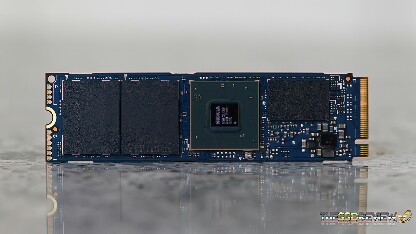
The S50 Lite is built on Silicon Motion's four-channel SM2267 controller paired with 96-layer Micron 3D TLC and a small SK hynix DDR4 DRAM buffer. That is a deliberately less aggressive design than the eight-channel Phison E16 in ADATA's own Gammix S50 or the E18-based S70 Blade, so the rated ceiling sits at 3,900 MB/s reads and 3,200 MB/s writes rather than 7,000+ MB/s. The trade-off is real cost, heat and power savings: independent reviewers consistently note the S50 Lite runs cooler than typical first-generation Gen4 drives, and the bundled thin metal heat spreader is enough for most desktop M.2 slots.
The 1 TB model sits in the middle of a 512 GB / 1 TB / 2 TB lineup and uses a single-sided M.2 2280 PCB, so it drops cleanly into slim laptops and PS5 slots that won't tolerate a tall heatsink. It is best understood as a no-fuss mainstream NVMe rather than a flagship: it competes with the WD Blue SN580, Crucial P3 Plus and Samsung 980 (which is itself PCIe 3.0), and undercuts higher-end PCIe 4.0 drives like the Samsung 980 Pro or WD Black SN850X on price by a wide margin. Buyers who want a quiet, low-heat boot or game-library drive get the bulk of the practical Gen4 benefit; buyers chasing DirectStorage scratch-space speeds or sustained pro workloads should step up to a full-fat E18 or in-house design.
Storage Comparisons:
XPG Gammix S50 Lite Performance & Benchmarks
ADATA rates the 1 TB S50 Lite at 3,900 MB/s sequential reads and 3,200 MB/s sequential writes, with up to 380,000 IOPS random reads and 490,000 IOPS random writes (the 2 TB model jumps the IOPS figures, which is why some review tables disagree). Those numbers comfortably beat any SATA SSD and roughly match a strong PCIe 3.0 NVMe like the Samsung 970 EVO Plus, while sitting clearly below flagship Gen4 drives such as the WD Black SN850X or Samsung 990 Pro.
ADATA XPG Gammix S50 Lite 1 TB vs M.2 4.0 x 4 peers
Switch between sequential throughput and random IOPS to see how this drive stacks up against other M.2 4.0 x 4 SSDs in our database. The highlighted bar is the drive on this page — click any other bar to open that drive.
- Patriot Viper PV593 1 TB: 14,500 MB/s read, 14,000 MB/s write
- Patriot Viper PV593 2 TB: 14,500 MB/s read, 14,000 MB/s write
- Patriot Viper PV593 4 TB: 14,500 MB/s read, 14,000 MB/s write
- Patriot Viper PV573 2 TB: 14,000 MB/s read, 12,000 MB/s write
- ADATA XPG Gammix S50 Lite 1 TB (this drive): 3,900 MB/s read, 3,200 MB/s write
In the real world this translates to near-instant Windows boot, sub-second cold launches for Cyberpunk-class games and large file copies that finish in seconds rather than minutes. Independent reviewers consistently find that the SM2267's pseudo-SLC cache absorbs the first 100-200 GB of writes at near-rated speed before dropping to the 500-700 MB/s native-TLC floor, which is fine for occasional bulk transfers but noticeable if you regularly move multi-hundred-gigabyte video projects. DirectStorage benefits are present but modest at this tier - the controller is the bottleneck before the interface is.
ADATA XPG Gammix S50 Lite vs Competitors
See how the XPG Gammix S50 Lite stacks up against other M.2 4.0 x 4 drives in our database:
Compare with rival drives:
Endurance, TBW & Warranty
ADATA rates the 1 TB Gammix S50 Lite at 740 TBW, paired with a five-year limited warranty (whichever comes first). At a typical mixed workload of 20-40 GB written per day that endurance budget translates to roughly 50-100 years before the wear-out limit becomes a concern, so for ordinary consumer use it is effectively unreachable. MTBF is rated at 2,000,000 hours, which is a population-statistics figure rather than a promise about any individual drive but is in line with mainstream Gen4 competitors. Warranty service is handled through ADATA's regional RMA process and requires the original purchase invoice and the drive's serial number; some retailers will also accept returns in the first year. The 2 TB model doubles the endurance budget to 1,480 TBW and the 512 GB version is rated lower at 370 TBW.
ADATA XPG Gammix S50 Lite 1 TB Specifications
| Category | Value |
|---|---|
| Capacity [?] | 1 TB |
| Interface [?] | M.2 4.0 x 4 |
| Controller [?] | Silicon Motion SM2267 |
| Memory type [?] | Micron 3D TLC |
| DRAM [?] | HMB (no DRAM) |
| Read speed (MB/s) [?] | 3900 |
| Write speed (MB/s) [?] | 3200 |
| Read IOPS [?] | 490000 |
| Write IOPS [?] | 540000 |
| Endurance (TBW) [?] | 740 |
| MTBF (million hours) [?] | 1500000 |
| Warranty (years) [?] | 5 |
Verdict: Is the XPG Gammix S50 Lite Worth It in 2026?
The ADATA XPG Gammix S50 Lite 1 TB is the right pick for the buyer who wants PCIe 4.0 on the spec sheet without paying flagship money - boot drive duty, a single-SSD gaming build, or a quiet secondary library where heat and power matter more than peak benchmark scores. Anyone who runs sustained creative workloads, frequently moves multi-hundred-gigabyte transfers, or builds a PS5 around DirectStorage-class throughput should skip it and pay the premium for an SN850X, Samsung 990 Pro or the larger Gammix S70 Blade. Against the Crucial P3 Plus 1 TB and WD Blue SN580 1 TB it is competitive on price and warranty, and a clear step up from any SATA drive. The headline judgment: solid mainstream Gen4 storage, with no pretensions to flagship status.
+ Pros
- 3,900 MB/s reads on PCIe 4.0 interface
- 740 TBW endurance with 5-year warranty
- SK hynix DDR4 DRAM cache buffer included
- Runs notably cooler than first-gen Phison E16 drives
- Single-sided M.2 2280 fits PS5 and thin laptops
- Includes a low-profile aluminium heat spreader
- Cons
- Writes drop to native-TLC speed after SLC cache fills
- Sequential write speed trails flagship Gen4 by 3,000+ MB/s
- No hardware encryption on this SKU
- 2 TB variant has different IOPS rating than 1 TB
- StorageReview measured real 64K writes well below rated speed
Buy this or similar SSD Storage:



Video Review
Are Budget PCIe 4 SSDs Worth It?? - ADATA XPG GAMMIX S50 Lite