ADATA XPG SX8000 1TB Review — Legacy MLC PCIe 3.0 NVMe SSD (2026)
Quick answer
The ADATA XPG SX8000 1TB is a legacy PCIe 3.0 NVMe SSD whose MLC NAND gives it an endurance advantage that modern TLC drives cannot match.
Read: 2500 MB/s Write: 1100 MB/s Endurance: 640 TBW Warranty: 5 years Interface: M.2 3.0 x 4
The ADATA XPG SX8000 1TB is a legacy PCIe 3.0 NVMe SSD whose MLC NAND gives it an endurance edge over modern TLC competitors.
Controller & Memory
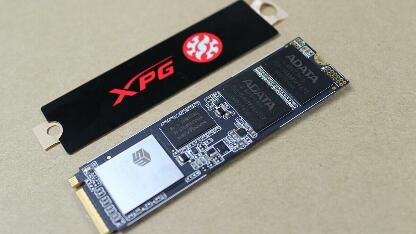
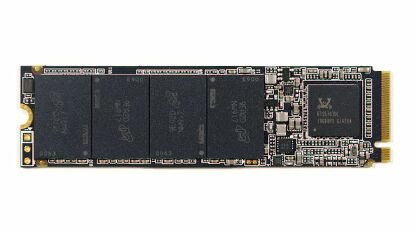
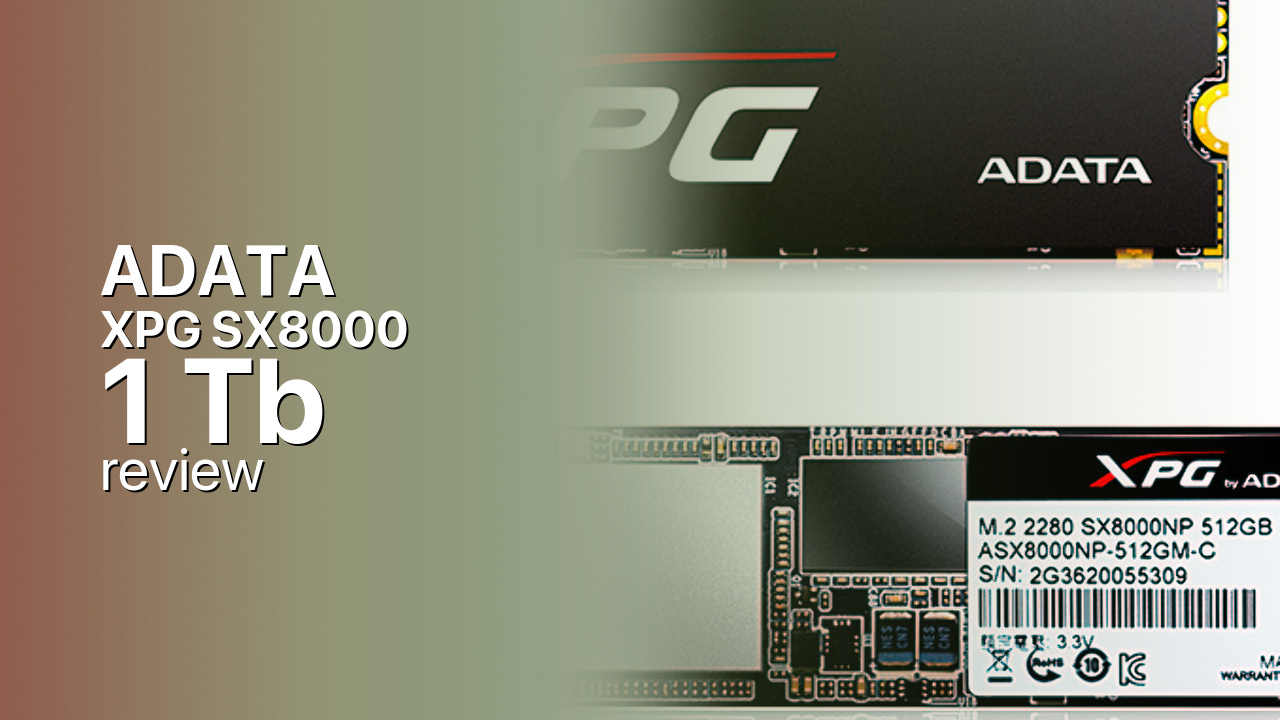
The 1 TB SX8000 pairs Silicon Motion's SM2260G controller — a quad-channel PCIe 3.0 design from the early NVMe era — with ADATA-sourced 3D MLC NAND and 256 MB of Nanya DDR3L-1600 DRAM on an M.2 2280 PCB. The MLC NAND is the drive's defining characteristic: each cell stores two bits instead of three (TLC) or four (QLC), giving the SX8000 inherently better endurance and more consistent write performance than TLC-based competitors from the same generation.
ADATA rates the SX8000 at 2,500 MB/s sequential reads and 1,100 MB/s sequential writes across all capacities. The 1 TB variant benefits from having more NAND chips for parallelism, so it is the most likely capacity to actually reach these rated figures in real-world use. Even so, these speeds are modest by modern standards — budget PCIe 3.0 TLC drives now exceed 3,500 MB/s reads.
The SX8000 was ADATA's first foray into the high-end M.2 NVMe market, positioned above the SP550 SATA line. It has since been superseded by the SX8200 Pro and newer generations, making it a legacy product. The SM2260G controller was known for uneven performance across different workload types — strong in gaming simulations but less consistent in mixed random I/O. The drive features a thin metal heatspreader glued to the PCB.
The 1 TB capacity makes this the most practical variant of the SX8000 for modern use. It provides enough space for the operating system, applications, and a reasonable game library. The MLC NAND gives this drive a longevity advantage that appeals to write-intensive applications: video editing scratch disks, database workloads, and environments where sustained write consistency matters more than burst speed.
Direct competitors from the same era include the Samsung 960 EVO 1TB (TLC, faster but less durable per cell), the Intel 760p 1TB (TLC, Intel's 64-layer 3D NAND), and the Plextor M8Se 1TB (TLC, Marvell controller). Modern alternatives like the WD Blue SN580 1TB offer dramatically better performance at lower prices.
Storage Comparisons:
XPG SX8000 Performance & Benchmarks
The ADATA XPG SX8000 1TB is rated at 2,500 MB/s sequential reads and 1,100 MB/s sequential writes — figures that were competitive at launch but are modest compared to modern PCIe 3.0 drives. The 1 TB variant, with its additional NAND chips for parallelism, is the capacity most likely to reach these rated numbers. In independent testing by StorageReview on the 512 GB model, the drive delivered 1,490 MB/s sequential reads and 987 MB/s writes in 2MB sequential tests. The 1 TB should perform closer to the manufacturer's rated figures.
ADATA XPG SX8000 1 TB vs M.2 3.0 x 4 peers
Switch between sequential throughput and random IOPS to see how this drive stacks up against other M.2 3.0 x 4 SSDs in our database. The highlighted bar is the drive on this page — click any other bar to open that drive.
- ADATA SX 8800 Pro 512 GB: 3,500 MB/s read, 2,700 MB/s write
- ADATA SX 8800 Pro 1 TB: 3,500 MB/s read, 2,700 MB/s write
- ADATA XPG Spectrix S40G RGB 256 GB: 3,500 MB/s read, 3,000 MB/s write
- ADATA XPG Spectrix S40G RGB 512 GB: 3,500 MB/s read, 3,000 MB/s write
- ADATA XPG SX8000 1 TB (this drive): 2,500 MB/s read, 1,100 MB/s write
The SM2260G controller manages the 3D MLC NAND through a quad-channel interface over the full PCIe 3.0 x4 bandwidth. The 256 MB DDR3L-1600 DRAM cache stores the flash translation table, providing dedicated address mapping without borrowing system RAM. Reviewers noted uneven performance across workload types: the SX8000 excelled in gaming simulations, reaching approximately 30,600 IOPS at 1,490 MB/s with 0.254 ms average latency, but struggled in mixed random I/O tests where it placed near the bottom of its peer group.
The MLC NAND's advantage shows most clearly in sustained write scenarios. Unlike TLC drives that rely heavily on SLC caching to achieve high write speeds, MLC writes directly to native cells at full speed. This means the SX8000's 1,100 MB/s write rating is sustainable — there is no dramatic drop-off after an SLC buffer exhausts. For the 1 TB capacity, this is genuinely useful: large file transfers, video editing workflows, and database operations benefit from consistent throughput rather than burst-and-collapse behavior.
Random 4K performance was approximately 6,500 IOPS for reads and 21,300 IOPS for writes in StorageReview's testing. These numbers reflect the SM2260G's earlier-generation firmware, which had not yet reached the optimization levels of later Silicon Motion controllers like the SM2262EN found in the SX8200 Pro.
ADATA XPG SX8000 vs Competitors
See how the XPG SX8000 stacks up against other M.2 3.0 x 4 drives in our database:
Compare with rival drives:
Endurance, TBW & Warranty
ADATA covers the SX8000 1TB with a five-year limited warranty. ADATA does not publish a specific TBW (terabytes written) rating for the SX8000 series, which was common for early NVMe drives. However, the MLC NAND provides inherently higher endurance than TLC alternatives — each MLC cell supports significantly more program-erase cycles than a TLC cell. ADATA rates the drive at 2,000,000 hours MTBF (mean time between failures), a population statistic indicating reliability rather than a per-drive lifespan guarantee. For a 1 TB MLC drive, estimated endurance would be in the range of 500 TBW or higher based on typical MLC cell ratings of 5,000-10,000 P/E cycles, though this is an estimate since ADATA has not published an official figure. At a sustained workload of 50 GB per day, a 500 TBW drive would take roughly 27 years to exhaust — well beyond the five-year warranty period.
ADATA XPG SX8000 1 TB Specifications
| Category | Value |
|---|---|
| Capacity [?] | 1 TB |
| Interface [?] | M.2 3.0 x 4 |
| Controller [?] | Silicon Motion SM2260G |
| Memory type [?] | ADATA MLC |
| DRAM [?] | NANYA 256MB DDR3 |
| Read speed (MB/s) [?] | 2500 |
| Write speed (MB/s) [?] | 1100 |
| Read IOPS [?] | 160000 |
| Write IOPS [?] | 140000 |
| Endurance (TBW) [?] | 640 |
| MTBF (million hours) [?] | 2 |
| Warranty (years) [?] | 5 |
Verdict: Is the XPG SX8000 Worth It in 2026?
The ADATA XPG SX8000 1TB is a legacy PCIe 3.0 NVMe SSD whose MLC NAND gives it an endurance advantage that modern TLC drives cannot match. It is best suited for buyers who value cell longevity and consistent write performance over raw speed. The 1 TB capacity is the most practical variant for modern use, offering enough space for OS, applications, and games. The Samsung 960 EVO 1TB offers faster performance but uses less durable TLC NAND. Modern alternatives like the WD Blue SN580 1TB deliver over three times the sequential throughput at a lower price. The SX8000 makes sense as a secondary drive for write-intensive workloads or as a legacy drive for buyers who already own the platform. As a new purchase, faster and more affordable options exist.
+ Pros
- MLC NAND with higher endurance than TLC
- 256 MB DDR3 DRAM cache
- Consistent write speeds without SLC cache drop-off
- 1 TB capacity practical for modern use
- Five-year limited warranty
- Cons
- 2,500/1,100 MB/s slower than modern TLC drives
- No published TBW endurance rating
- Legacy product — harder to find at retail
- Uneven performance across workload types
- SM2260G controller is an earlier-generation design
Buy this or similar SSD Storage:
Video Review
NVME Wars: Adata XPG SX8200 vs Samsung 970 Pro/EVO Plus