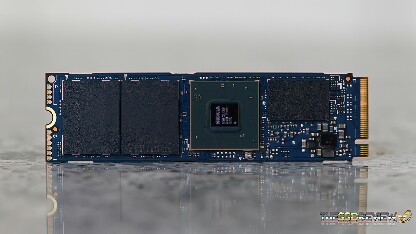
AIGO SM170 1 TB: A 7,400 MB/s DRAM-less Contender on the SM2268XT (2026)
The AIGO SM170 1 TB is a 7,400 MB/s DRAM-less PCIe 4.0 drive on Silicon Motion's SM2268XT and YMTC 232-layer TLC, with 1,800 TBW and largely Asia-only availability.
Controller & Memory
The AIGO SM170 1 TB runs the Silicon Motion SM2268XT, a four-channel DRAM-less controller set in front of a YMTC 232-layer TLC flash array running at 2,400 MT/s, and it borrows system memory through Host Memory Buffer for the flash translation layer rather than carrying a discrete DRAM chip. The SM2268XT is part of the same wave of fast DRAM-less PCIe 4.0 controllers as Maxio's MAP1602, and AIGO's SM170 was among the first drives to pair it with YMTC's 232-layer NAND, a combination TweakTown had not tested before the SM170 arrived. The drive is rated at 7,400 MB/s sequential reads and 6,400 MB/s sequential writes over a PCIe 4.0 x4 link, with up to 1,000,000 random read and write IOPS, and it carries a five-year warranty backed by a 1,800 TBW endurance rating on the 1 TB capacity.
The SM170 ships in three capacities, 1 TB, 2 TB, and 4 TB, all sharing the same SM2268XT controller, YMTC 232L TLC, and HMB architecture. Sequential throughput holds at 7,400 MB/s reads across the line, while endurance scales at 1,800 TBW per terabyte, 1,800 TBW on the 1 TB reviewed here, 3,600 TBW on the 2 TB, and 7,200 TBW on the 4 TB, figures that sit well above the 600 TBW-per-terabyte norm of older TLC drives and reflect the write endurance of YMTC's 232-layer NAND. The 1 TB is the entry point of the line: it reaches the full 7,400 MB/s read speed and the full 1,000,000 IOPS, so it gives up nothing on peak performance to the larger capacities, only on raw capacity and total write budget.
The most important caveat for Western buyers is availability. The SM170 has been distributed primarily through the Asian market, and TweakTown's review explicitly listed availability as a con alongside strong performance scores, which is why the product is flagged in some databases as temporarily only available in Asia. For buyers who can source it, the 1 TB is positioned as a high-value DRAM-less PCIe 4.0 boot and app drive competing with Maxio MAP1602 designs like the Addlink S93, the WD Black SN770, and the Team Group MP44, all of which share the same DRAM-less HMB architecture and a similar performance envelope. The SM170's distinguishing traits are the SM2268XT platform's strong showing in TweakTown's testing, where the related 2 TB model ranked as the second-highest-performing 2 TB DRAM-less SSD the lab had measured, and the unusually high 1,800 TBW-per-terabyte endurance that the YMTC 232-layer TLC delivers.
Storage Comparisons:
SM170 Temporarily Only Available in Asia Performance & Benchmarks
AIGO rates the SM170 1 TB at 7,400 MB/s sequential reads and 6,400 MB/s sequential writes over PCIe 4.0 x4, with up to 1,000,000 random read and 1,000,000 random write IOPS. The SM2268XT is a four-channel DRAM-less controller that, like the Maxio MAP1602, extracts flagship-tier PCIe 4.0 throughput from a high-speed YMTC 232-layer TLC array running at 2,400 MT/s without needing discrete DRAM.
AIGO SM170 Temporarily Only Available in Asia 1 TB vs M.2 4.0 x 4 peers
Switch between sequential throughput and random IOPS to see how this drive stacks up against other M.2 4.0 x 4 SSDs in our database. The highlighted bar is the drive on this page — click any other bar to open that drive.
- Patriot Viper PV593 1 TB: 14,500 MB/s read, 14,000 MB/s write
- Patriot Viper PV593 2 TB: 14,500 MB/s read, 14,000 MB/s write
- Patriot Viper PV593 4 TB: 14,500 MB/s read, 14,000 MB/s write
- Patriot Viper PV573 2 TB: 14,000 MB/s read, 12,000 MB/s write
- AIGO SM170 Temporarily Only Available in Asia 1 TB (this drive): 7,400 MB/s read, 6,400 MB/s write
Independent testing backs the ratings. TweakTown's review of the 2 TB SM170 measured 953,000 random read IOPS on its AMD test bench, ranking it the second-best result TweakTown had ever recorded for a flash-based DRAM-less SSD, and it recorded a 4,294 MB/s result in a heavy mixed-transfer workload that set a new lab record for a DRAM-less drive. The same review found 4K QD1 random read at around 102 MB/s, a strong signal for real-world boot and application-launch responsiveness, and a 3DMark Storage Gaming score around 4,200 that it called respectable but the lowest of the top three DRAM-less controller platforms. Those results transfer cleanly to the 1 TB, which shares the same controller, firmware stack, and 1,000,000 IOPS rating. As with every DRAM-less HMB design, the SM170 shows higher 4K random write latency under sustained pressure than drives with discrete DRAM such as the Samsung 990 Pro or the Phison E18-based Anacomda i4-X, but those are pricier drives in a different tier entirely. For the boot, gaming, and everyday workloads the 1 TB is built for, the SM2268XT's measured performance lands it at the front of the DRAM-less pack.
AIGO SM170 Temporarily Only Available in Asia vs Competitors
See how the SM170 Temporarily Only Available in Asia stacks up against other M.2 4.0 x 4 drives in our database:
Compare with rival drives:
Endurance, TBW & Warranty
AIGO covers the SM170 1 TB with a five-year limited warranty, ending at whichever comes first between the term and the 1,800 TBW endurance rating. That 1,800 TBW-per-terabyte figure is unusually high for the budget PCIe 4.0 segment, where 600 TBW per terabyte is the older norm, and it reflects the write-cycle headroom of the YMTC 232-layer TLC the drive uses; the 2 TB model carries 3,600 TBW and the 4 TB carries 7,200 TBW on the same scaling. At a typical consumer write load of 20 GB per day, the 1 TB's 1,800 TBW rating translates to roughly 246 years before the write budget is exhausted, so the five-year term expires long before the NAND approaches its limit. The endurance advantage matters most for buyers who push sustained writes, such as game capture, large file transfers, or running the drive as a working scratch volume, where the extra headroom over a 600 TBW-per-terabyte drive is a genuine, measurable benefit. Warranty service is the practical question mark: because the SM170 has been distributed primarily in Asia, buyers outside that region should confirm retailer or distributor RMA support before purchase, since AIGO does not run a global end-user RMA portal comparable to Samsung's or WD's. Within its home market the five-year coverage and the high TBW rating together make a credible reliability proposition.
AIGO SM170 Temporarily Only Available in Asia 1 TB Specifications
| Category | Value |
|---|---|
| Capacity [?] | 1 TB |
| Interface [?] | M.2 4.0 x 4 |
| Controller [?] | Silicon Motion SM2268XT 4 Channel |
| Memory type [?] | YMTC 232-L TLC |
| DRAM [?] | HMB |
| Read speed (MB/s) [?] | 7400 |
| Write speed (MB/s) [?] | 6400 |
| Read IOPS [?] | 1000000 |
| Write IOPS [?] | 1000000 |
| Endurance (TBW) [?] | 1800 |
| MTBF (million hours) [?] | 1500000 |
| Warranty (years) [?] | 5 |
Verdict: Is the SM170 Temporarily Only Available in Asia Worth It in 2026?
The AIGO SM170 1 TB is a genuinely fast DRAM-less PCIe 4.0 drive that reaches the full 7,400 MB/s read ceiling of the SM2268XT platform, delivers a verified 1,000,000 IOPS, and pairs those numbers with an unusually high 1,800 TBW endurance rating and a five-year warranty. For buyers who can actually buy one, it is a competitive alternative to Maxio MAP1602 drives like the Addlink S93, the WD Black SN770, and the Team Group MP44, trading blows on performance while pulling ahead on raw write endurance thanks to the YMTC 232-layer TLC. The 1 TB is the right capacity for a boot-and-apps role where peak speed matters more than total storage, since it gives up nothing on 7,400 MB/s reads or 1,000,000 IOPS to the larger capacities. The binding constraint is availability: the SM170 has been largely confined to the Asian market, and TweakTown flagged that directly, so buyers elsewhere should source it only through a retailer that handles warranty service. Where the SM170 is obtainable, the 1 TB earns its place as a top-tier DRAM-less option; where it is not, the Addlink S93 or the Team Group MP44 cover the same use case on the more familiar MAP1602 platform.
+ Pros
- 7,400 MB/s sequential reads, full SM2268XT platform ceiling
- 1,000,000 random read IOPS, near the top of the DRAM-less class
- 1,800 TBW endurance well above the 600 TBW/TB segment norm
- Five-year warranty on a budget DRAM-less drive
- YMTC 232-layer TLC delivers strong write-cycle headroom
- Cons
- Limited availability, primarily distributed in the Asian market
- DRAM-less HMB design raises sustained random write latency
- No global RMA portal outside its home region
- Lower 3DMark Storage Gaming score than rival DRAM-less platforms
- Sparse independent English-language review coverage
Buy this or similar SSD Storage:



Video Review
Best SSDs for PC & Playstation 5